Intermountain West Dashboard
Western Water Assessment needs your help improving the Intermountain West Dashboard! Please share your input in this short, anonymous survey which should take less than 5 minutes to complete.
The Intermountain West Dashboard provides situational awareness of weather, drought, and water resources for Colorado, Utah, and Wyoming.
Click the question mark icon above each graphic to see the description of that graphic.
Weekly or monthly summaries of evolving weather, drought, and water conditions for the Intermountain West are also available from these providers:
- Colorado CC/NIDIS Intermountain West Drought Status Briefings
- NOAA CBRFC Water Supply Briefings for the Colorado River Basin and Great Basin - monthly, January through May
- NRCS Water Supply Outlook Reports for Colorado, Utah, and Wyoming - monthly, January through May/June
Temperature, Precipitation and Snowpack





Drought Conditions


Current Streamflow, Forecasted Streamflow

Soil Moisture

Wildfire and Smoke
Reservoir Storage
Precipitation Forecast
Seasonal Climate Outlooks

ENSO Conditions and Forecasts

Latest Briefing
October 8, 2026 - CO, UT, WY
Above average precipitation during September improved drought conditions for parts of Colorado, Utah and Wyoming. Temperatures were three to six degrees above average for much of the region and September temperatures were among the ten warmest for Colorado (2nd), Utah (7th) and Wyoming (6th). Regional reservoir storage decreased from one year ago with conditions most dire in Colorado (reservoirs at 37% capacity) and two of the Upper Colorado Basin’s largest reservoirs, Blue Mesa and Lake Powell. A strong El Niño is in progress as Pacific Ocean temperatures were 2.5ºC above average in July-September. Seasonal forecasts suggest an increased probability of above average precipitation for southern Utah, much of Colorado and southeastern Wyoming and below average precipitation for northern Utah and western Wyoming.
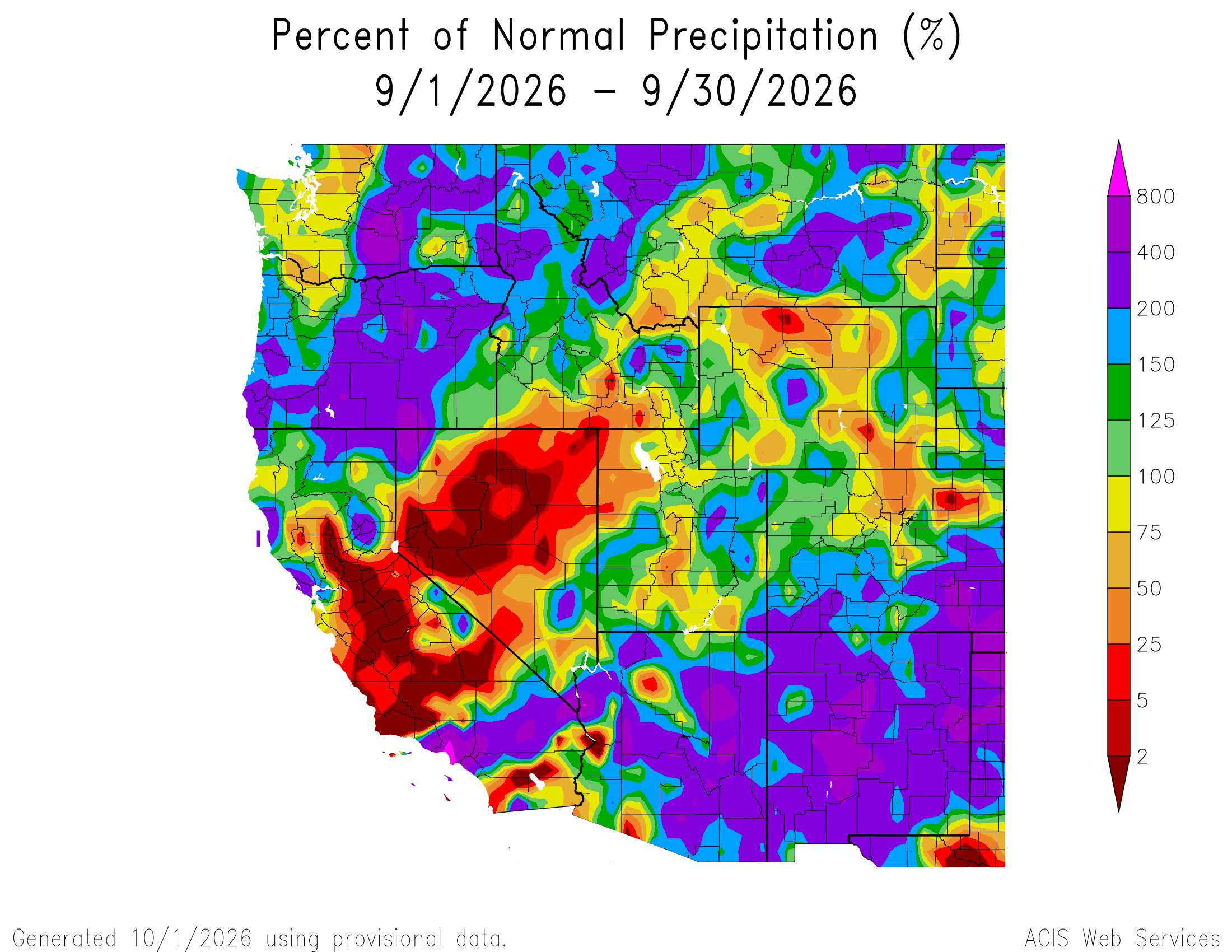
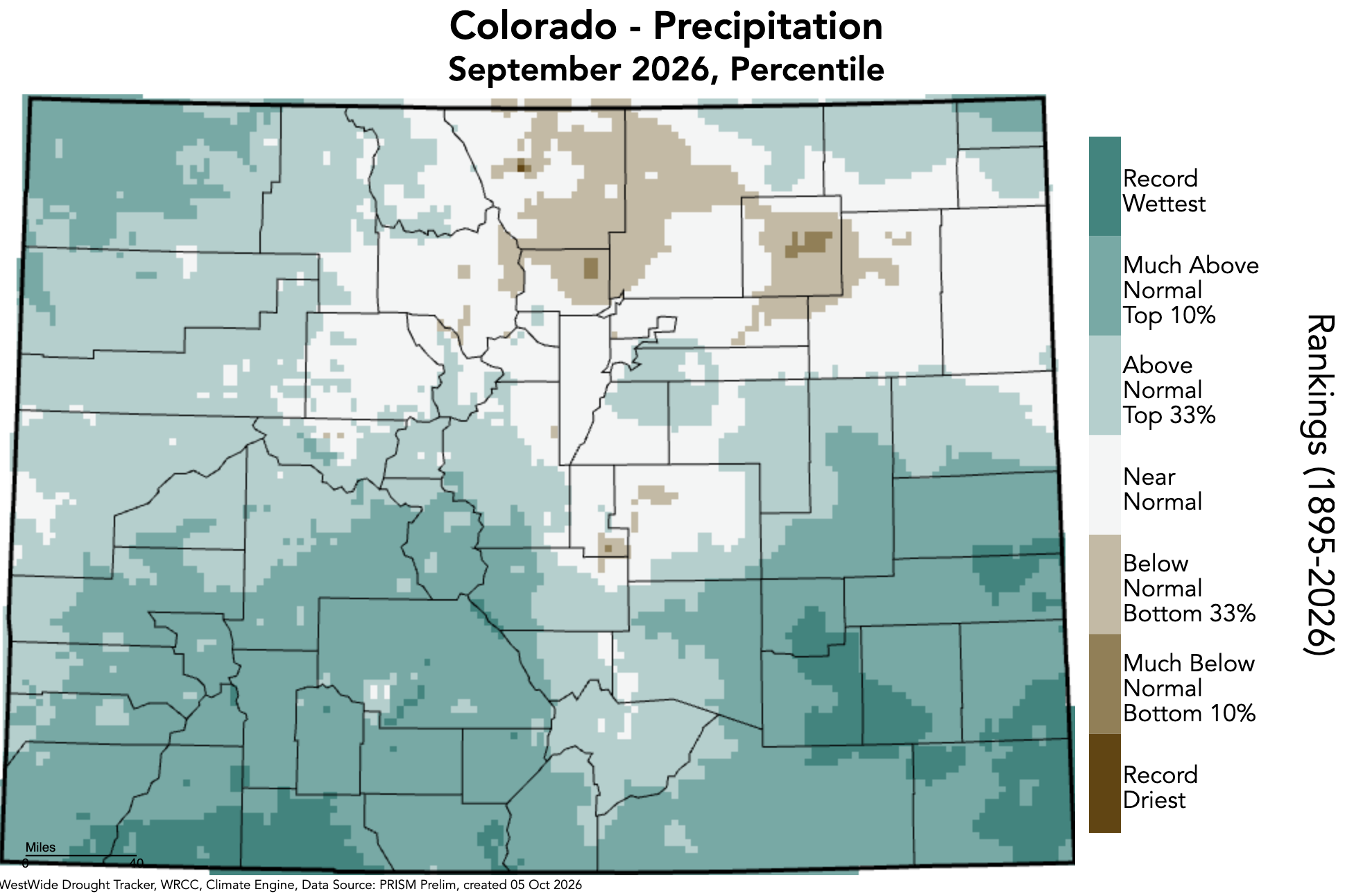
September was relatively wet across the region as precipitation was above average across a broad swath of Colorado, Utah and Wyoming. Portions of northern Colorado, central and northwestern Utah and northern Wyoming received less than 75% of average September precipitation. Record wet conditions were observed in the southwestern Colorado towns of Cortez and Fort Lewis and in southeastern Colorado at La Junta, Rocky Ford and Walsh.
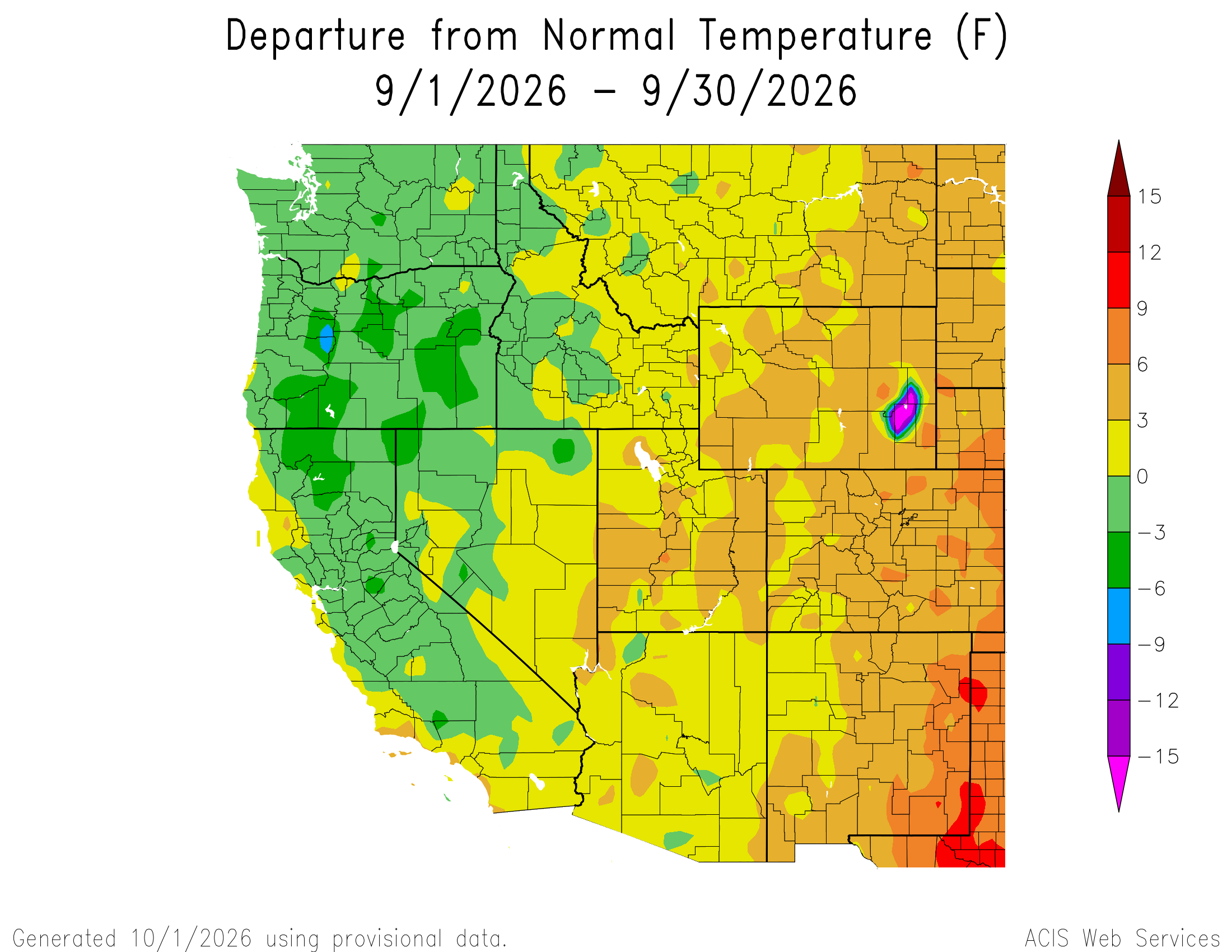
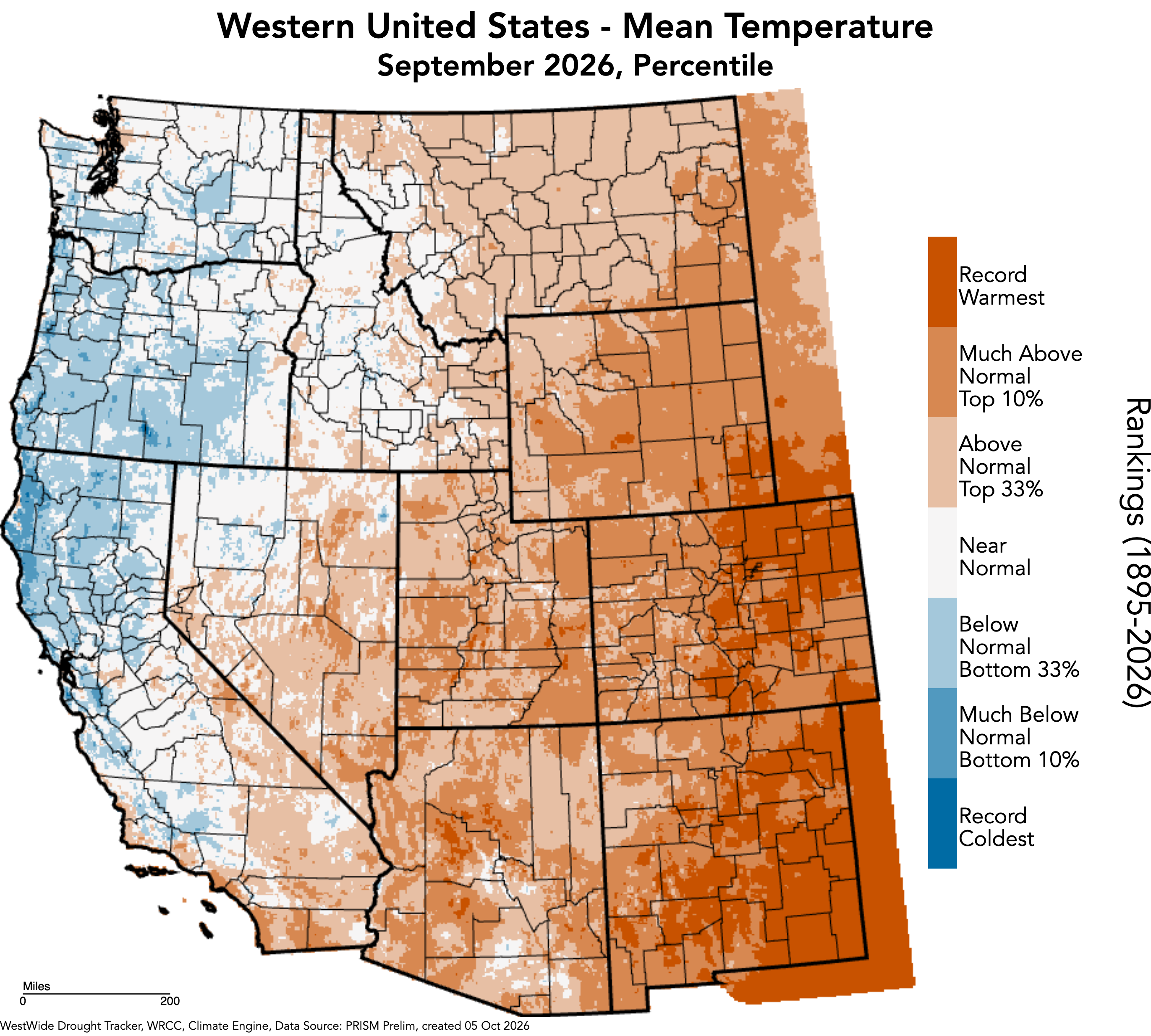
Temperatures were above average during September with portions of Utah and most of Colorado and Wyoming running three to six degrees above average. Record hot temperatures were observed at 25 locations in central and eastern Colorado, including Akron, Denver, Estes Park, Fort Collins, Greeley and Limon. Colorado experienced its second warmest September on record while Utah and Wyoming temperatures ranked among the ten warmest Septembers on record.
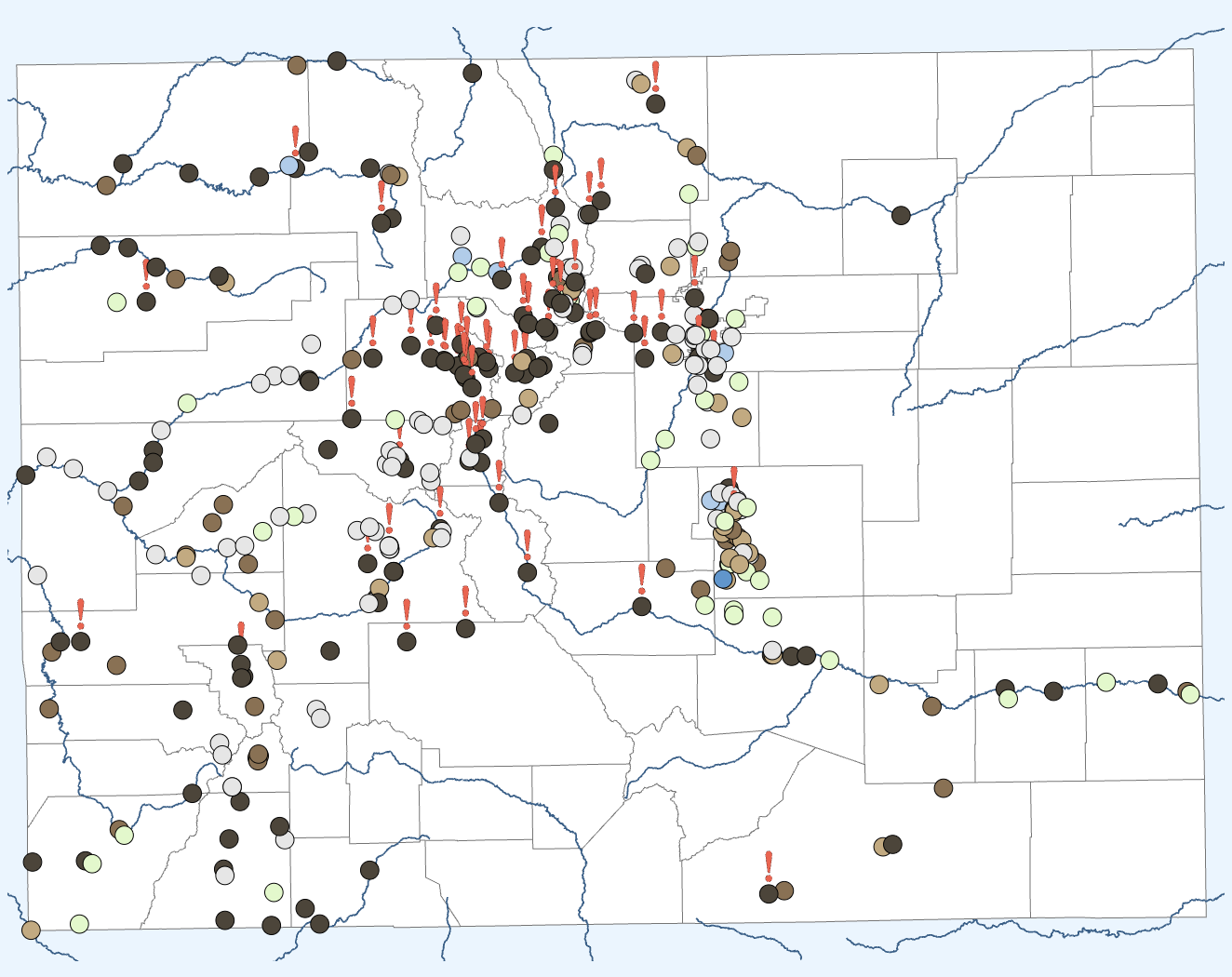
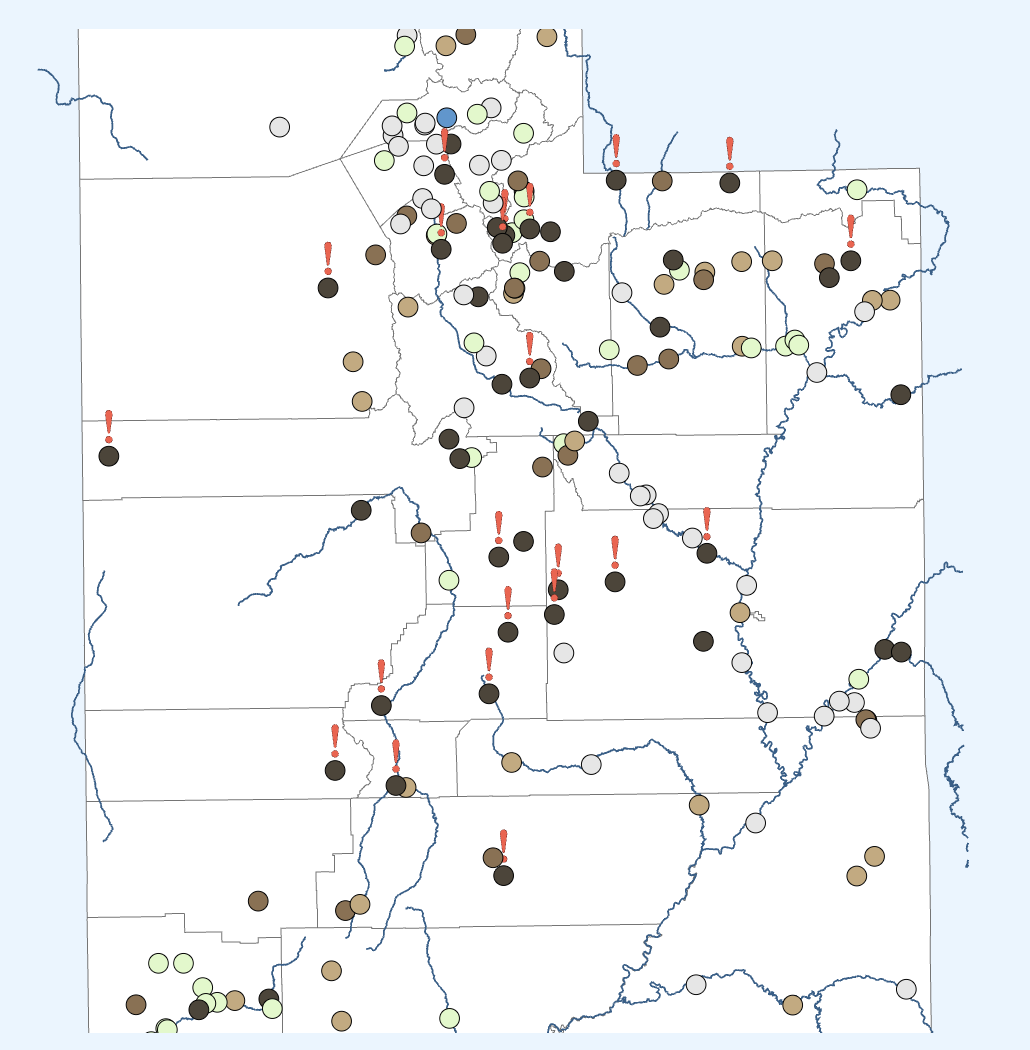
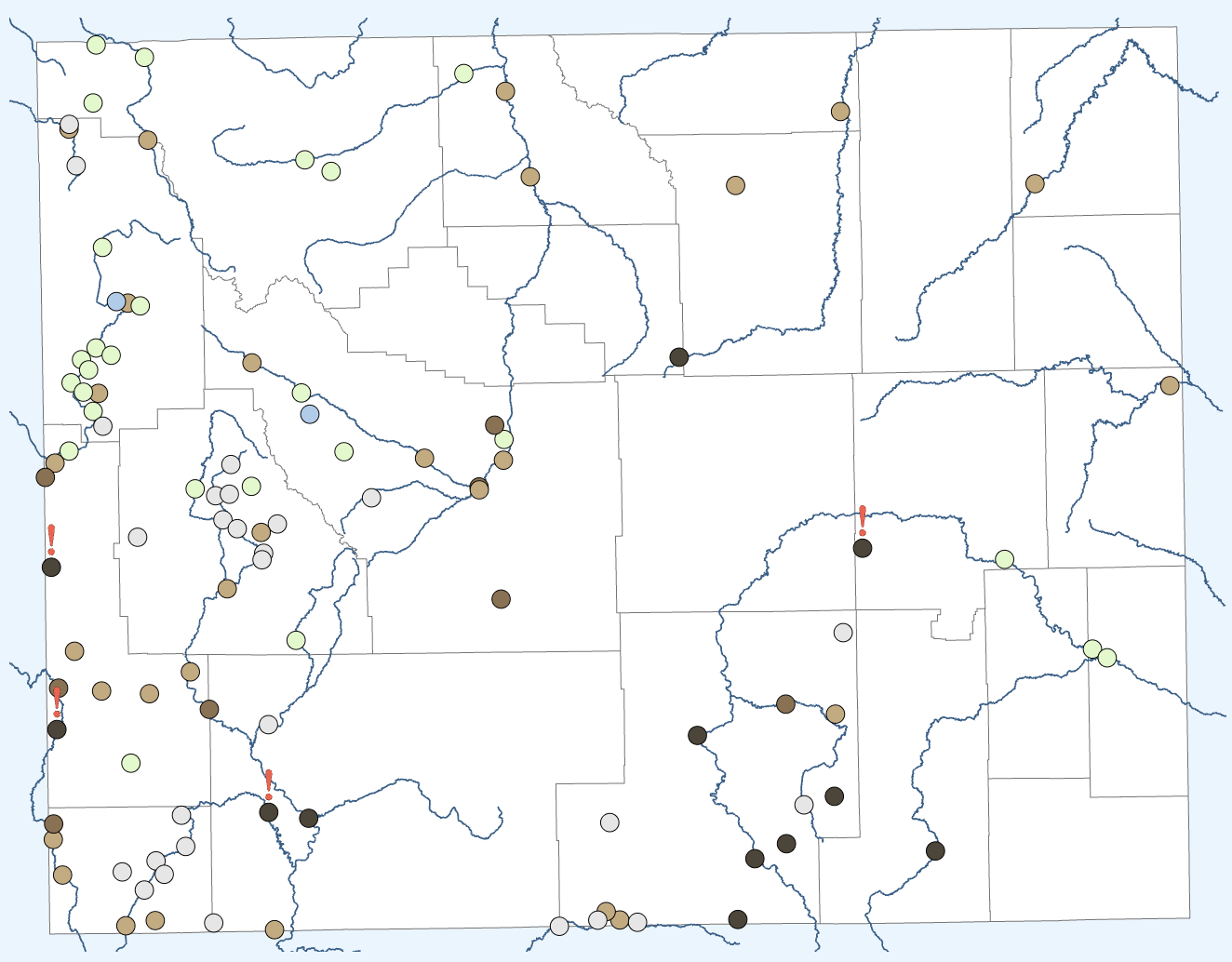
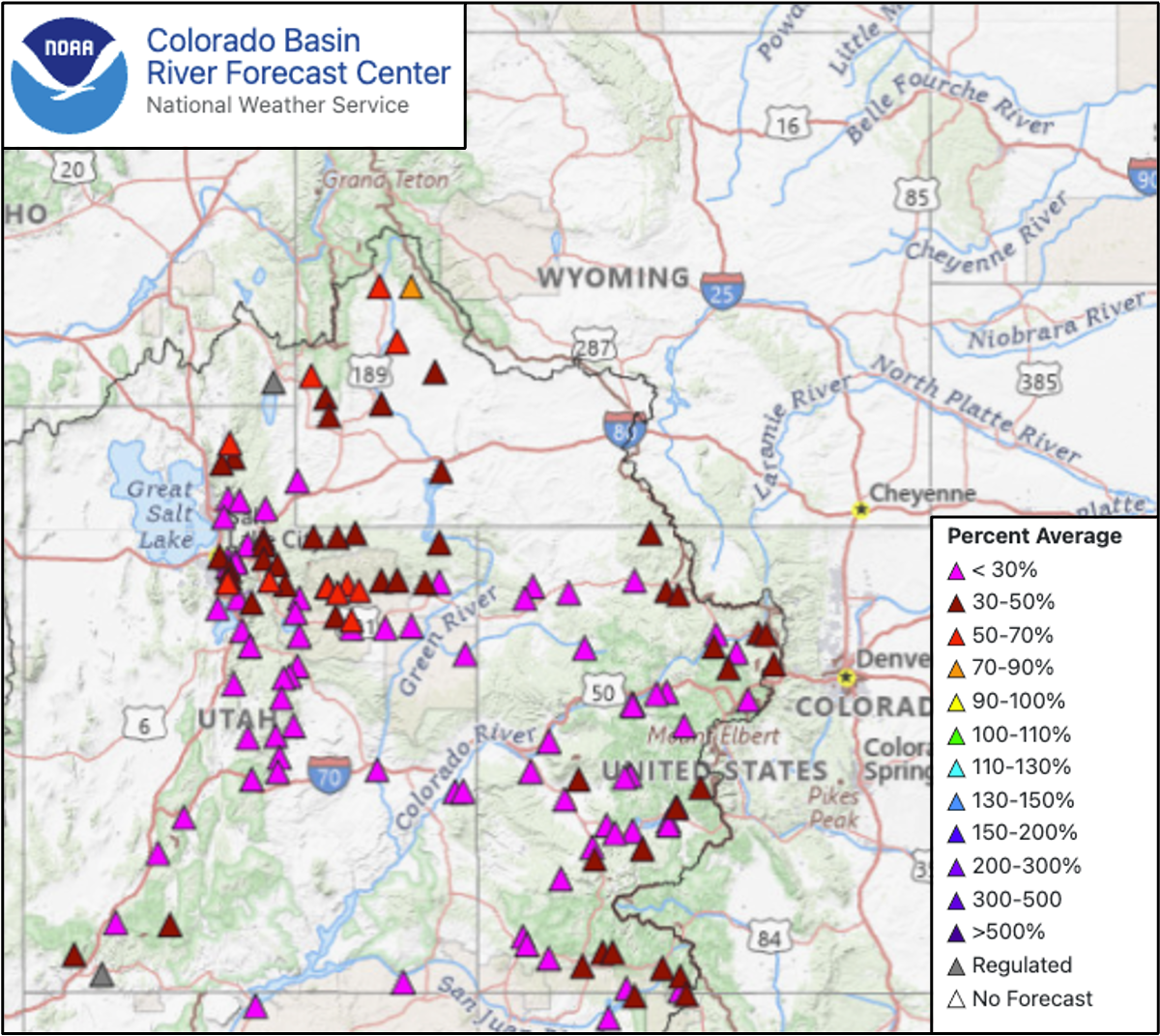
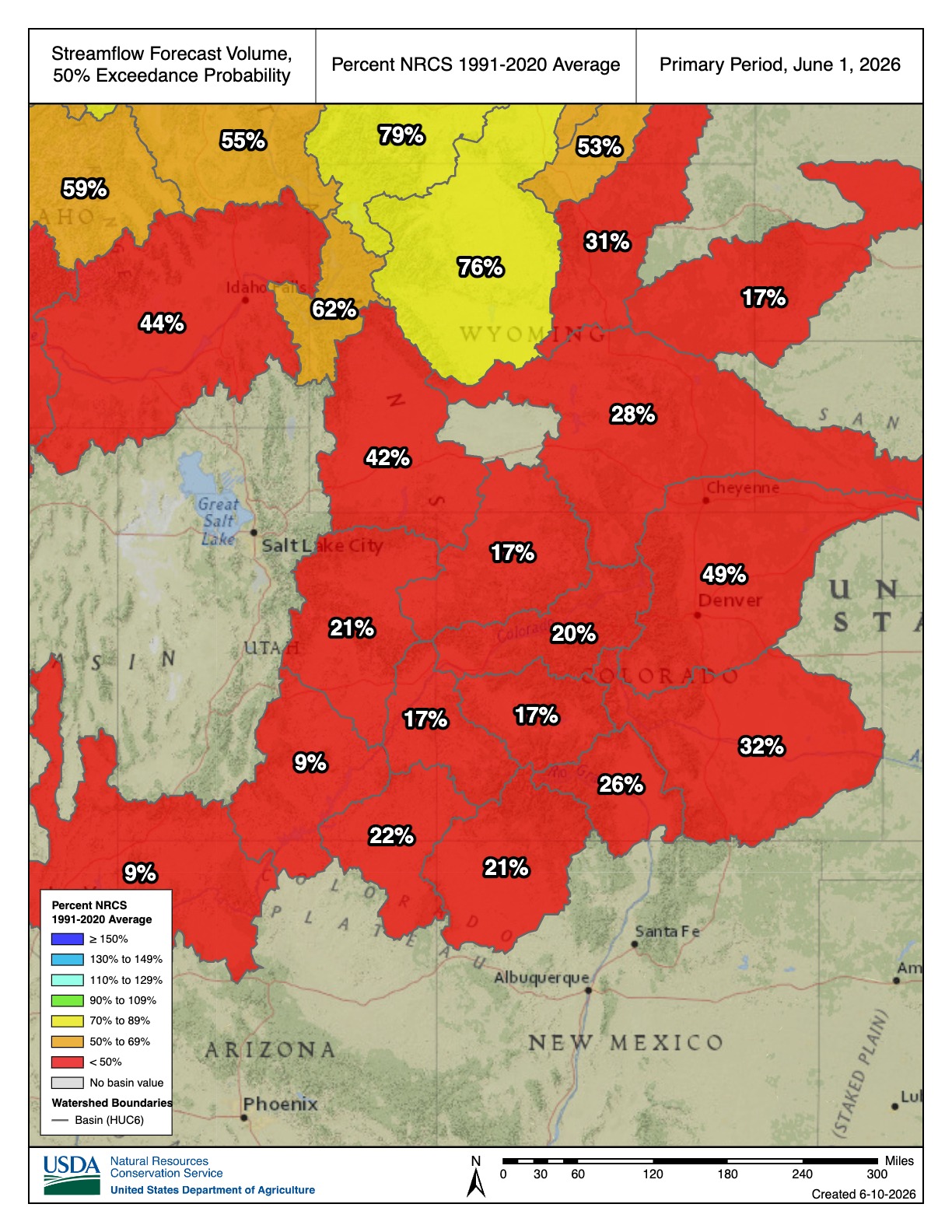
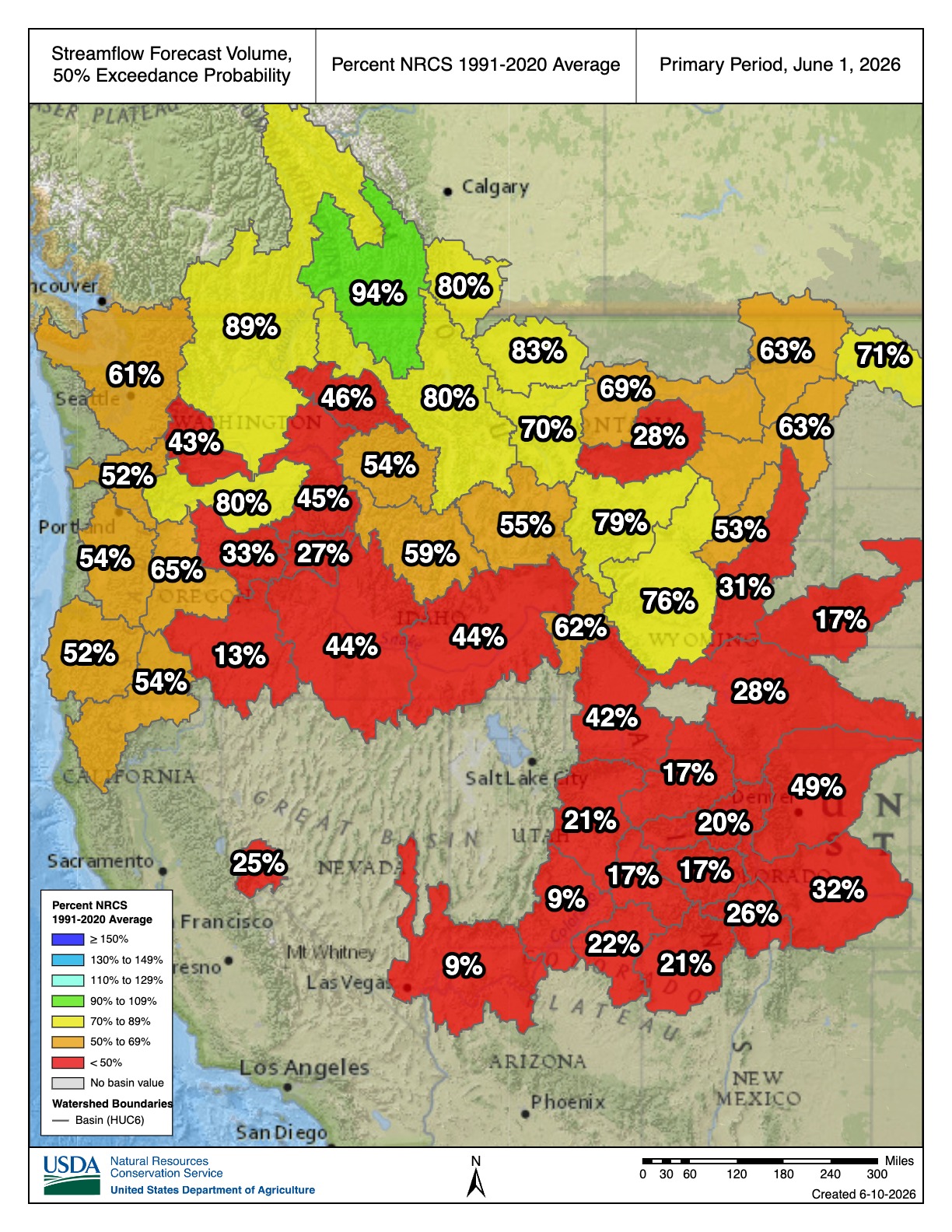
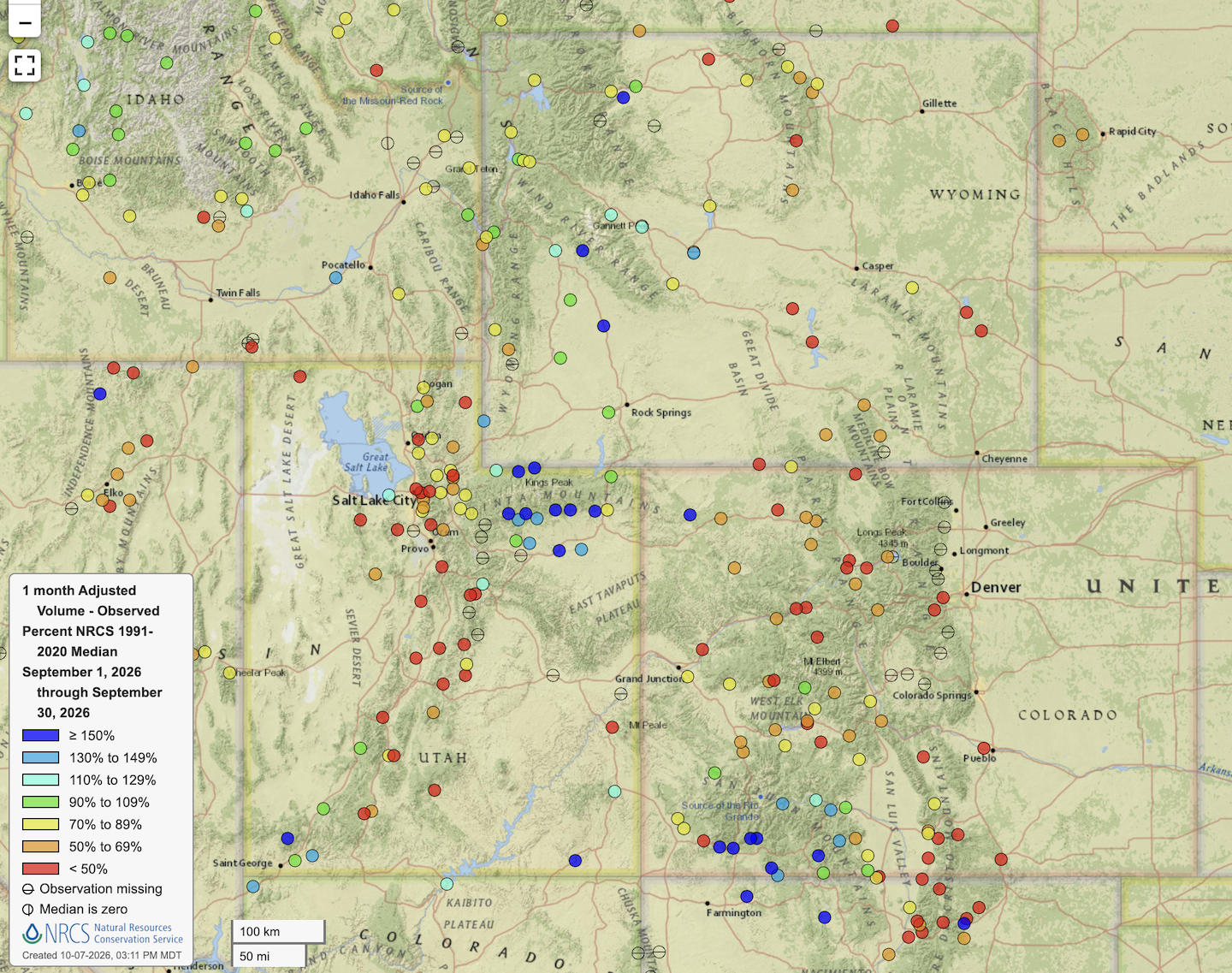
Regional streamflow during September reflected both long-term drought conditions and above average precipitation that fell across some of the region. September streamflow volume was less than 70% of median for large areas of Colorado, Utah and eastern Wyoming. Greater than 130% of median streamflow volume was observed in the Virgin River basin, rivers flowing out of the Uinta Mountains in Utah, rivers flowing from the San Juan Mountains in Colorado and in the Upper Green River basin.
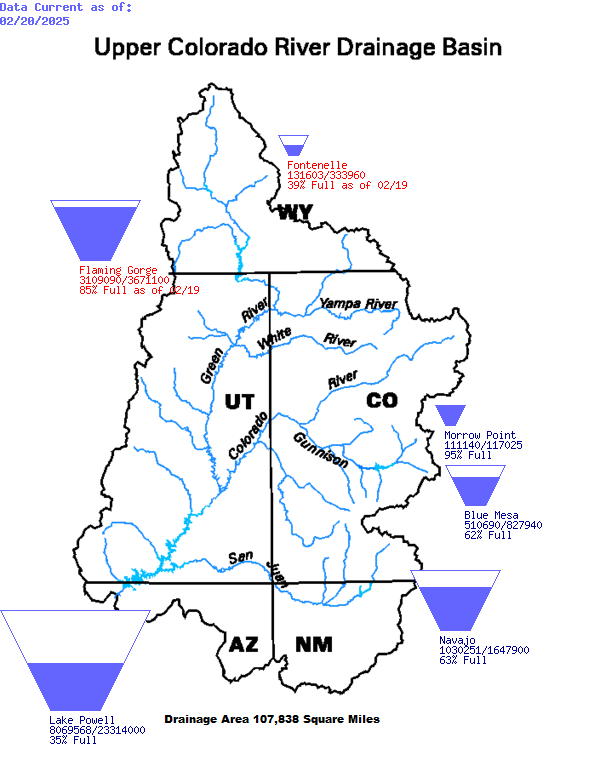
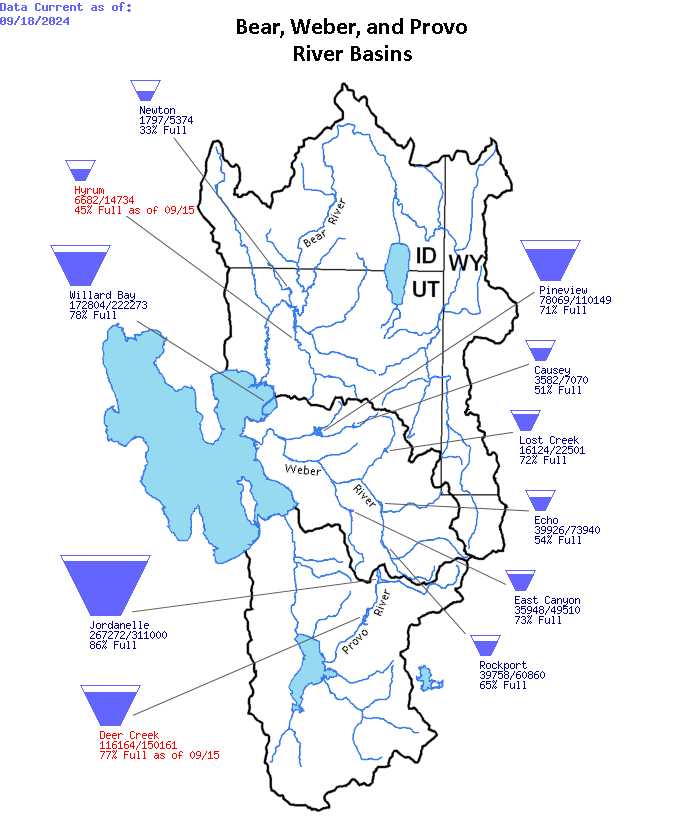
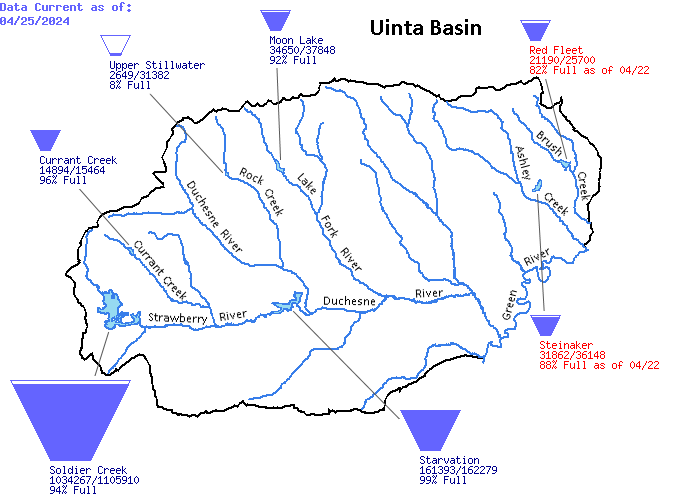
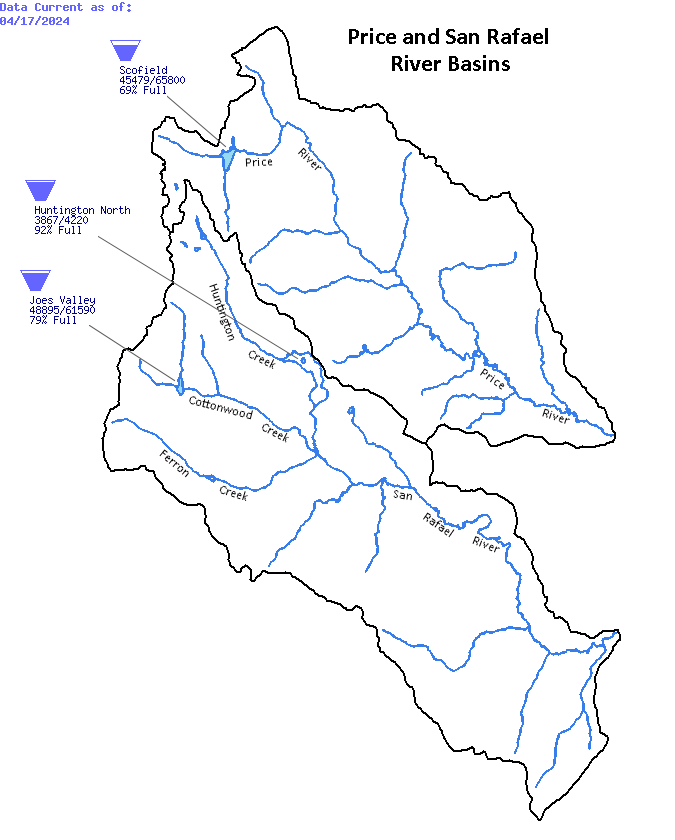
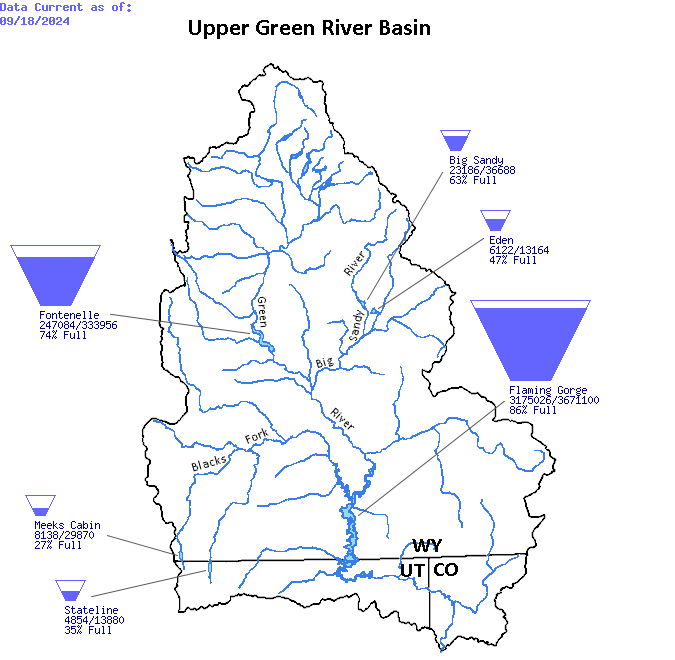
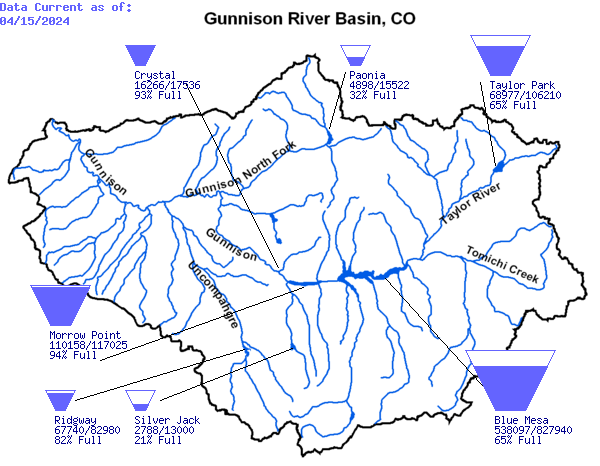
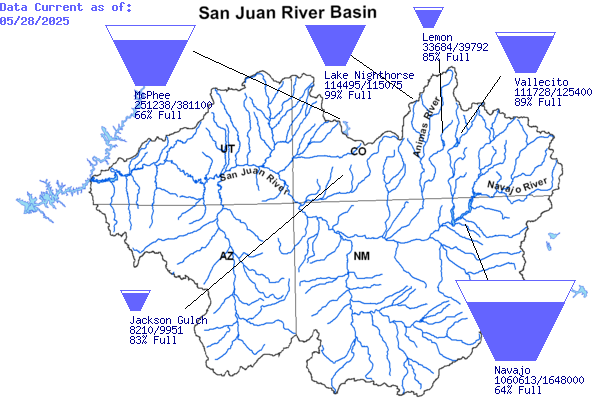
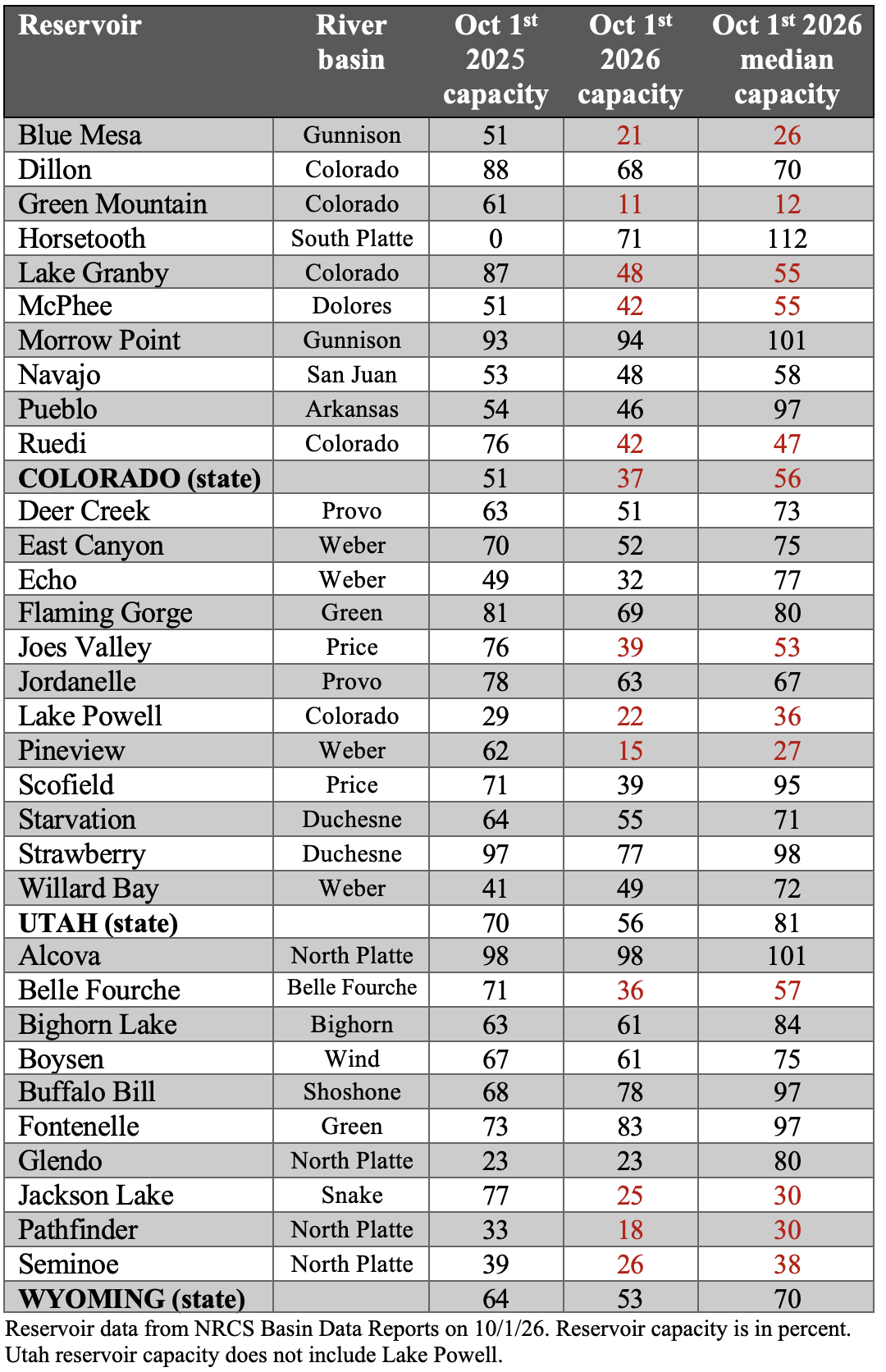
Storage in most regional reservoirs decreased relative to storage one year ago. On a statewide basis, Colorado’s reservoirs are at 37% of capacity, Utah’s at 56% and Wyoming at 53% of capacity. Of large reservoirs, Blue Mesa and Lake Powell are lowest at 26% and 22% of capacity. A record wet September in parts of the San Juan River basin increased storage in Navajo Reservoir by 60,000 acre-feet (af) and in Lake Powell by 130,000 af. Interestingly, the 2.4-foot increase in Lake Powell elevation during September was greater than the 1.9-foot increase in Lake Powell elevation due to 2026 snowmelt runoff.
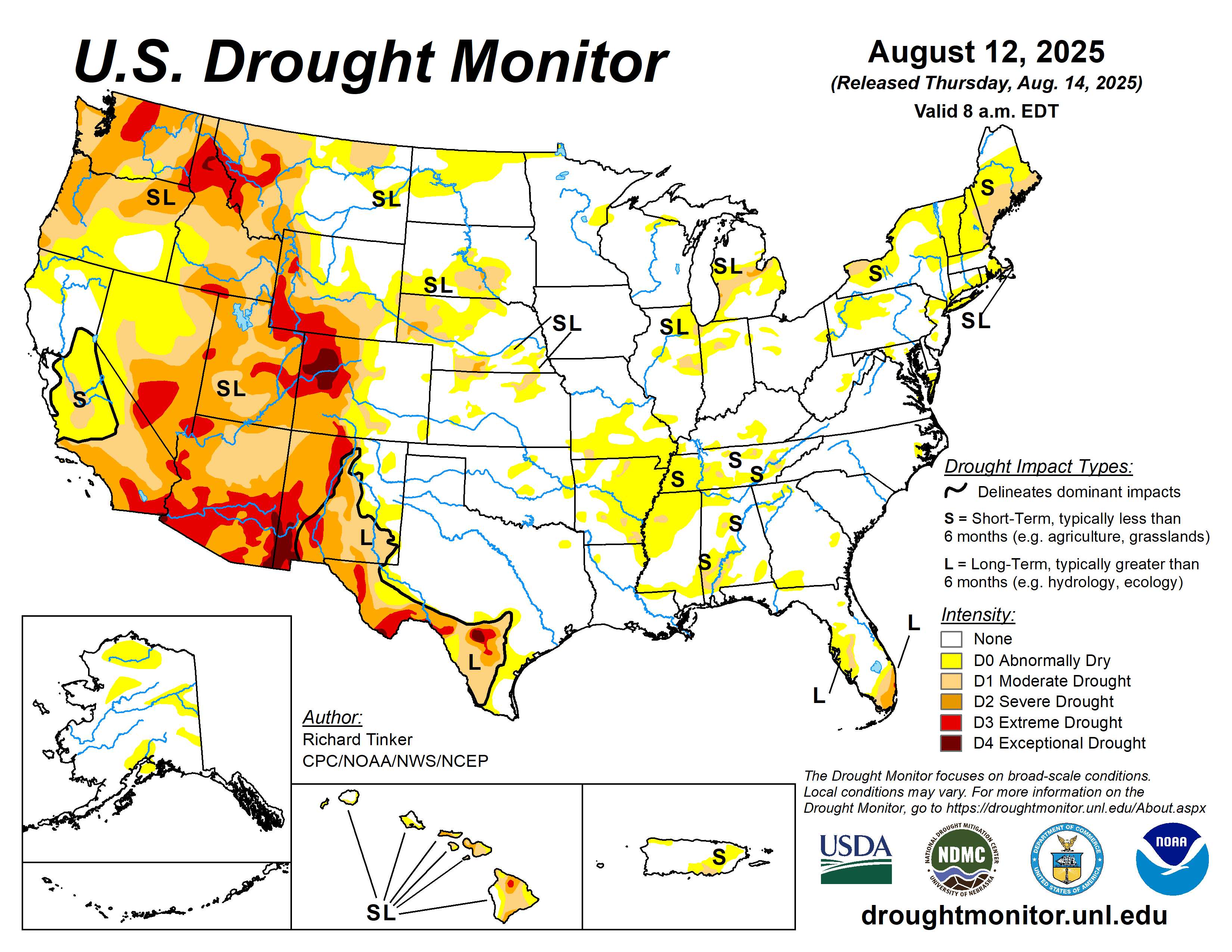
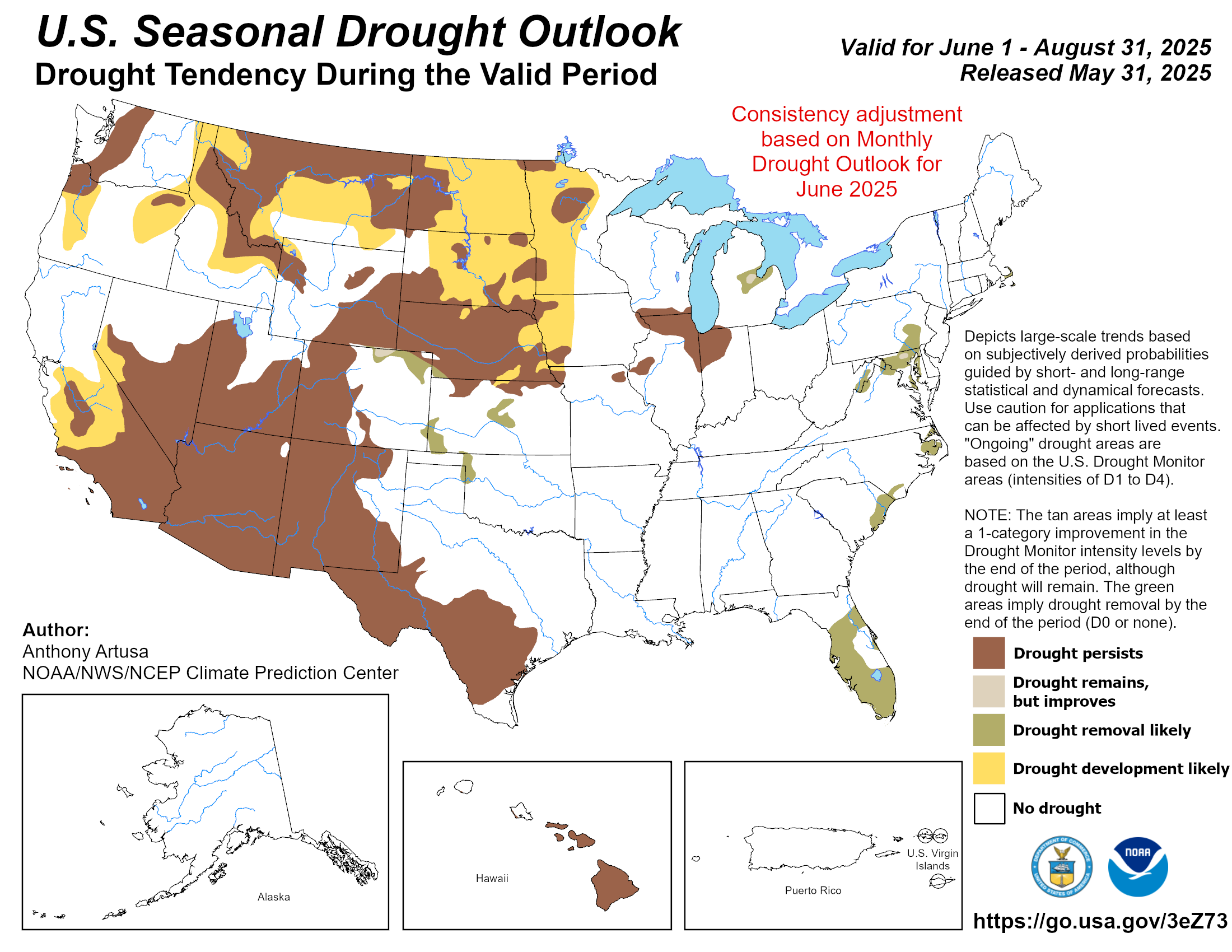
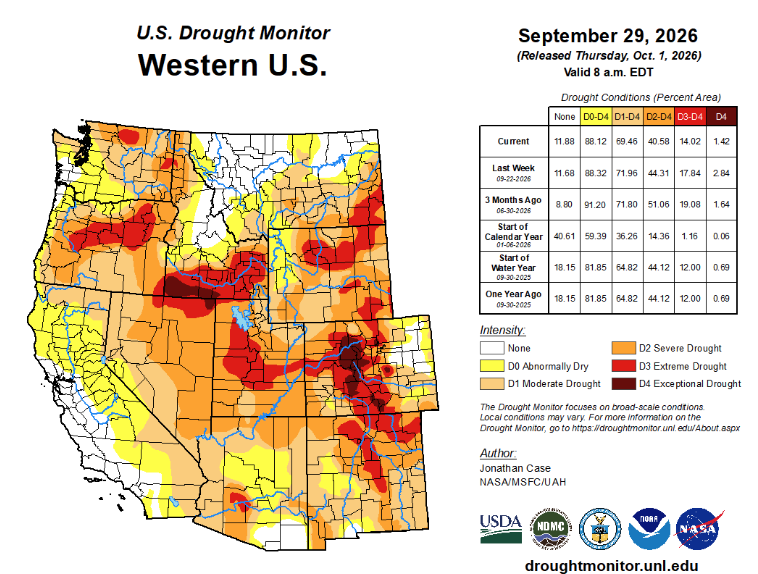
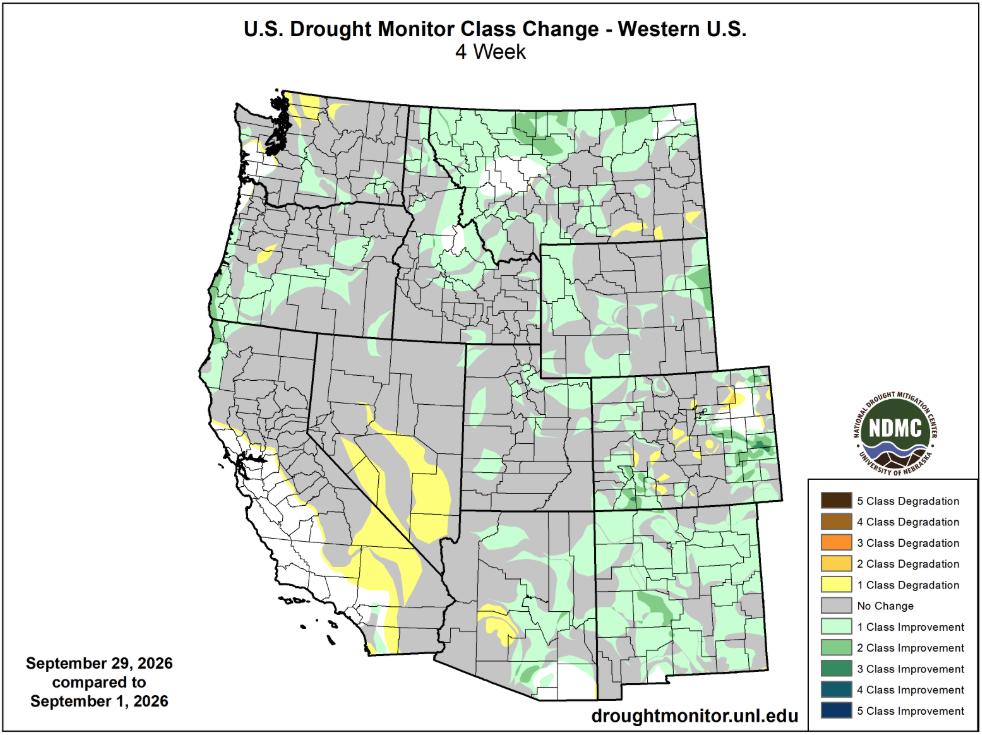
Regional drought extent decreased from 96% coverage of Colorado, Utah and Wyoming to 90% coverage during September. September rainfall removed drought from a small portion of southwestern and southeastern Colorado and northwestern Wyoming. In eastern Colorado, drought conditions improved by one to three categories of drought during September. Coverage of extreme and exceptional drought conditions also decreased across all three states during September.
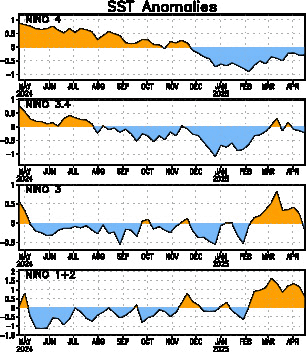
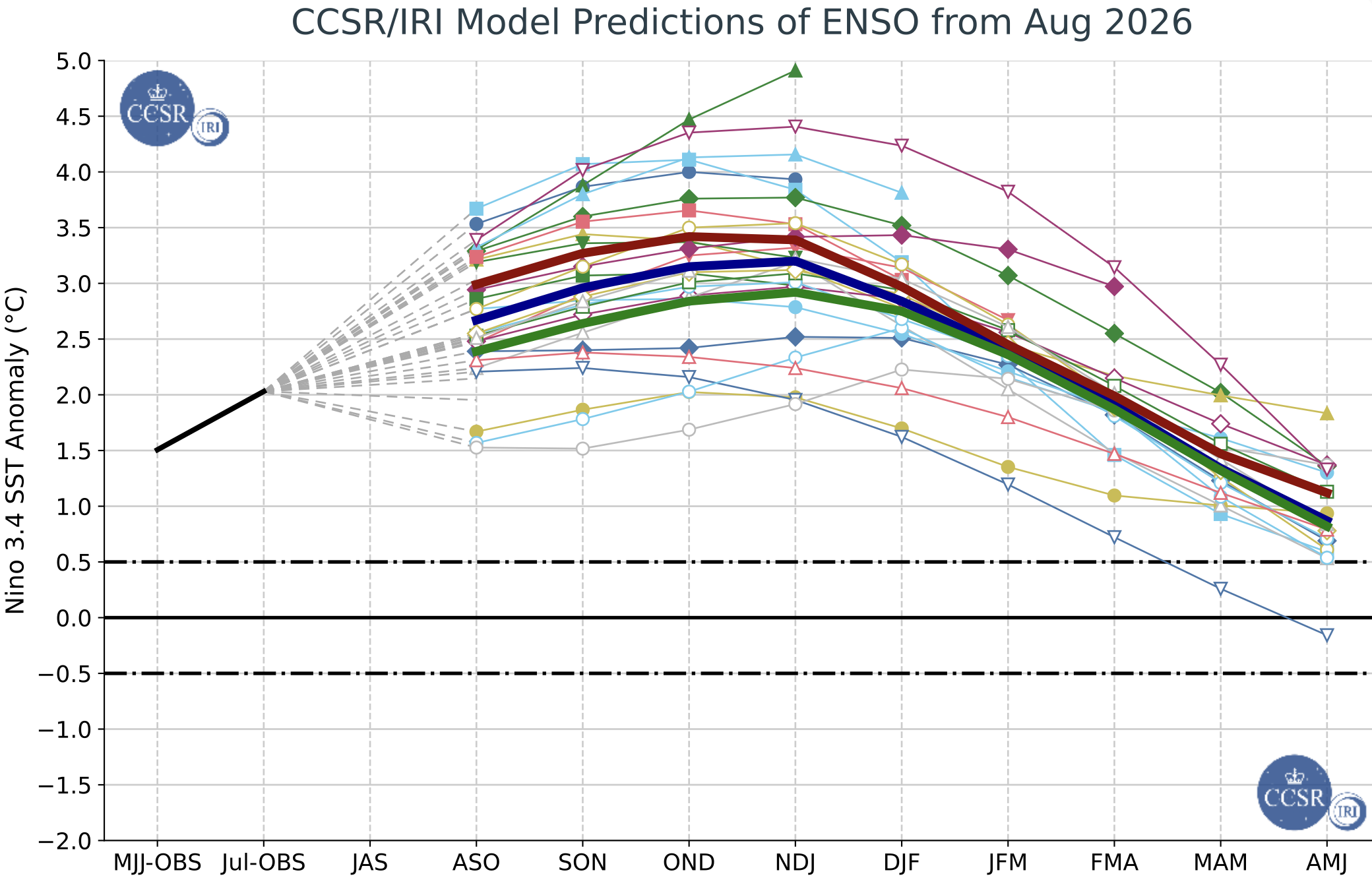
A strong El Niño event is occurring and July-September sea surface temperatures (SST) in the eastern Pacific (Niño3.4) were 2.5ºC above average, already making the event one of the warmest on record. It is very likely that strong El Niño conditions (SST >2ºC above average) continue through early winter and El Niño conditions continue through early summer. Impacts from the strong El Niño are already being felt; Kelvin waves, caused by a switch of trade wind direction caused by strong El Niños, are causing sea level rise of 6 to 18 inches from Peru up the Pacific coast to southern California and down the coast to Chile.
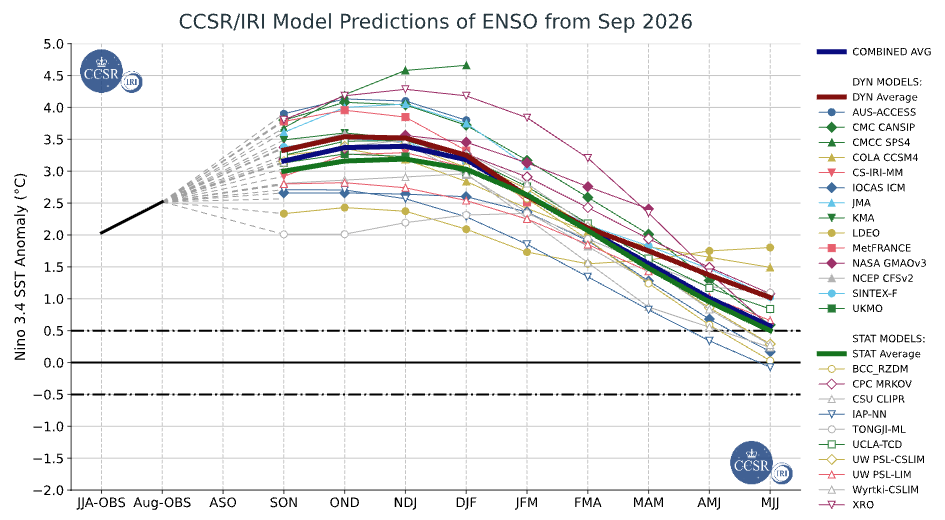
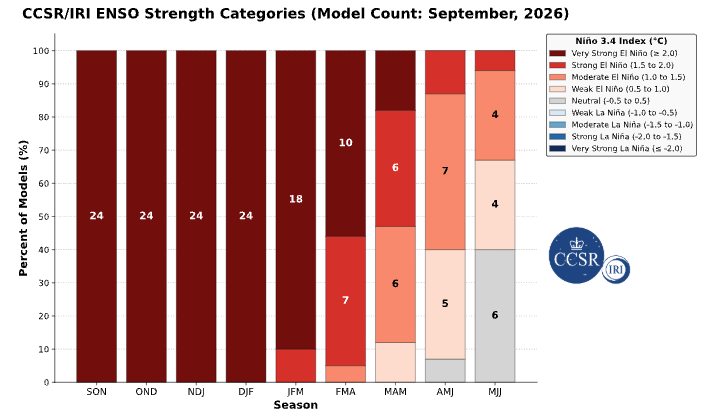
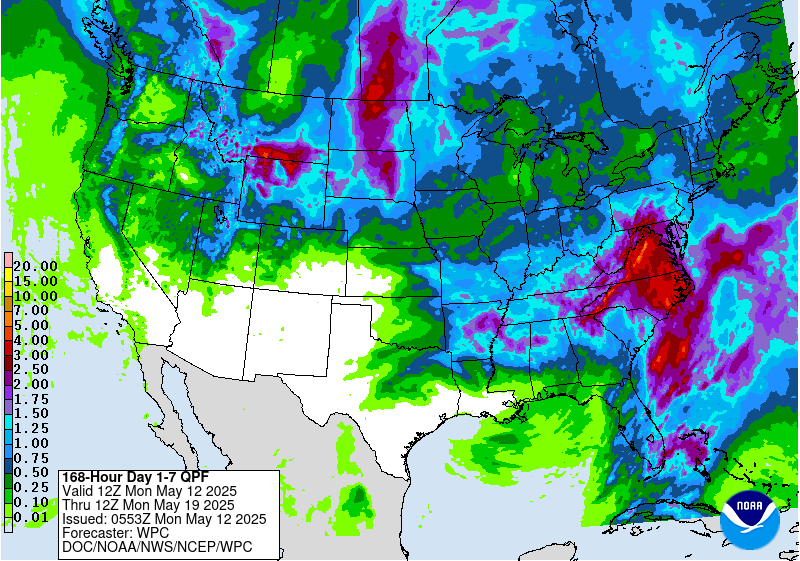
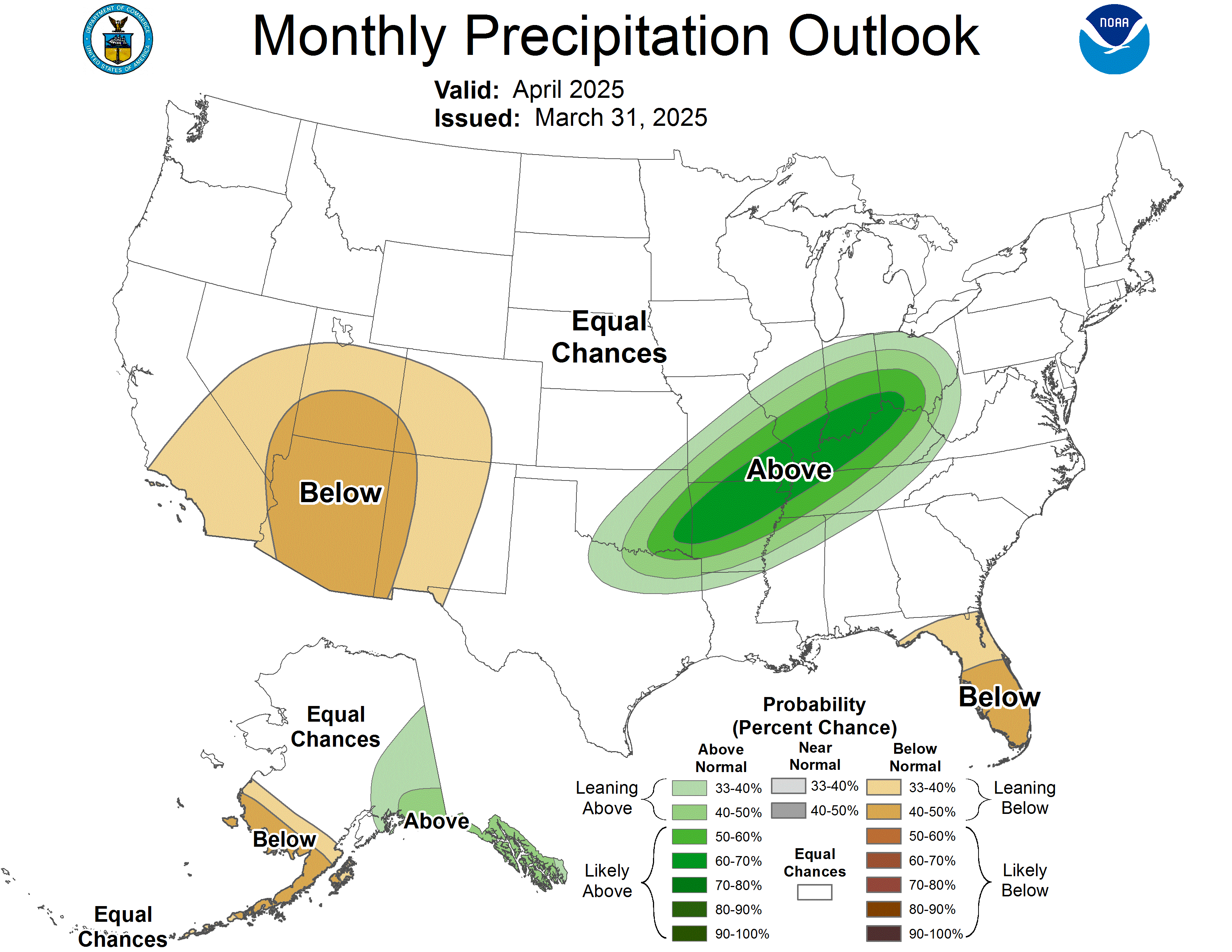
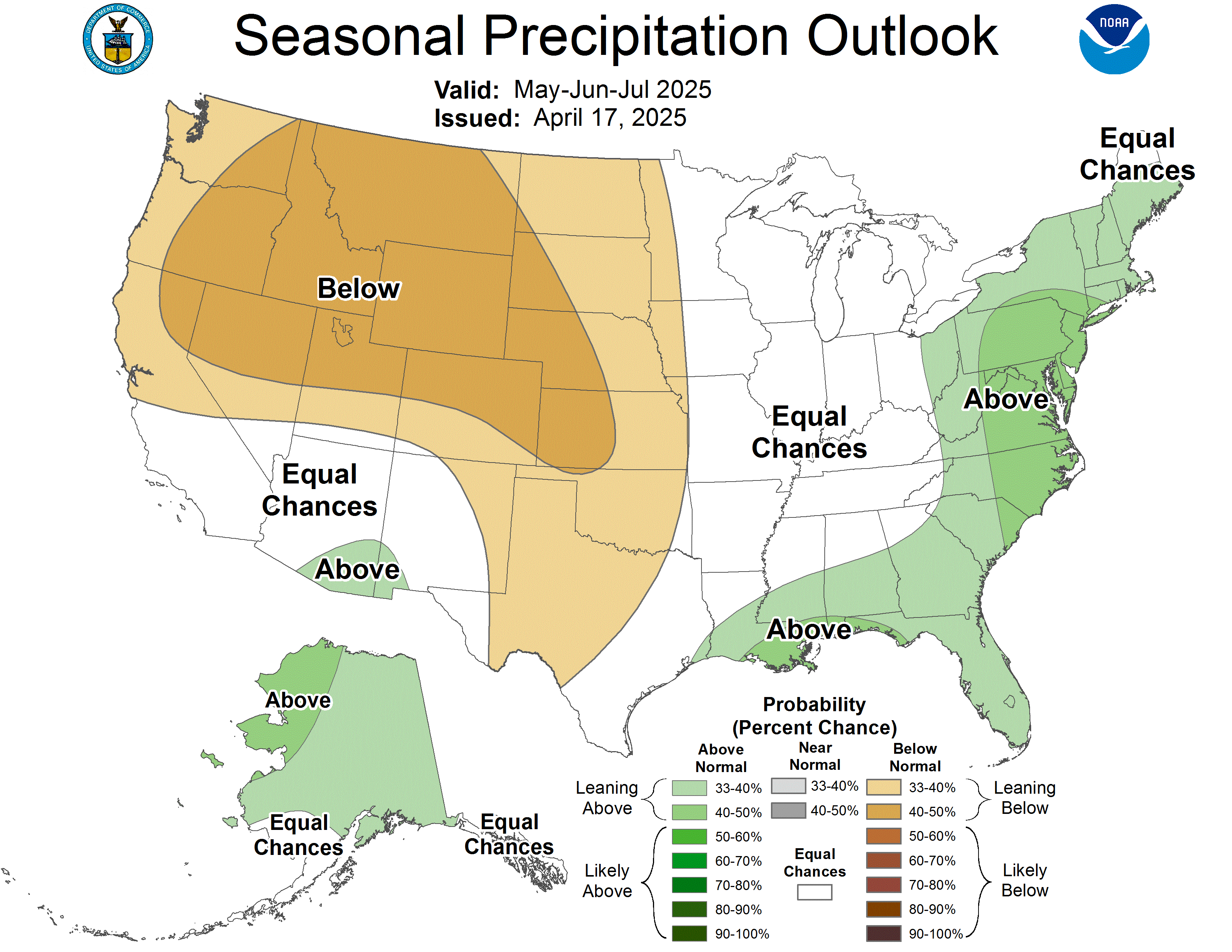
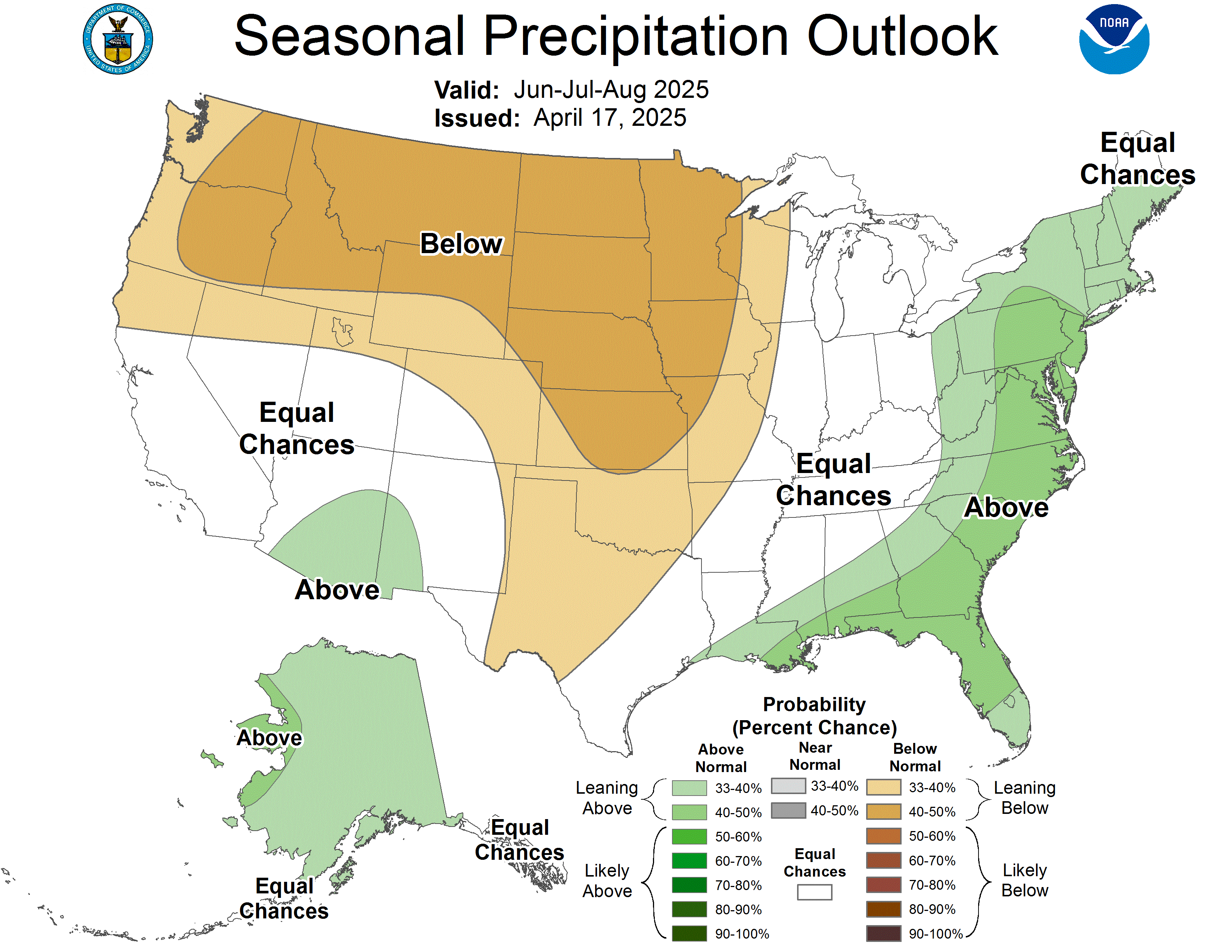
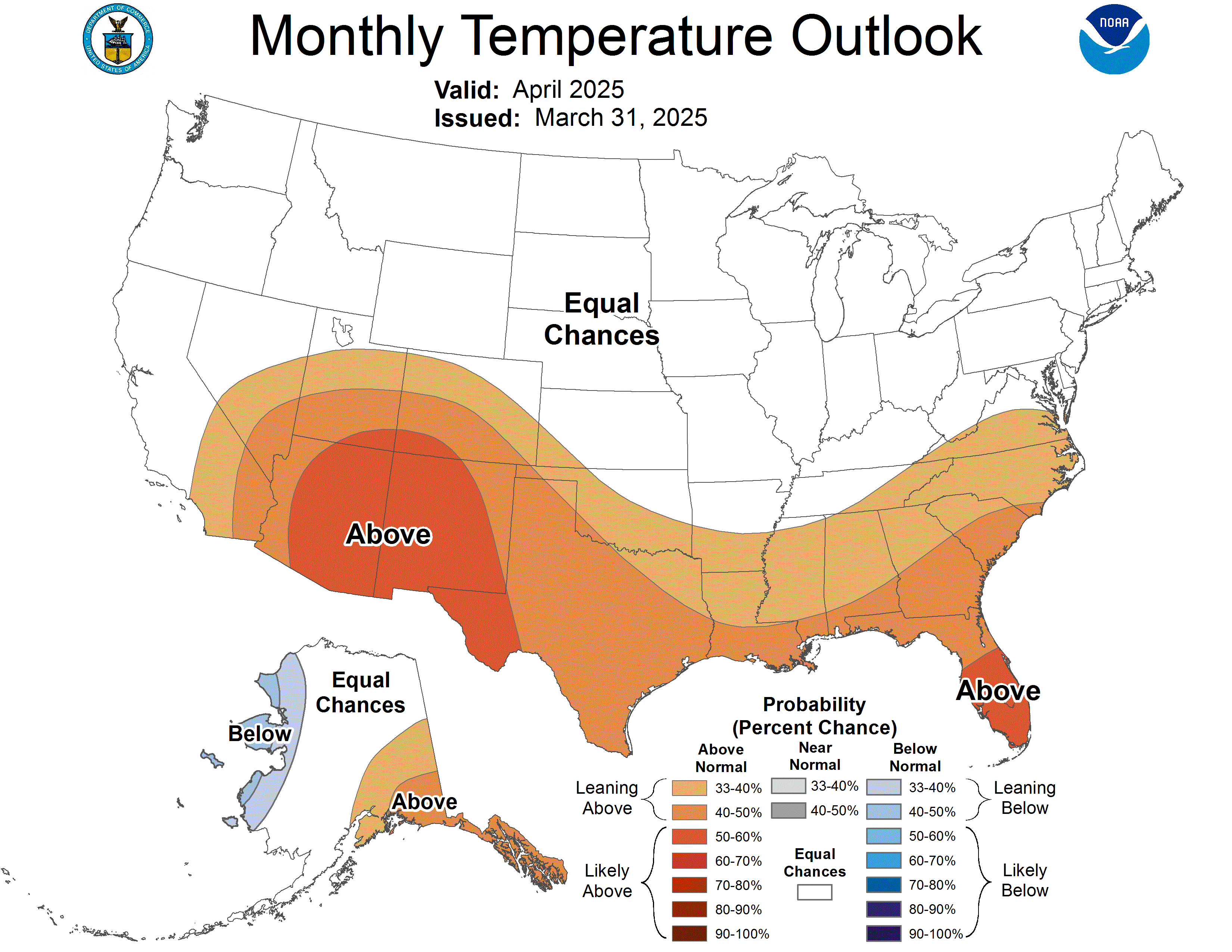
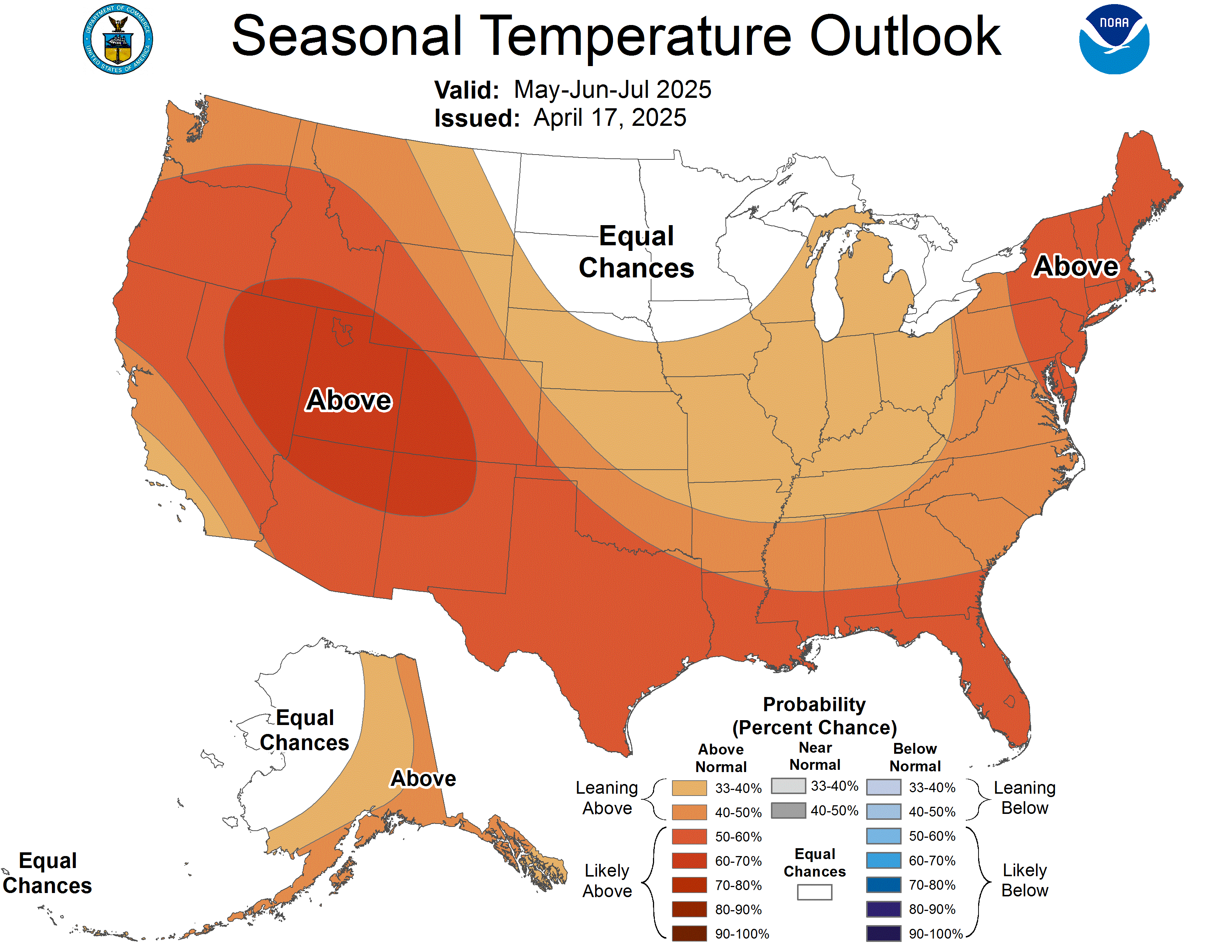
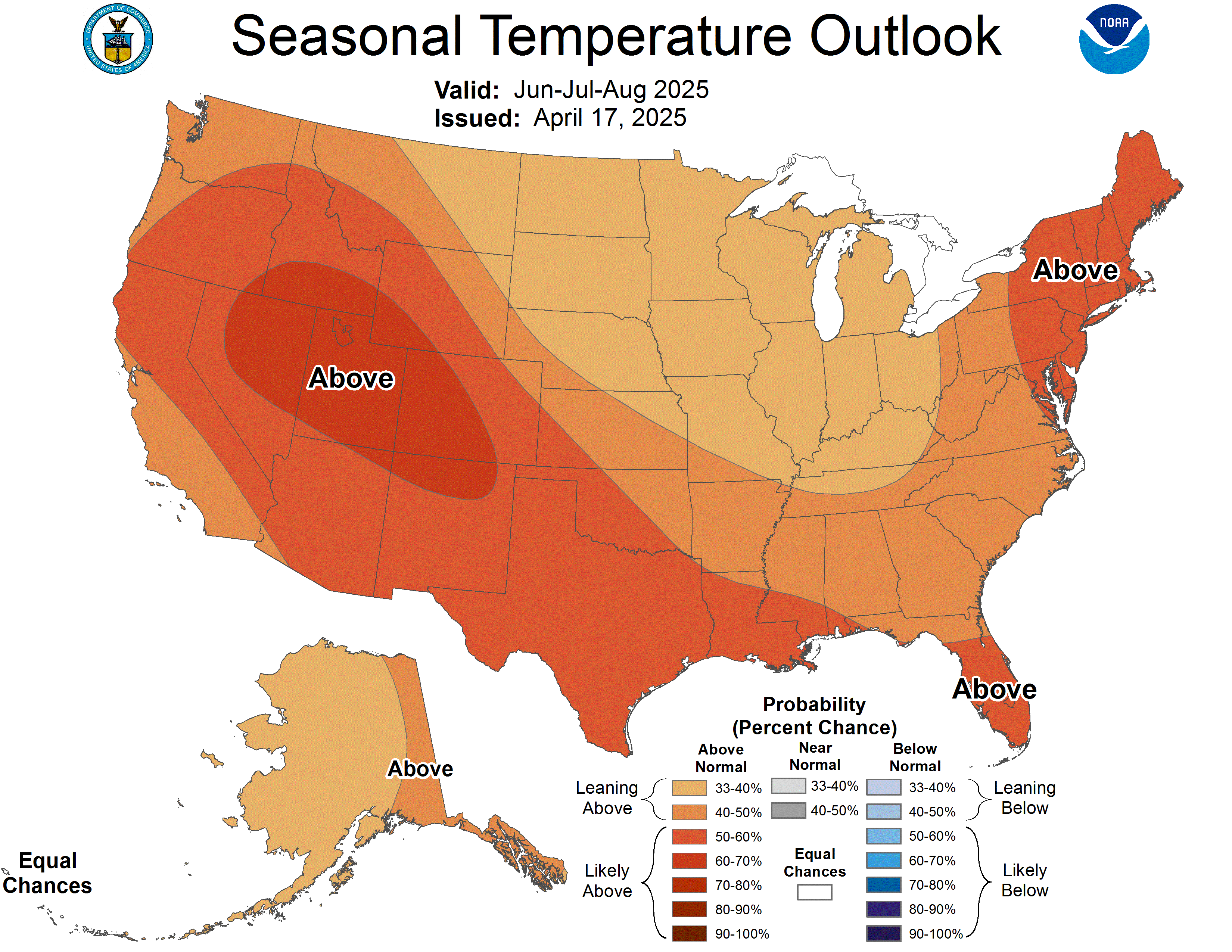
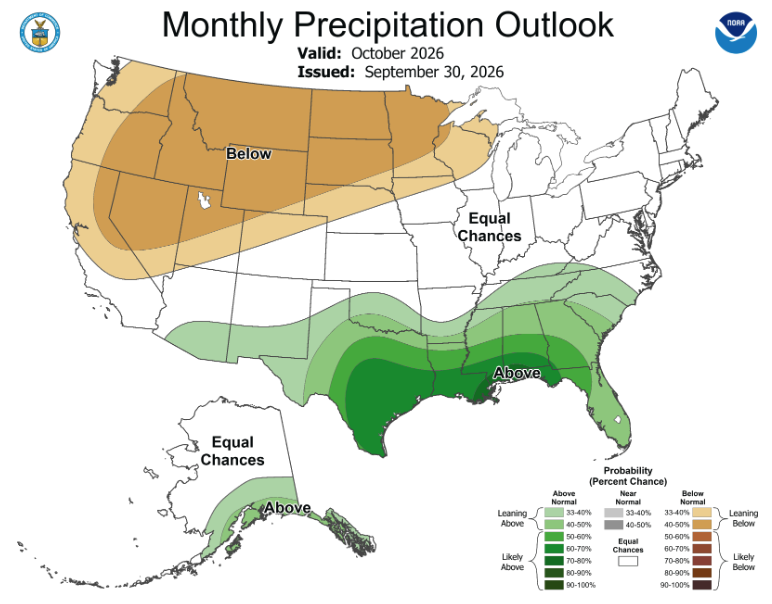
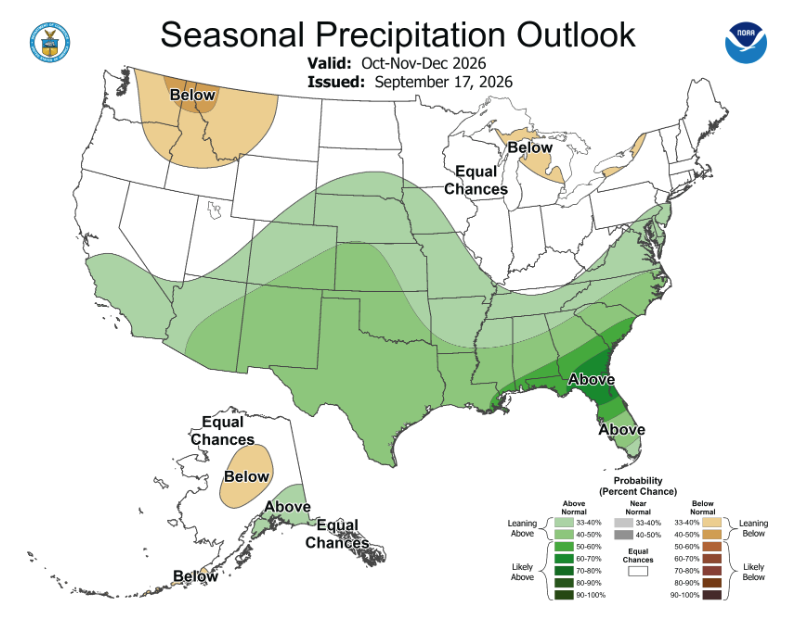
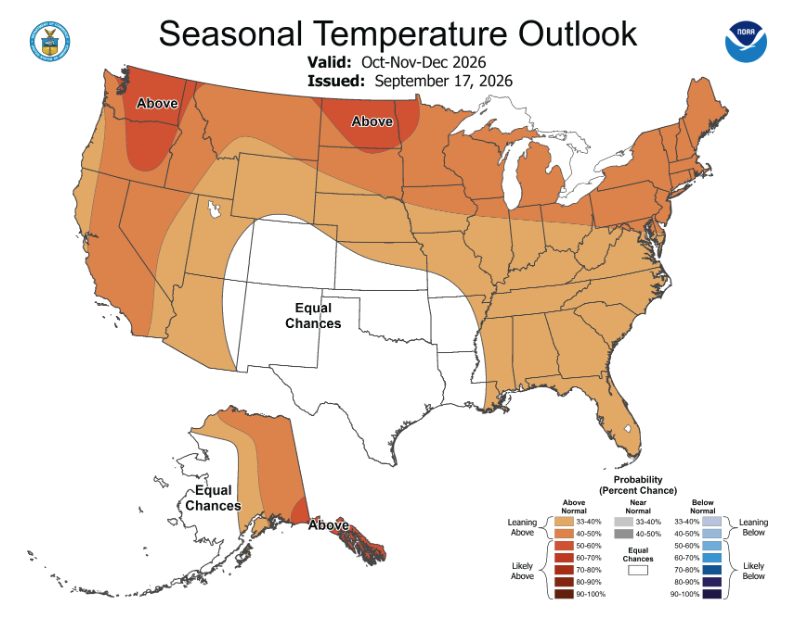
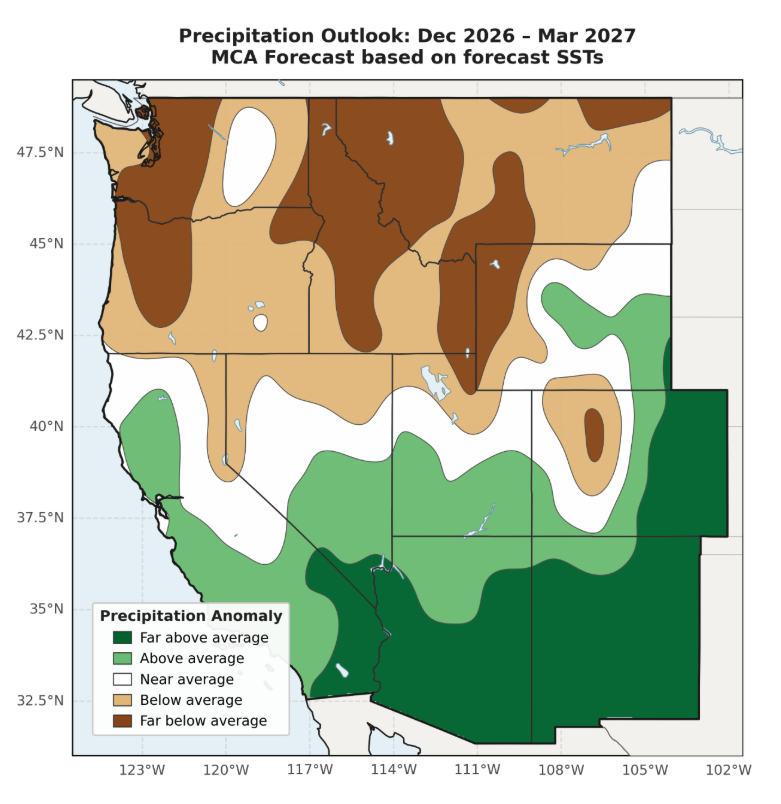
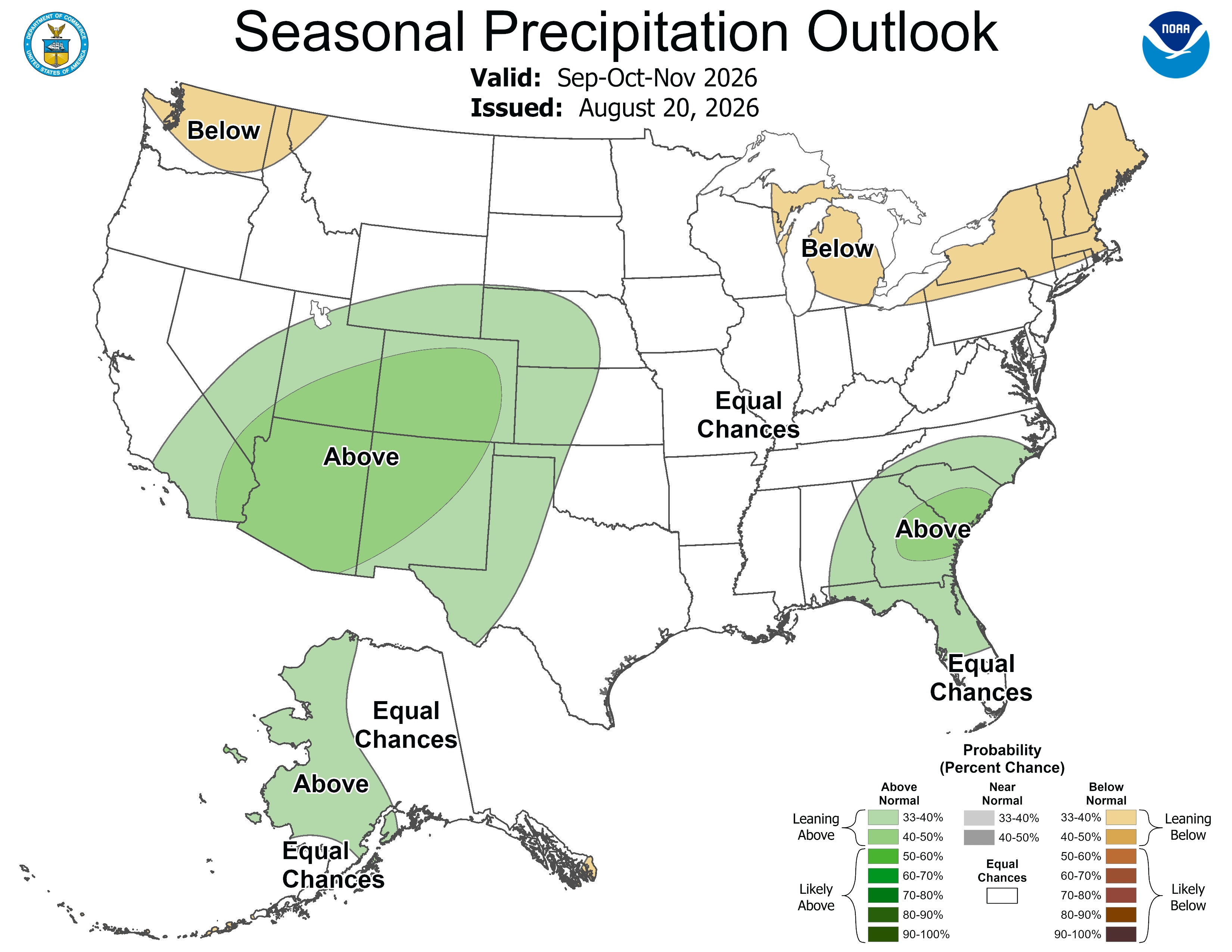
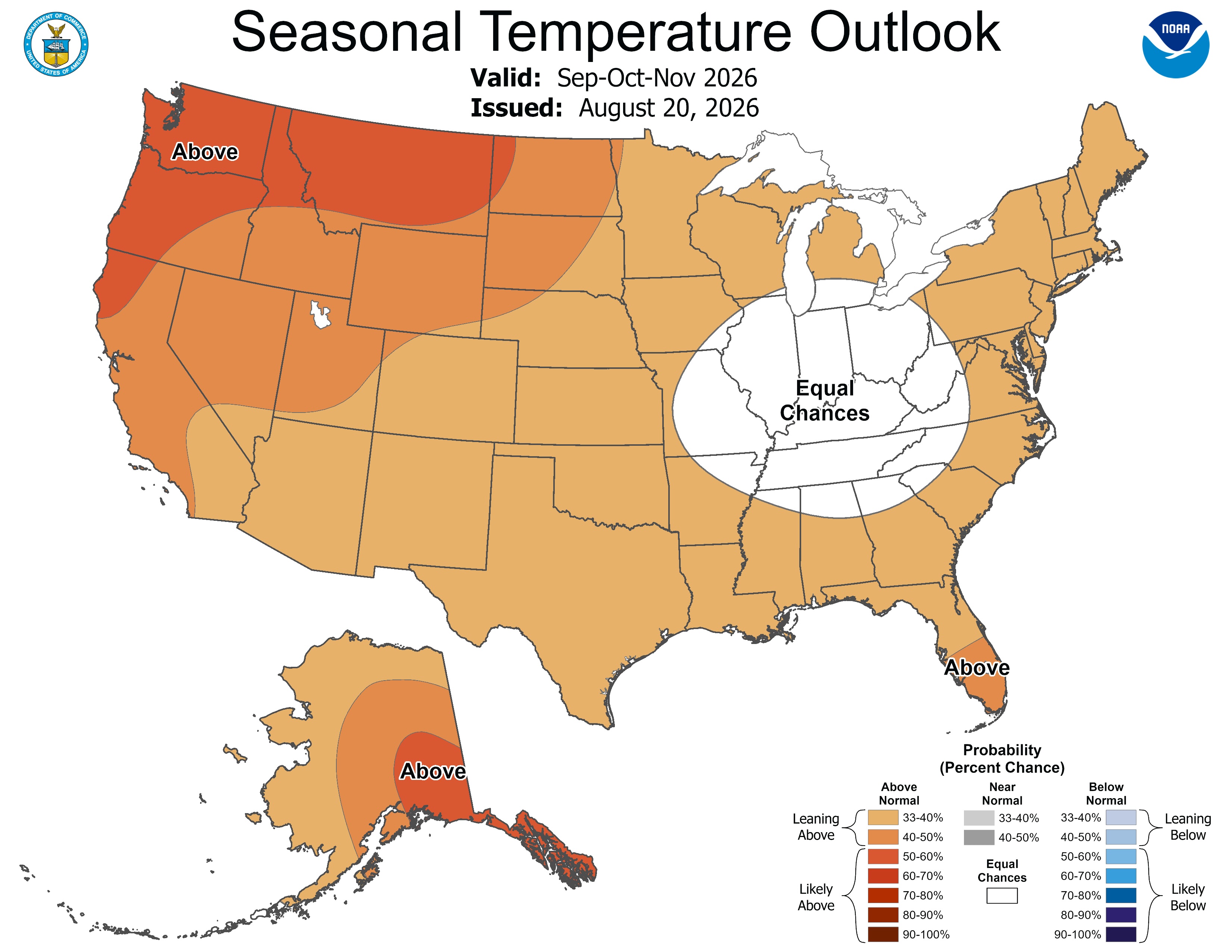
Seasonal forecasts for precipitation and temperature in 2026-2027 are strongly influenced by strong El Niño conditions. NOAA seasonal forecasts for precipitation suggest and increased probability for below average precipitation in October for Utah, Wyoming and northwestern Colorado and suggest an increased probability of above average precipitation in October to December for Colorado, southeastern Utah and southeastern Wyoming. Correspondingly, NOAA seasonal forecasts indicate an increase probability of above average temperatures in October through December for Utah and Wyoming. A new experimental winter precipitation forecast that uses both Pacific and Atlantic Ocean temperatures to forecasts December through March precipitation suggests below average winter precipitation in northern Utah and western Wyoming. Above average winter precipitation is forecasted for southern Utah, southeastern Wyoming and a large portion of Colorado.
September 14, 2026 - CO, UT, WY
August precipitation varied across the region due to scattered monsoonal thunderstorms. Regional temperatures were above average in August, and Colorado experienced its warmest August on record, while Utah experienced its second warmest on record. Streamflow conditions were below average for most regional rivers, especially in Colorado and Utah, where many streamflow gages observed record-low daily streamflows. Regional drought coverage changed little from the beginning of August to September and is at 96%. El Niño conditions persist, and there is a greater than 90% probability of a very strong El Niño event during fall and winter 2026-27. NOAA seasonal forecasts indicate an increased probability of above average temperatures for the region, and above average precipitation for Colorado, Utah, and southern Wyoming during September–November.
August precipitation varied across the region, from below average precipitation in southern Colorado, southeastern Utah, and northeastern Wyoming, to above average precipitation in northern and eastern Colorado and much of Utah and Wyoming. Monsoonal thunderstorms caused high variability of precipitation in each state. For example, parts of Emery and adjacent Wayne counties in southeastern Utah experienced below 25% of average conditions, while most counties north and west of there experienced above 150–200% of average conditions.

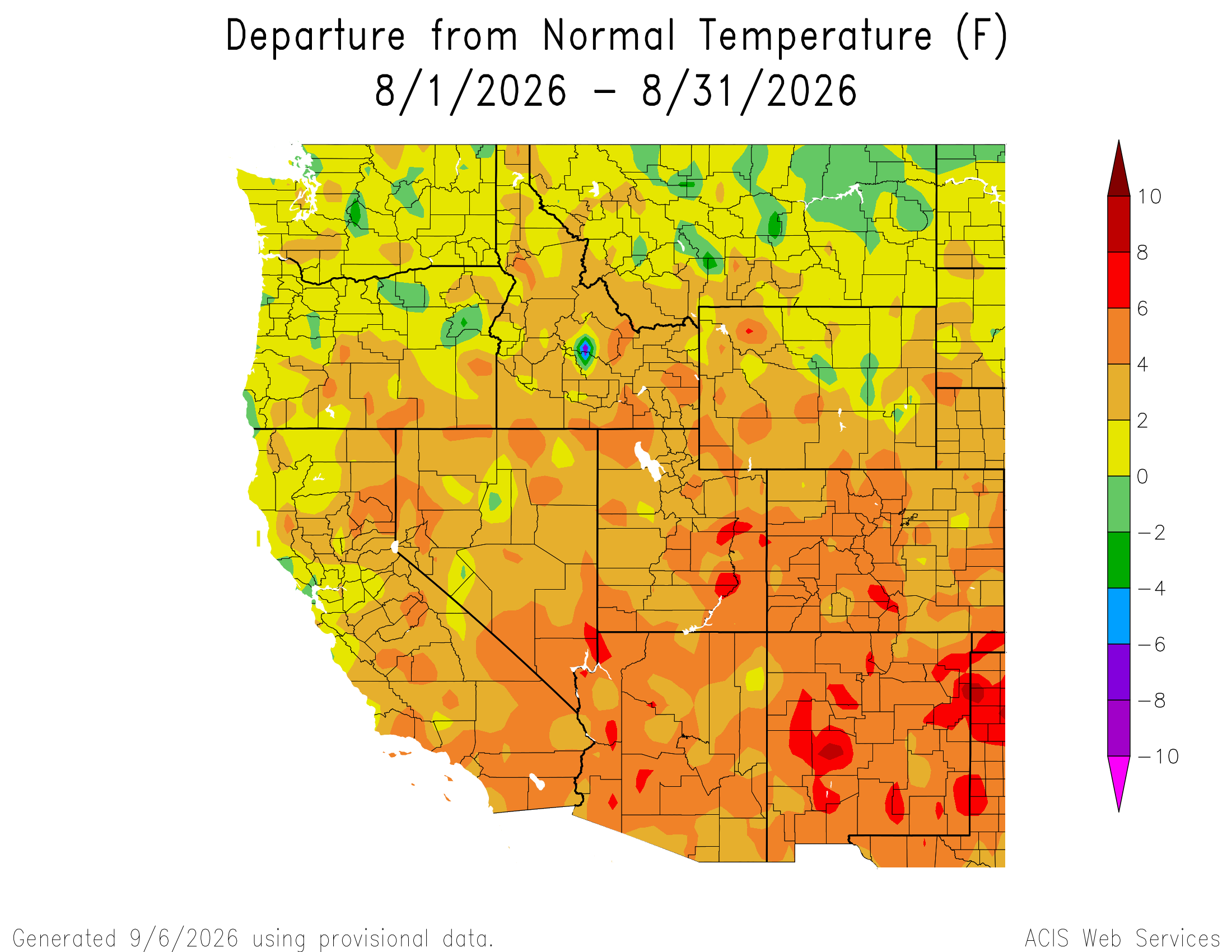
Regional temperatures were above average in August, with near average temperatures in northern Wyoming. August temperatures were generally 2–4°F above average, but temperatures for much of western Colorado and eastern Utah were 4–6°F above average. Small pockets of 6–8°F above average temperatures occurred in south-central Colorado and southeastern Utah. It was the warmest August on record for Colorado, the second warmest on record for Utah, and the seventh warmest on record for Wyoming. It was the warmest meteorological summer (June–August) on record for Colorado and Utah, and the sixth warmest on record for Wyoming.
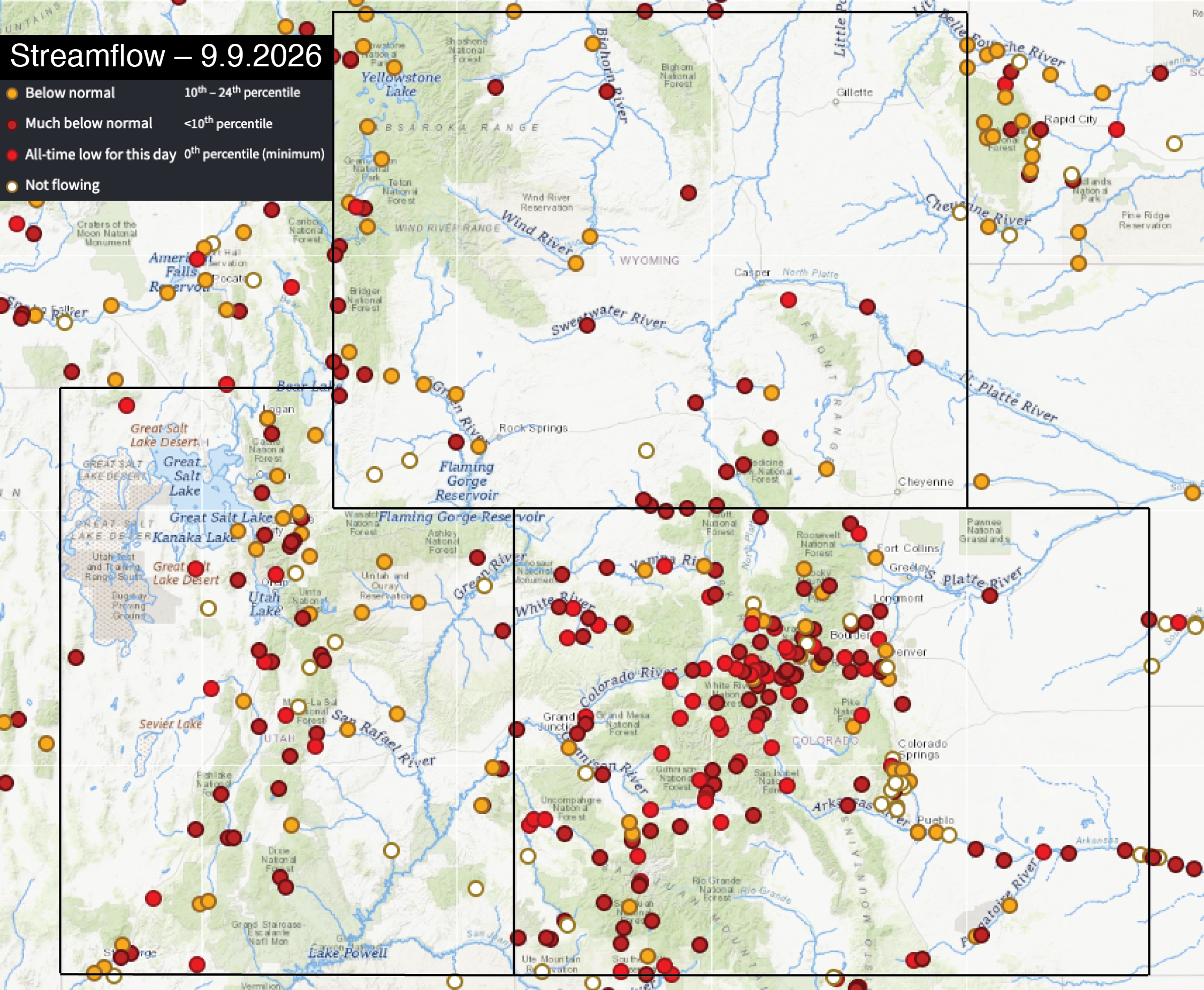
At the beginning of September, streamflow was below average for most regional rivers, especially in Colorado and Utah. On September 9, record-low daily streamflow was recorded at 30 or more sites in Colorado, 10 sites in Utah, and two in Wyoming. Western Colorado streamflows are particularly below average, with most rivers experiencing record-low or bottom 10th percentile daily streamflow observations.
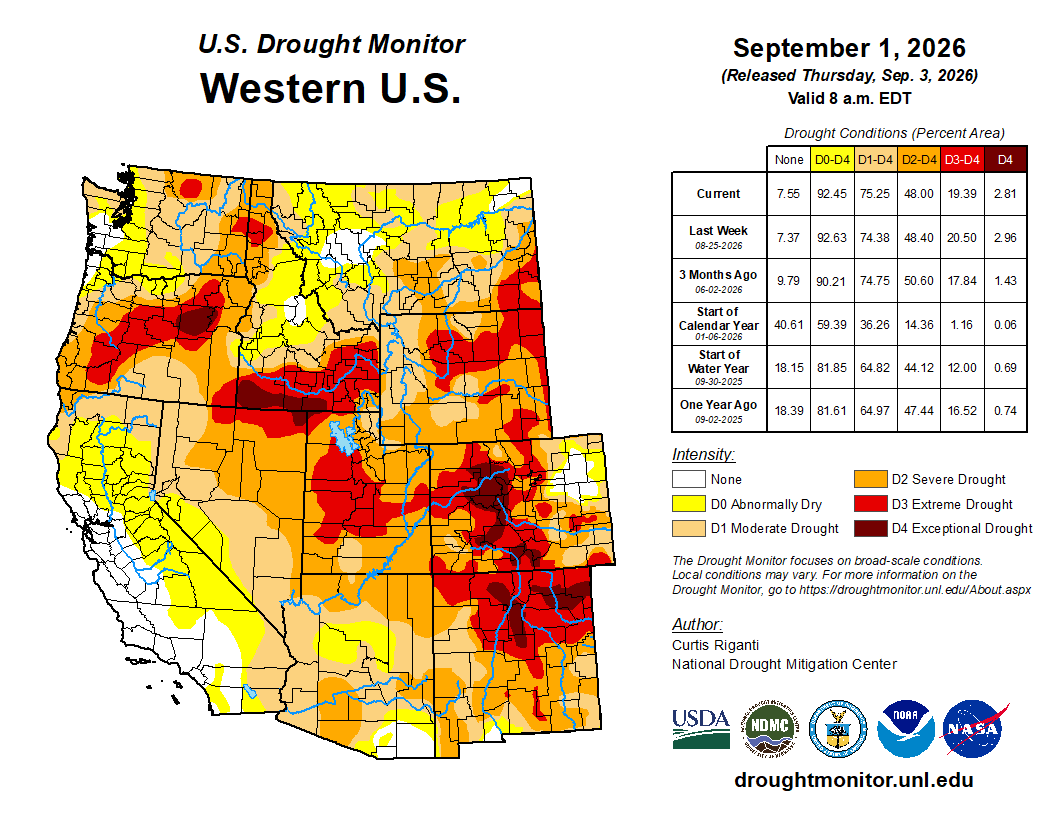
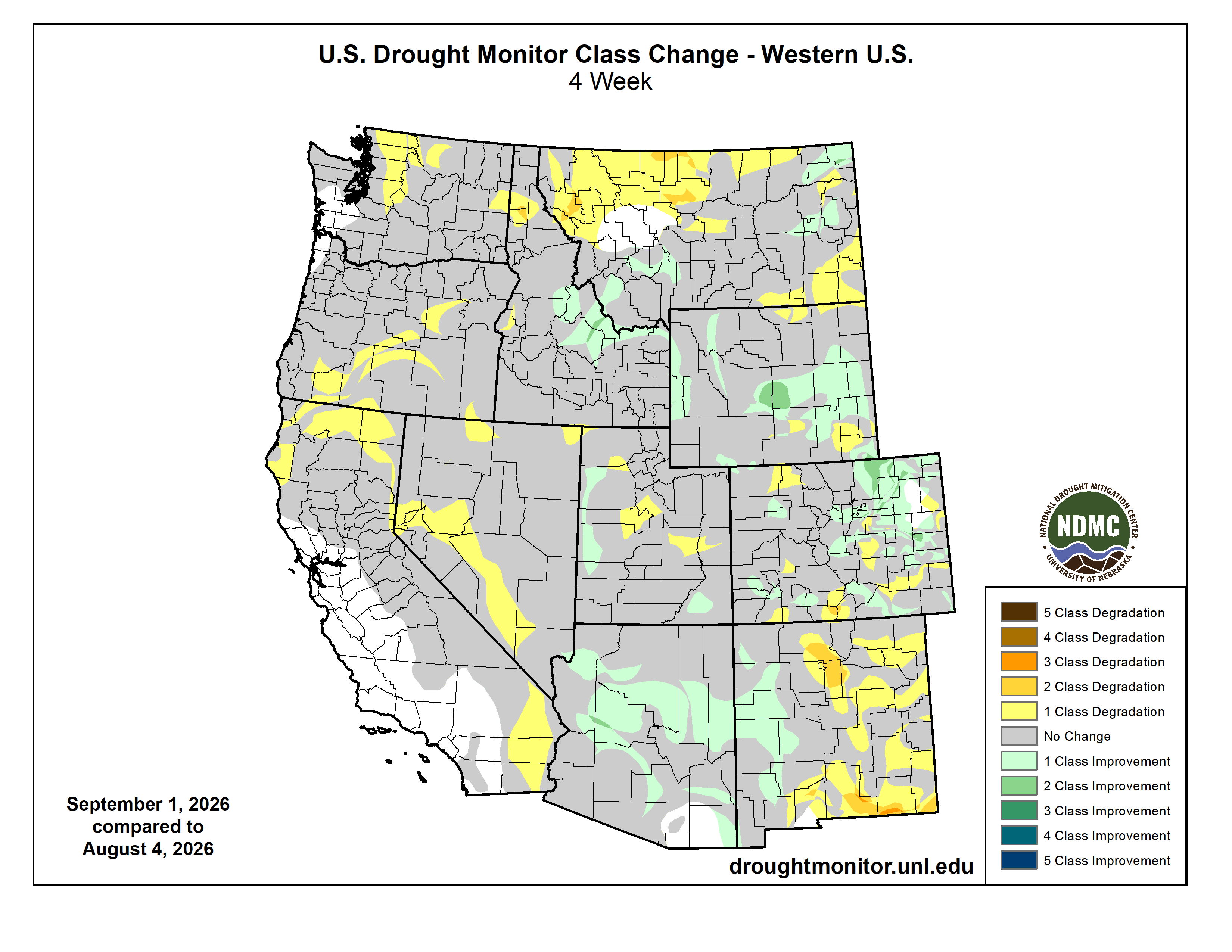
By September 1, regional drought coverage was at 96%. Similar to the beginning of August, drought covered the entire region except for a portion of northeastern Colorado, where monsoonal thunderstorms have continued to help relieve the area of drought conditions. Coverage of moderate (D1) drought conditions decreased slightly to 89% in Colorado, remained at 100% in Utah, and increased slightly in Wyoming to cover 100% of the state. Coverage of exceptional (D4) drought conditions decreased to 12% in Colorado, and extreme (D3) drought conditions remained at 35% in Utah and decreased to 29% in Wyoming, a 15% improvement from the beginning of August.
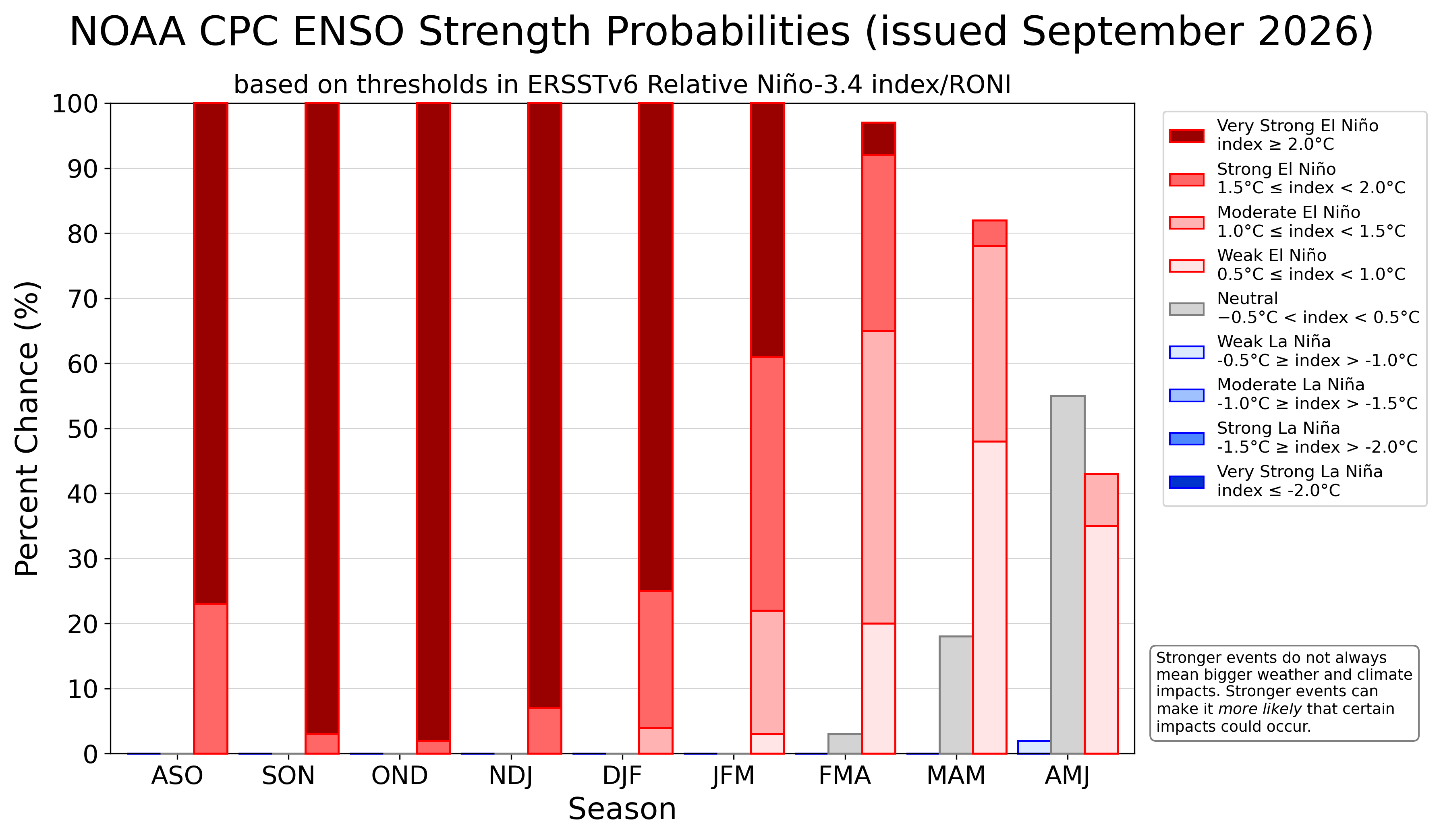
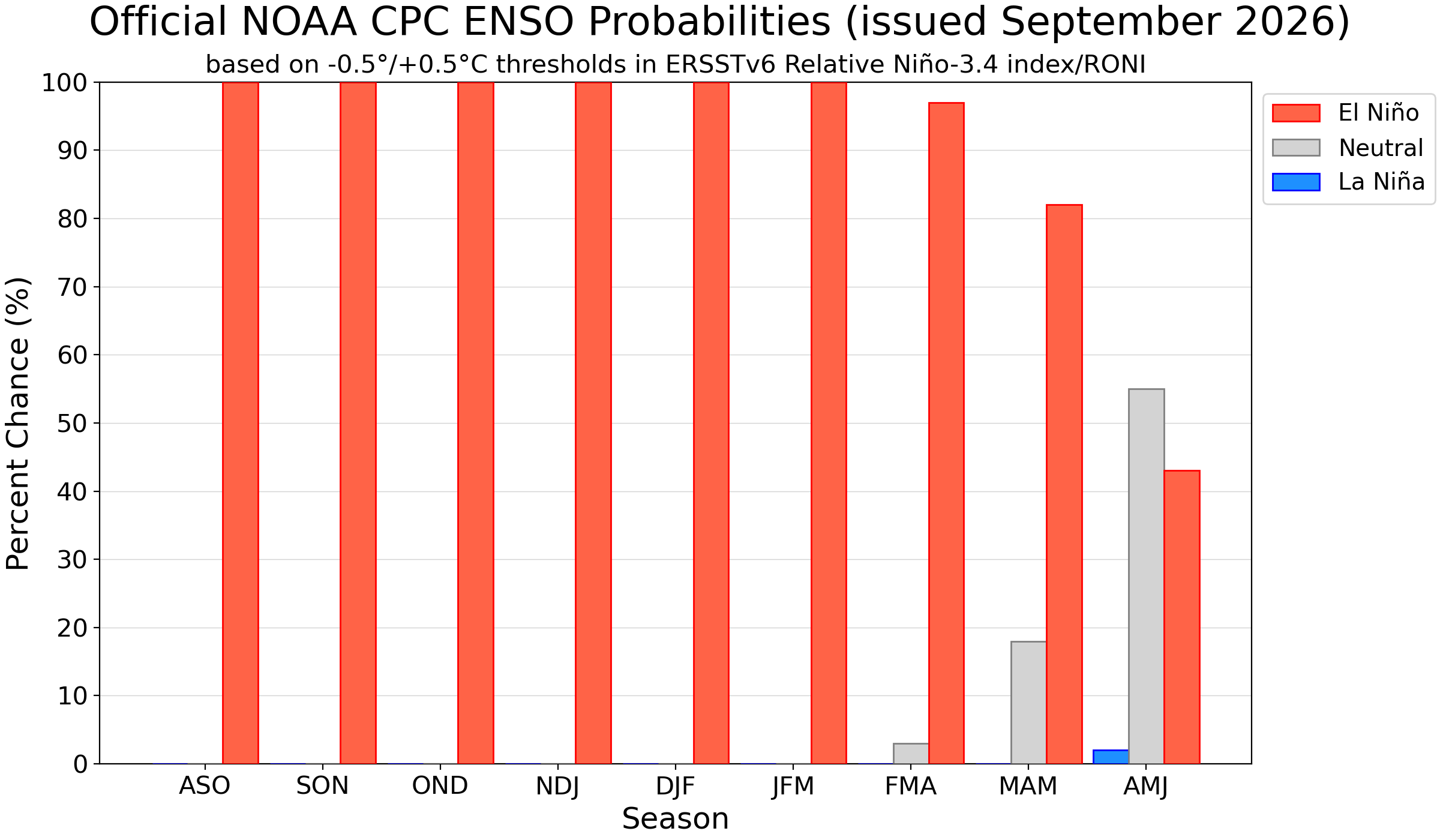
El Niño conditions persist in the eastern Pacific Ocean, with sea surface temperature anomalies running 1.8ºC above average in the Niño-3.4 index. There is a greater than 90% probability of a very strong El Niño event during fall and winter 2026-27, with as high as a 98% probability of a very strong event from October–December. Current forecasts of peak Pacific Ocean temperatures are 3–3.5ºC above average, indicating what could be the strongest El Niño on record. There is a 100% probability of El Niño conditions continuing at least through January–March 2027. NOAA seasonal forecasts indicate an increased probability of above average temperatures for the region, and above average precipitation for Colorado, Utah, and southern Wyoming during September–November, suggesting an active monsoon and the possibility of tropical storm remnants for the remainder of the season.
Significant weather event: Aspen Acres burn scar flooding. On July 28 and 29, severe thunderstorms brought intense rainfall and caused debris flow flooding in the community of Beulah, Colorado. The floodwaters damaged homes, washed out roads, and blocked bridges with debris. The Beulah Fire Protection and Ambulance District prompted emergency evacuations for residents and those along Highway 78. Rainfall rates were 1–3 inches per hour, and the muddy floodwaters carried rocks, burned trees, propane tanks, and other debris downstream. Highways 78 and 165, and other critical roads, were closed, limiting Beulah Valley access to essential and emergency services. Between Beulah and other nearby communities such as San Isabel and Wetmore, at least 11 homes were damaged by flooding, and many roads and culverts required emergency repairs.
On August 16, in about 1.5 hours, 1–1.5 inches of rain fell on the same burn scar in Beulah, triggering another major flash flood and resulting in the death of an 80-year-old resident who was swept away downstream by floodwaters. On August 23, Colorado Governor Jared Polis officially requested a Major Disaster Declaration (MDD) from the President and the Federal Emergency Management Agency (FEMA) to support recovery from the Aspen Acres and Gold Mountain Fires, and the post-wildfire flooding and debris flows on both burn scars.

Flash flooding in Beulah, Colorado on July 29, 2026. Credit: Pueblo County Sheriff's Office.