July 9, 2026 - CO, UT, WY
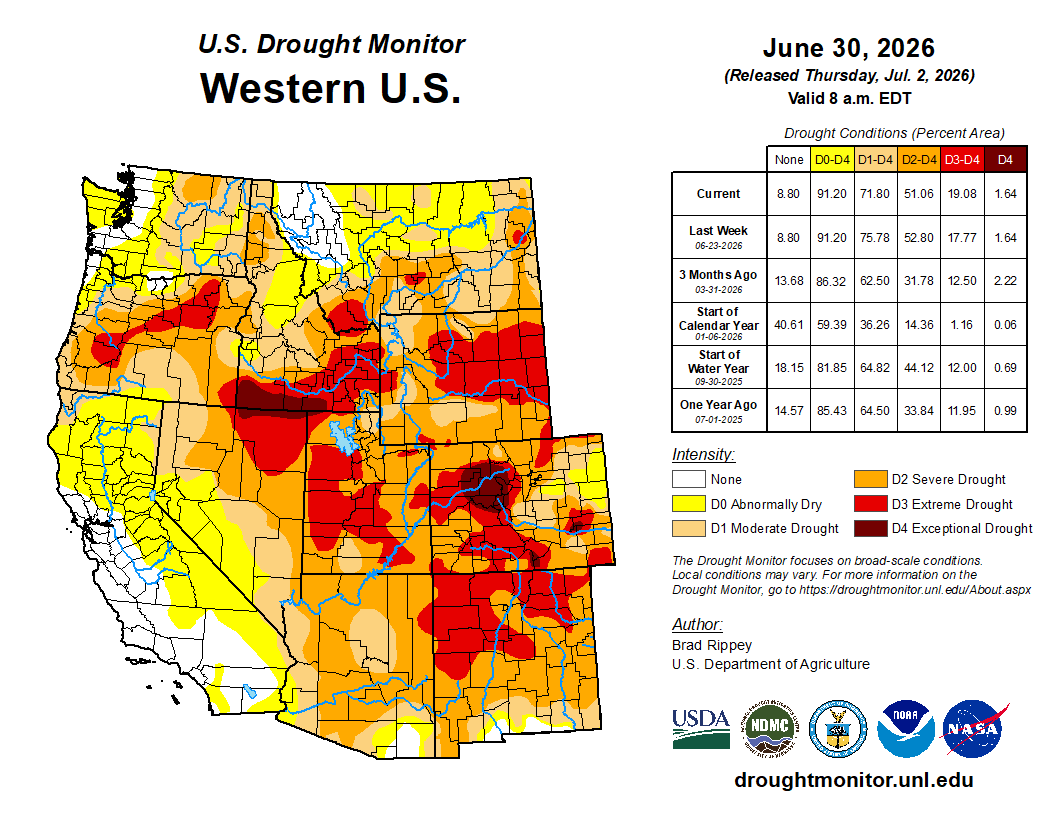
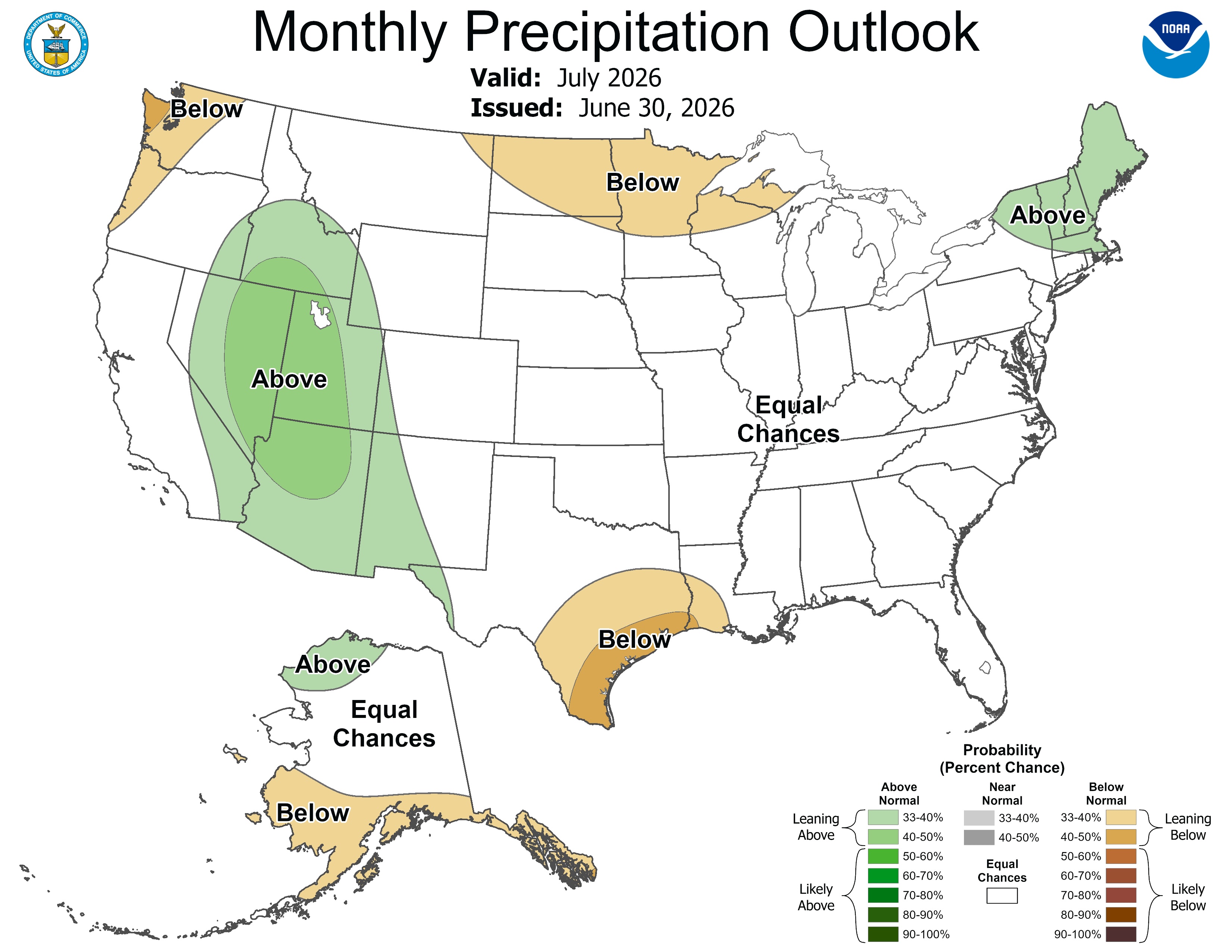
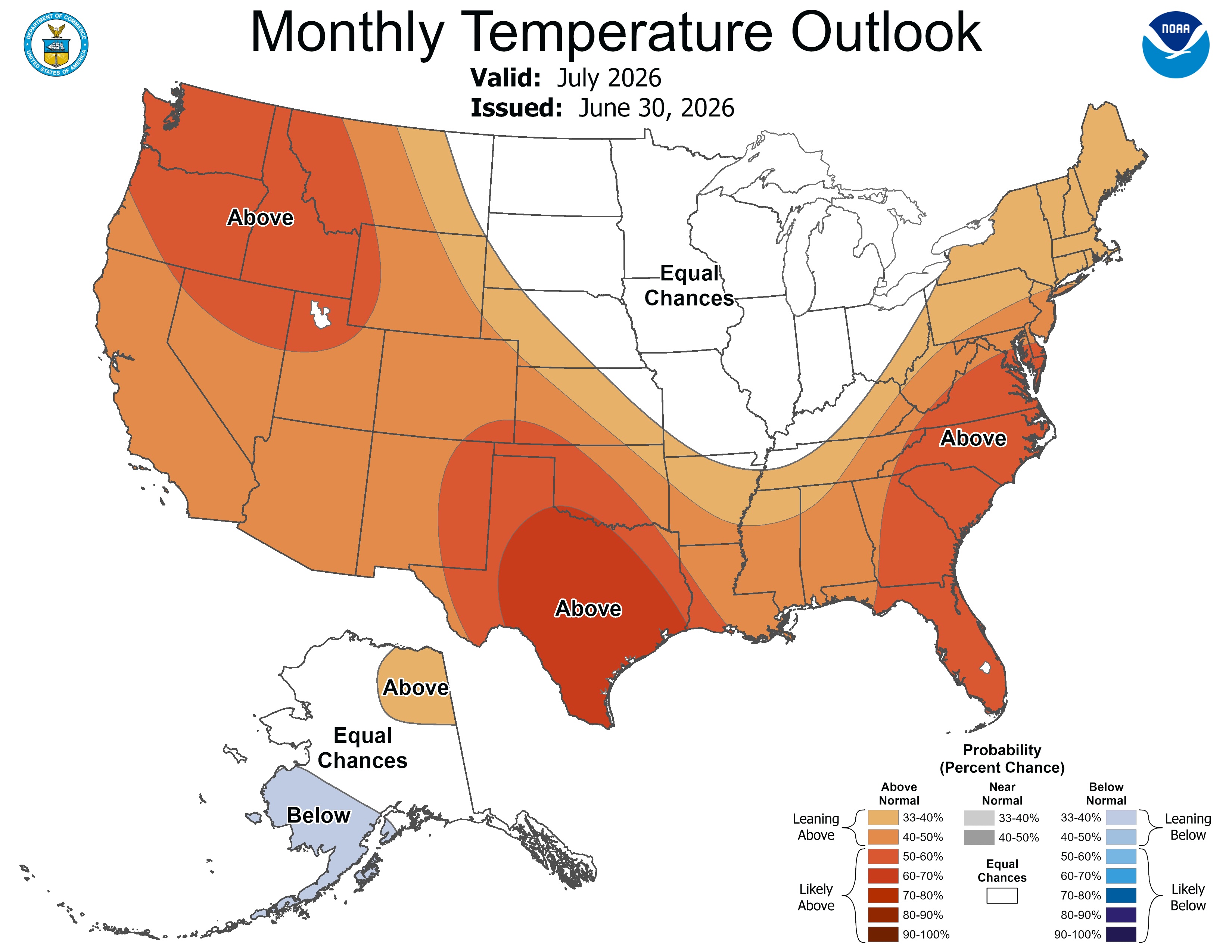
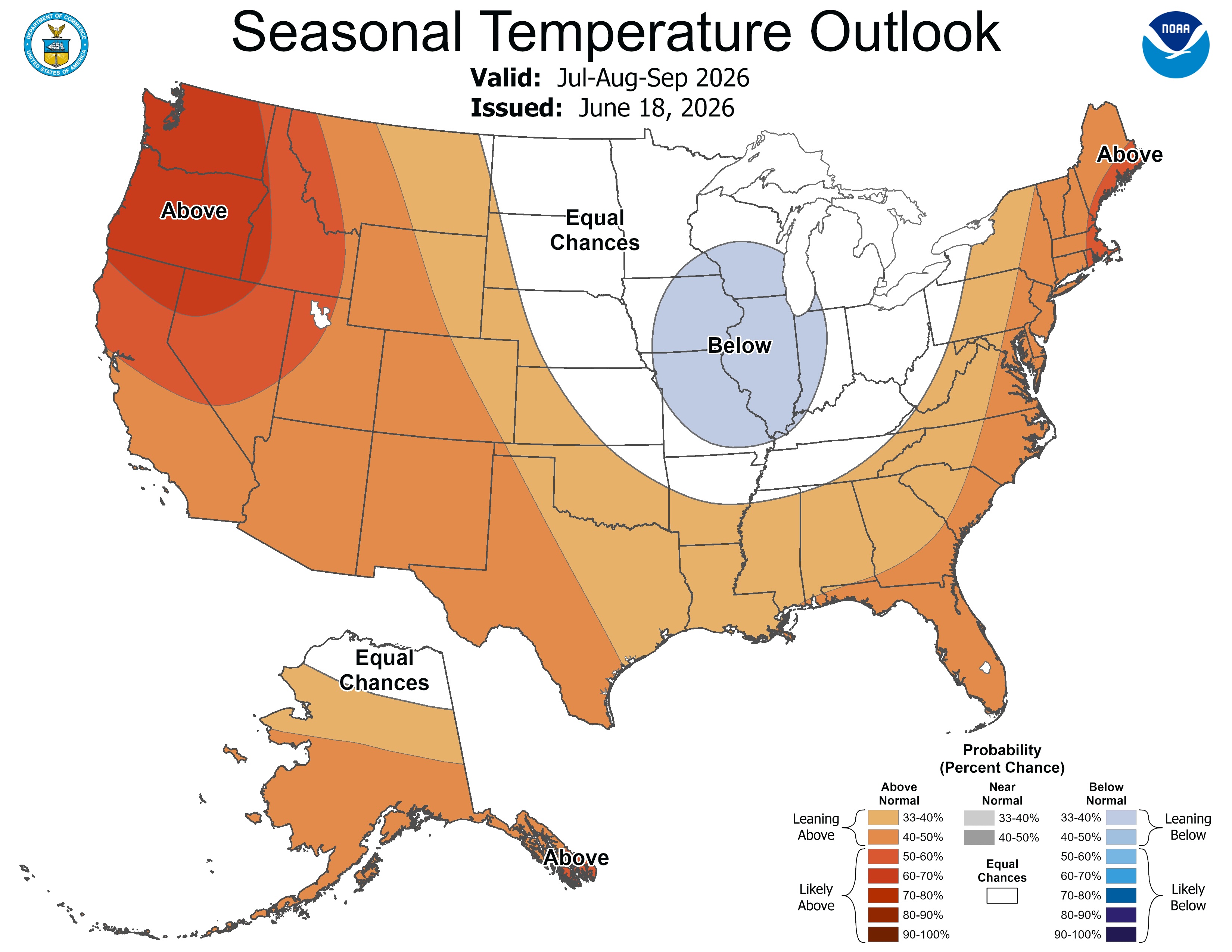
During June, much of the region experienced below average precipitation and above average temperatures. Snowpack melted out by June 4 in Utah, June 9 in Colorado, and June 19 in Wyoming. Regional streamflow conditions are below to much below average. As of July 1, Colorado reservoirs are 49% full, Utah reservoirs are 66% full, and Wyoming reservoirs are 65% full. Regional drought coverage remained the same at 97%. Pacific Ocean temperatures transitioned to El Niño conditions in June and are expected to persist through early spring 2027. NOAA seasonal forecasts suggest above average regional precipitation and temperatures during July through September.
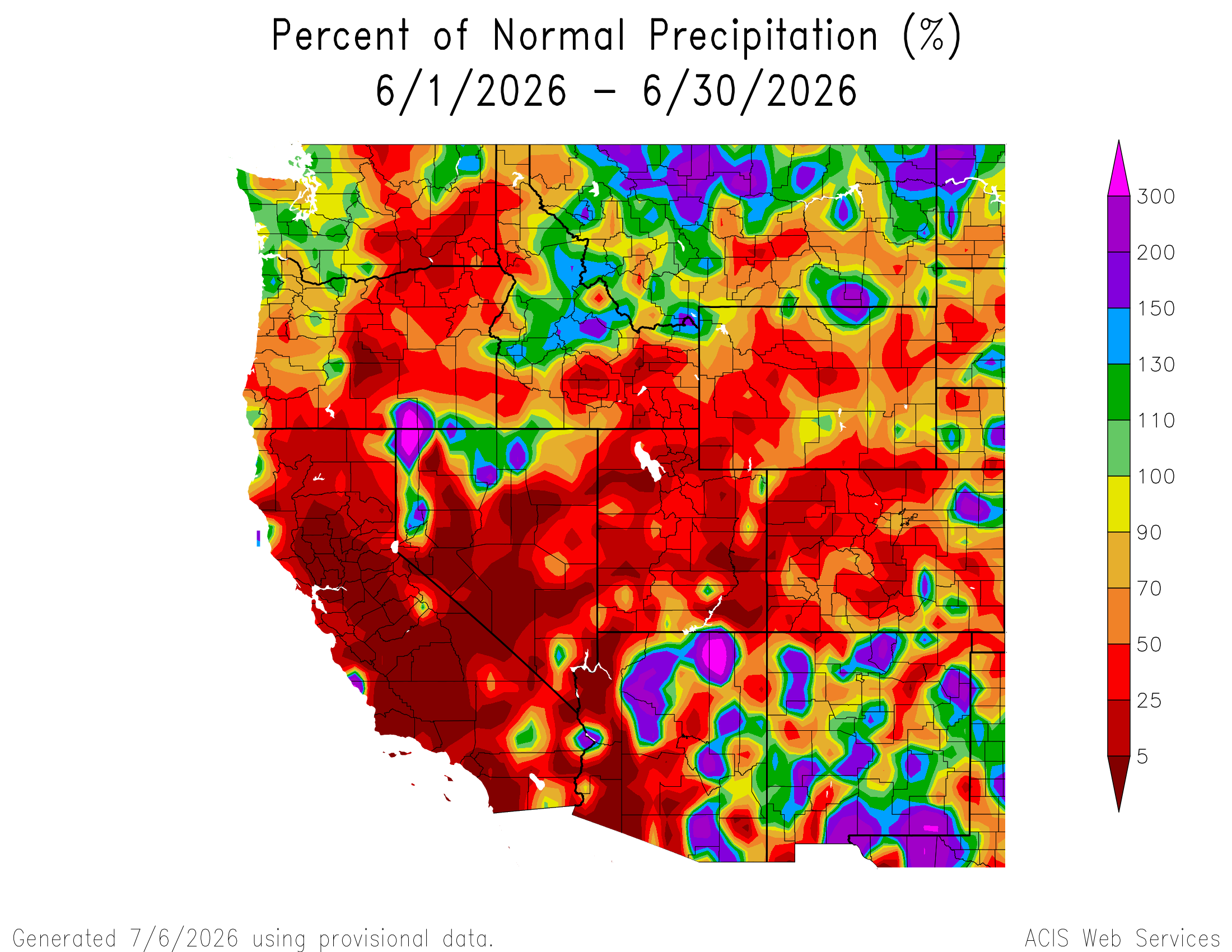
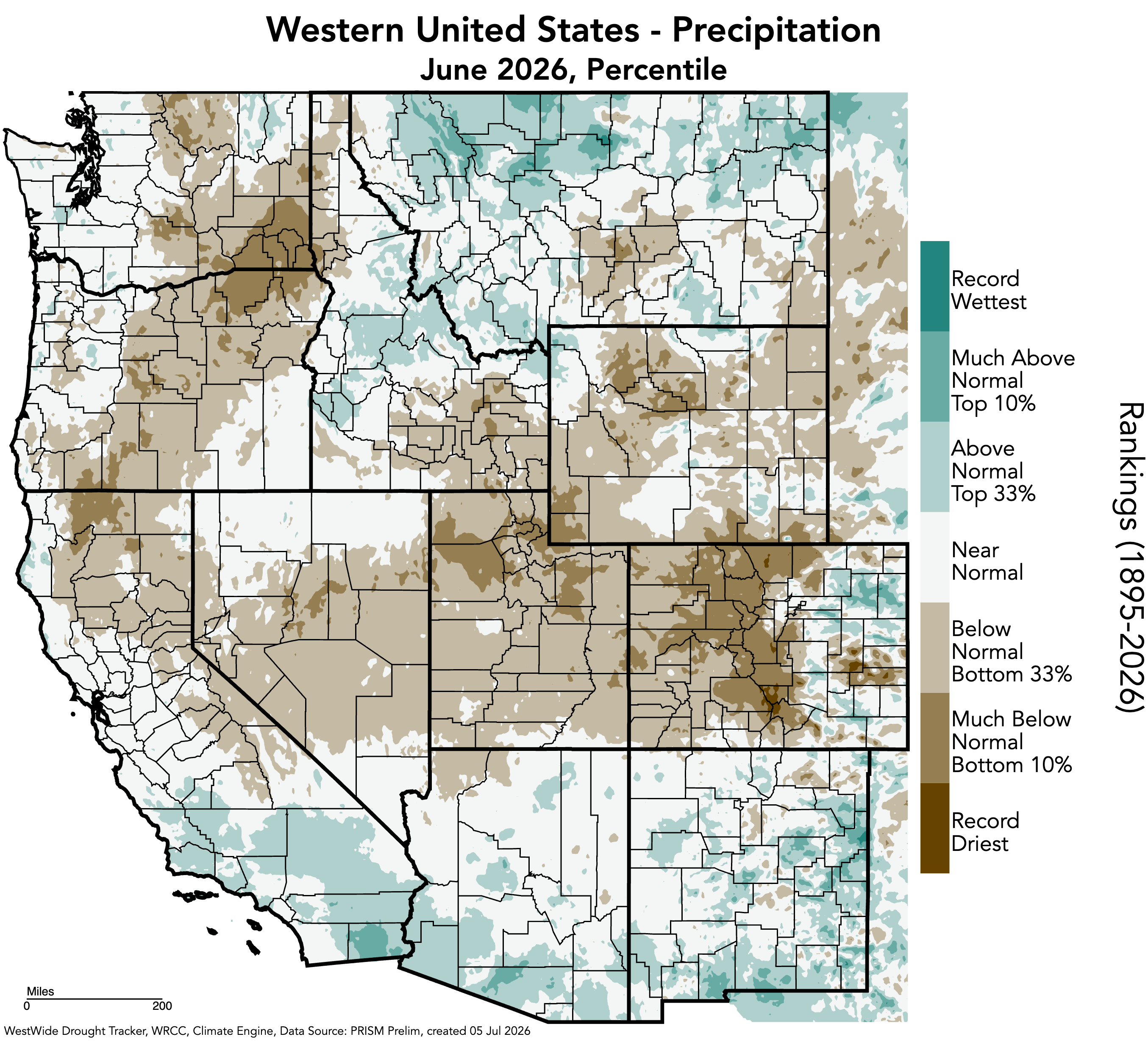
June precipitation was below average for most of the region, with Utah, western Colorado, and western Wyoming receiving less than 50% of average precipitation. Pockets of less than 5% of average precipitation occurred in Tooele, Millard, Beaver, Duchesne, Emery, Grand, Garfield, and San Juan Counties in Utah, and in Mesa County, Colorado. A few pockets of above average precipitation occurred in eastern Colorado and northern Wyoming. Record-dry conditions occurred in Larimer, Grand, Park, Custer, Saguache, Huerfano, Pueblo, Lincoln, and Kiowa Counties in Colorado.
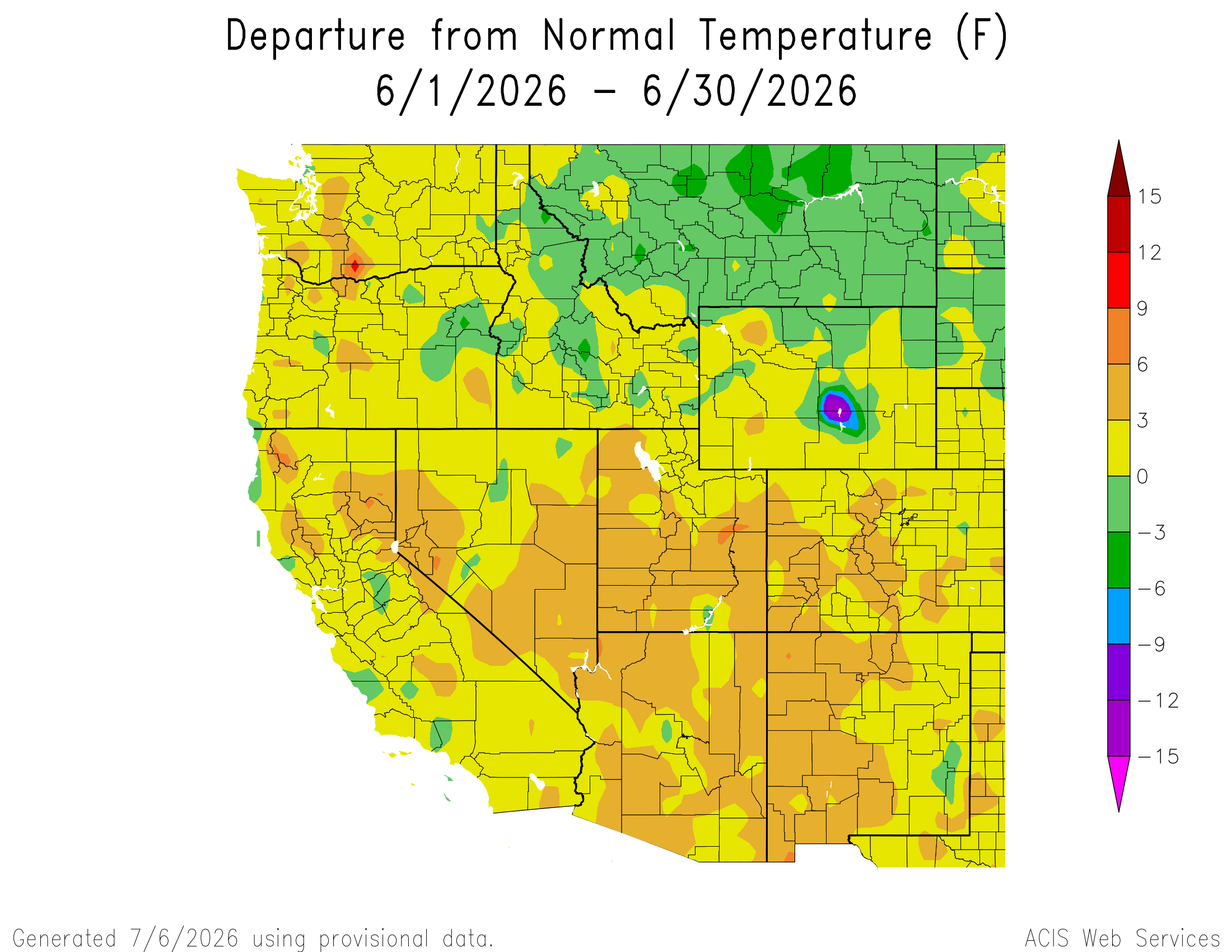
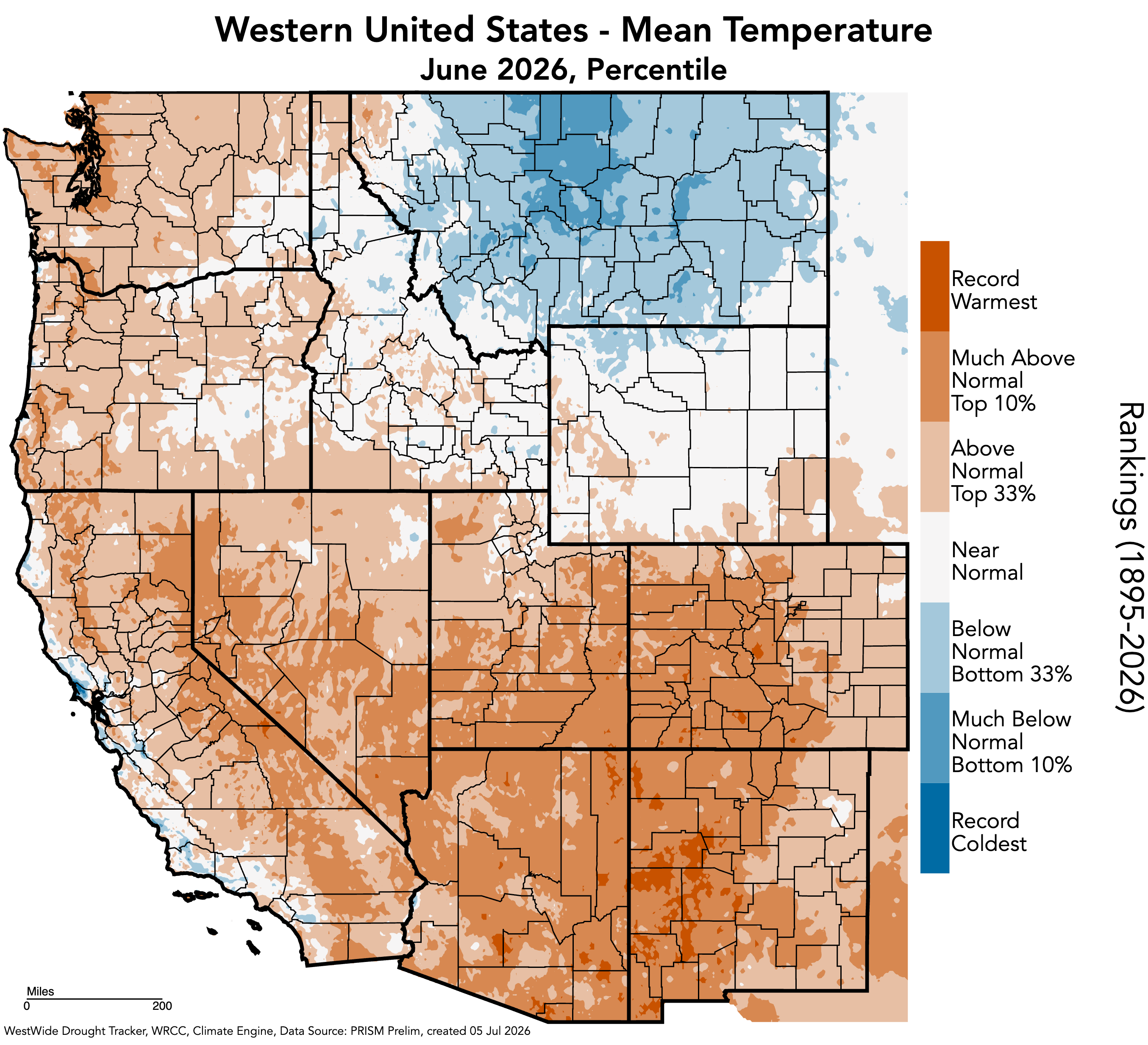
June temperatures were up to 3 °F above average in eastern Colorado, southern Wyoming, and northeastern Utah, while temperatures were up to 3 °F below average in northern and central Wyoming. Temperatures were 3-6 °F above average for much of Utah and western Colorado, with small pockets of these temperatures in eastern Colorado and western Wyoming. Record-warm temperatures occurred in southwestern Colorado and southeastern Utah.
Regional streamflow conditions are much below average, with extremely below average streamflow at many sites throughout the Upper Colorado River and Great Basins. Extremely below average streamflow conditions for these sites mean that streamflow is below the lowest daily average ever recorded for this day of the year (July 9).
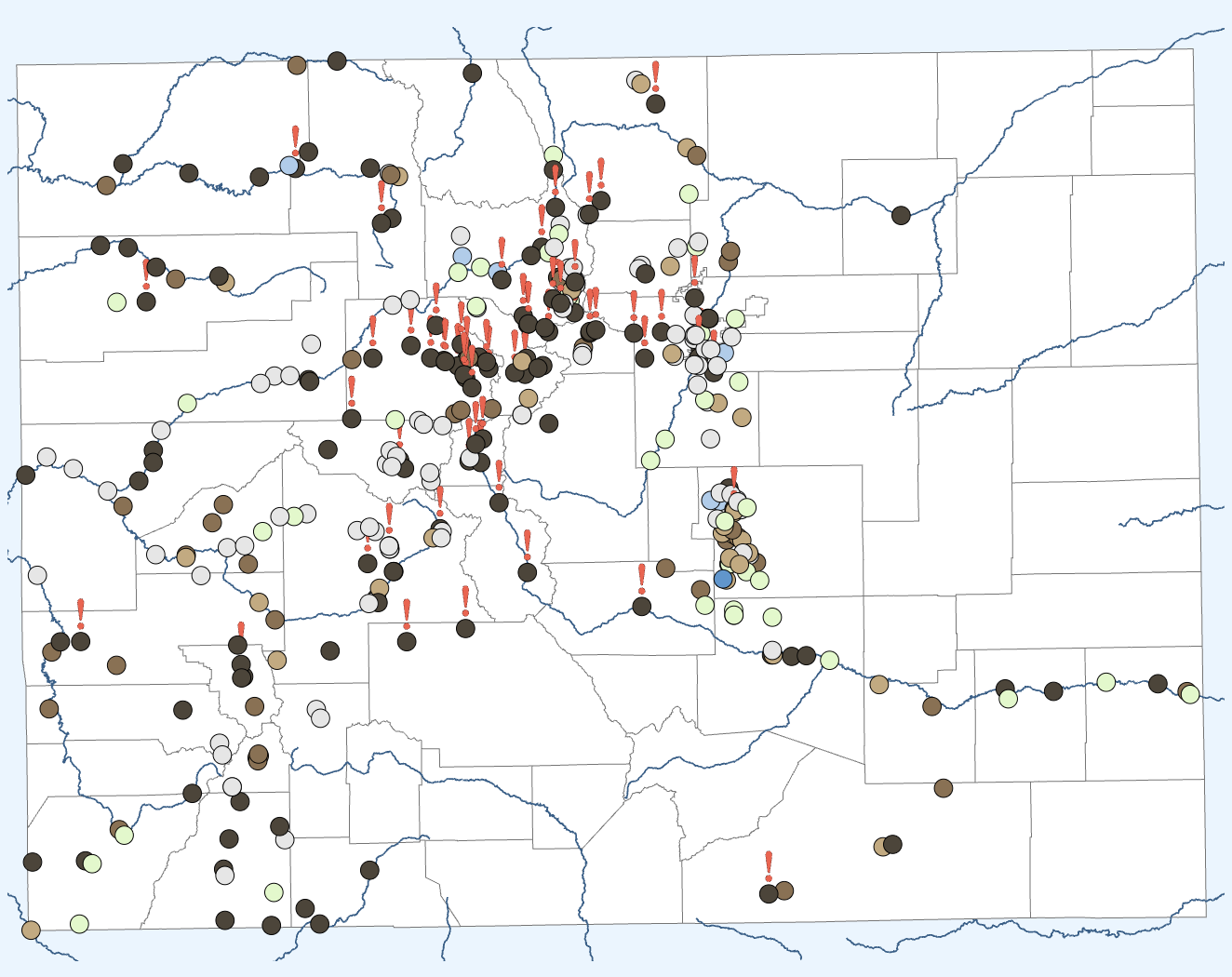
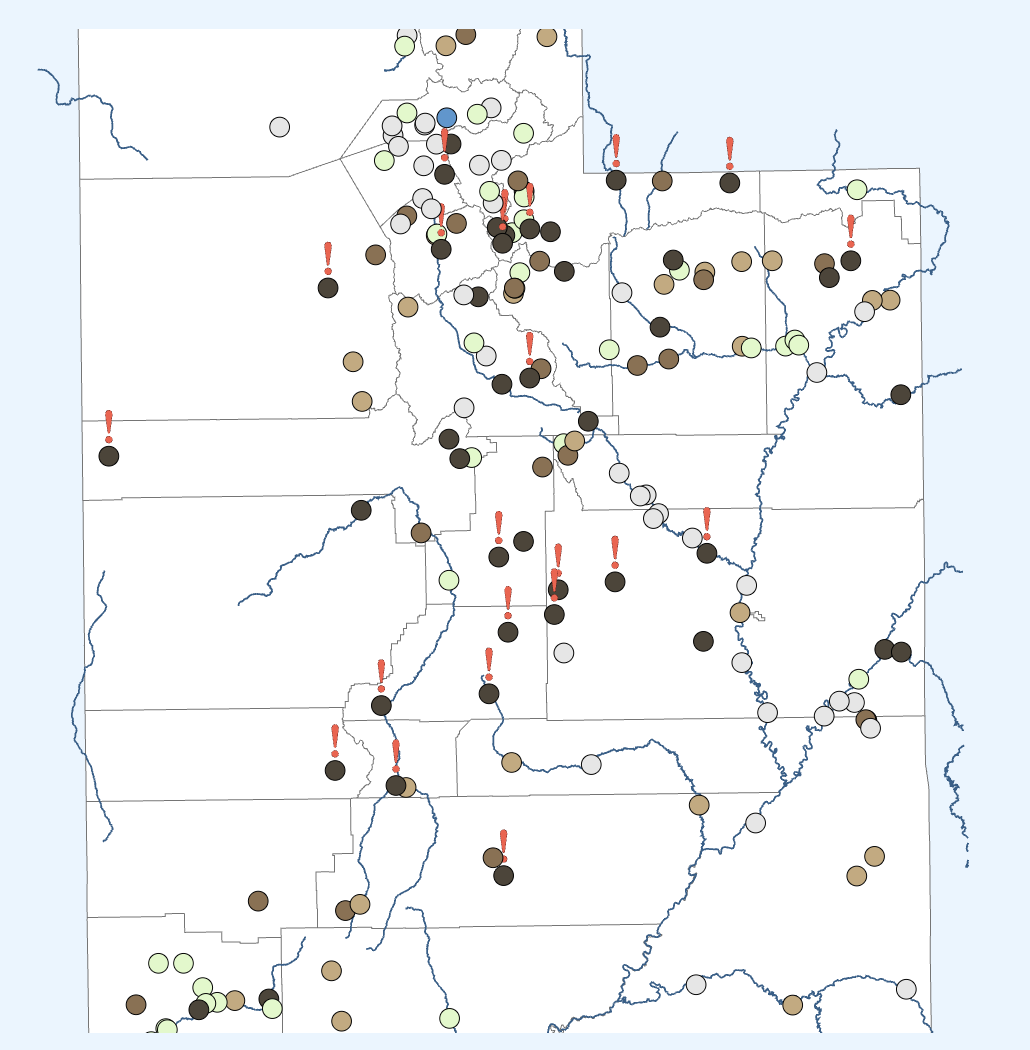
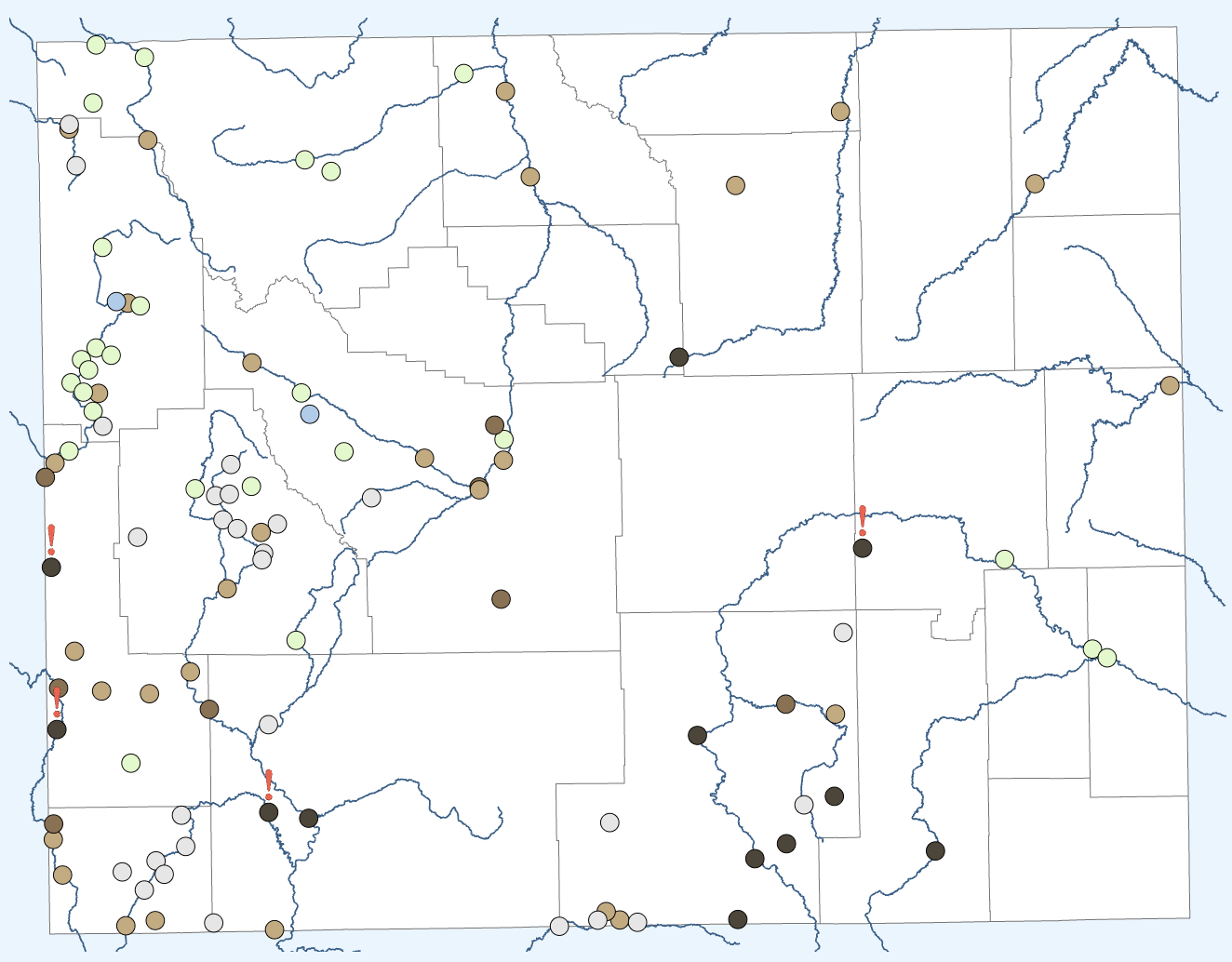

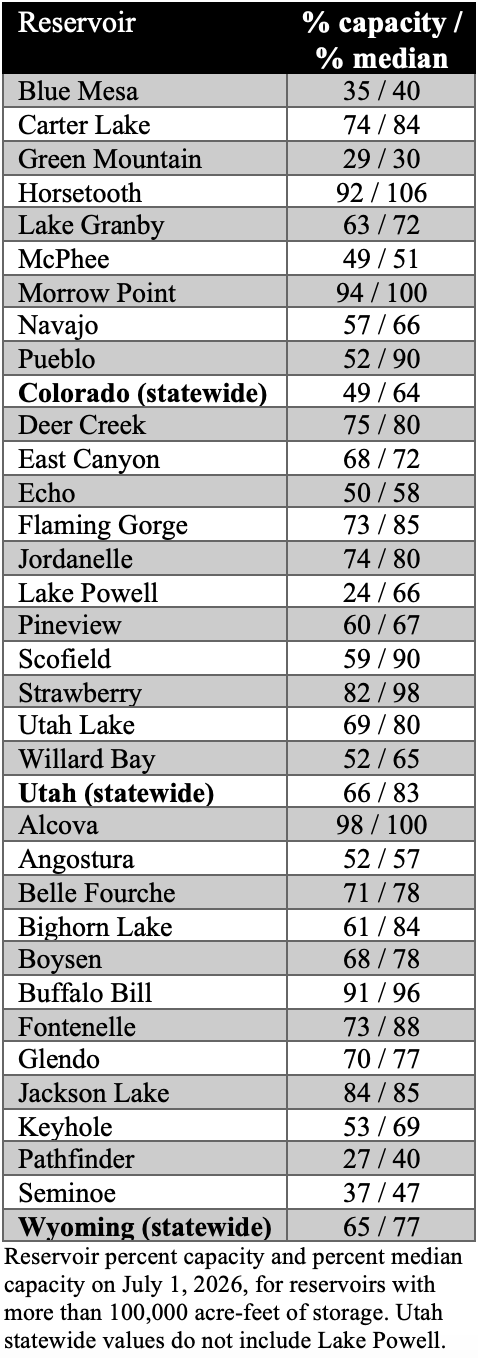
As of July 1, Colorado reservoirs are 49% full and at 64% of median capacity, Utah reservoirs are 66% full and at 83% of median capacity, and Wyoming reservoirs are 65% full and at 77% of median capacity. Reservoirs at 50% or less capacity include McPhee (49%), Blue Mesa (35%), and Green Mountain (29%) in Colorado; Echo (50%) and Lake Powell (24%) in Utah; and Seminoe (37%) and Pathfinder (27%) in Wyoming.
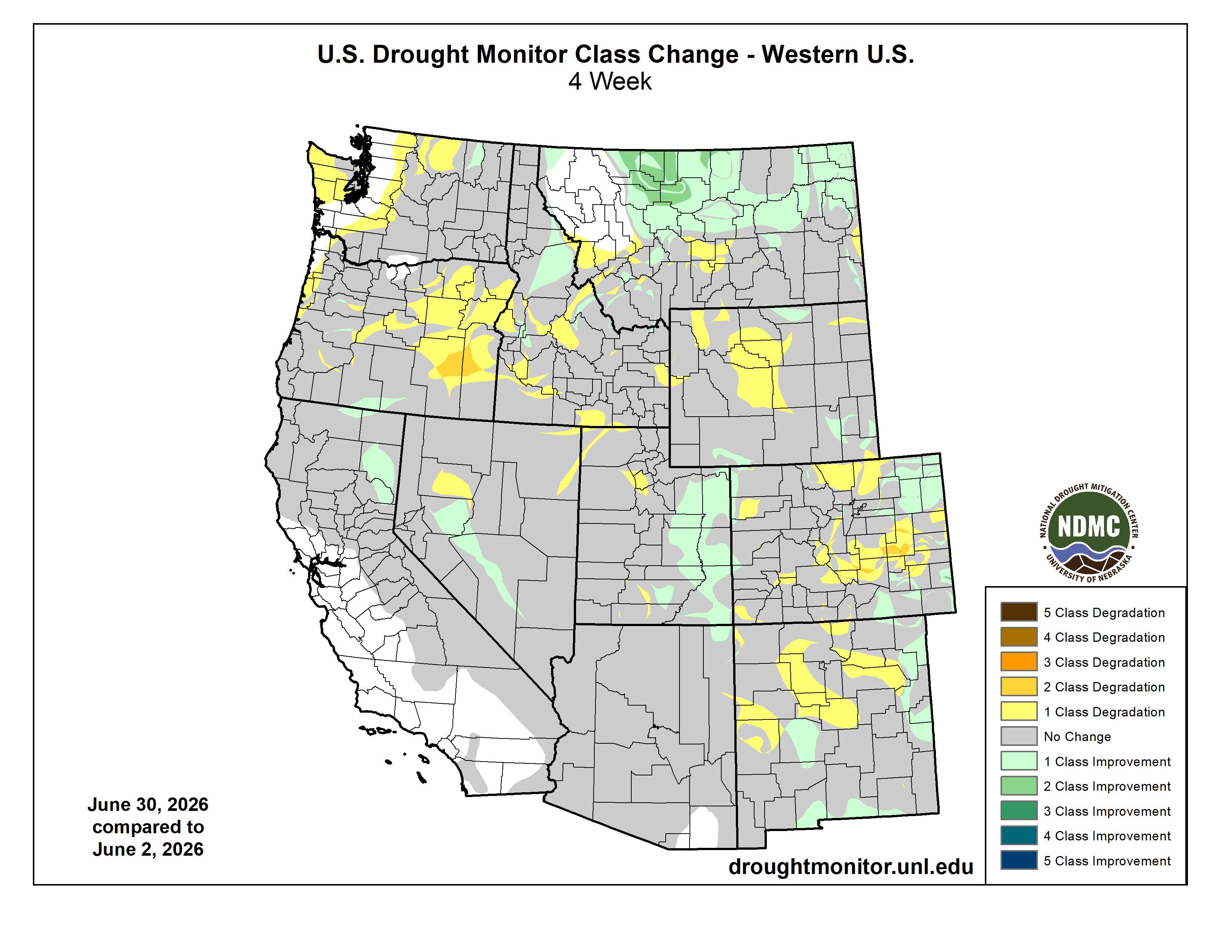
Regional drought coverage remained the same during June and covered 97% of the region as of June 30. Drought conditions slightly deteriorated in Colorado, with severe (D2) drought coverage increasing by 4% and extreme (D3) drought coverage increasing by 3%. While all of Utah is under at least moderate (D1) drought conditions, D3 drought coverage decreased by 19%. All of Wyoming is also under at least D1 drought conditions, and D3 drought coverage increased by 10%.
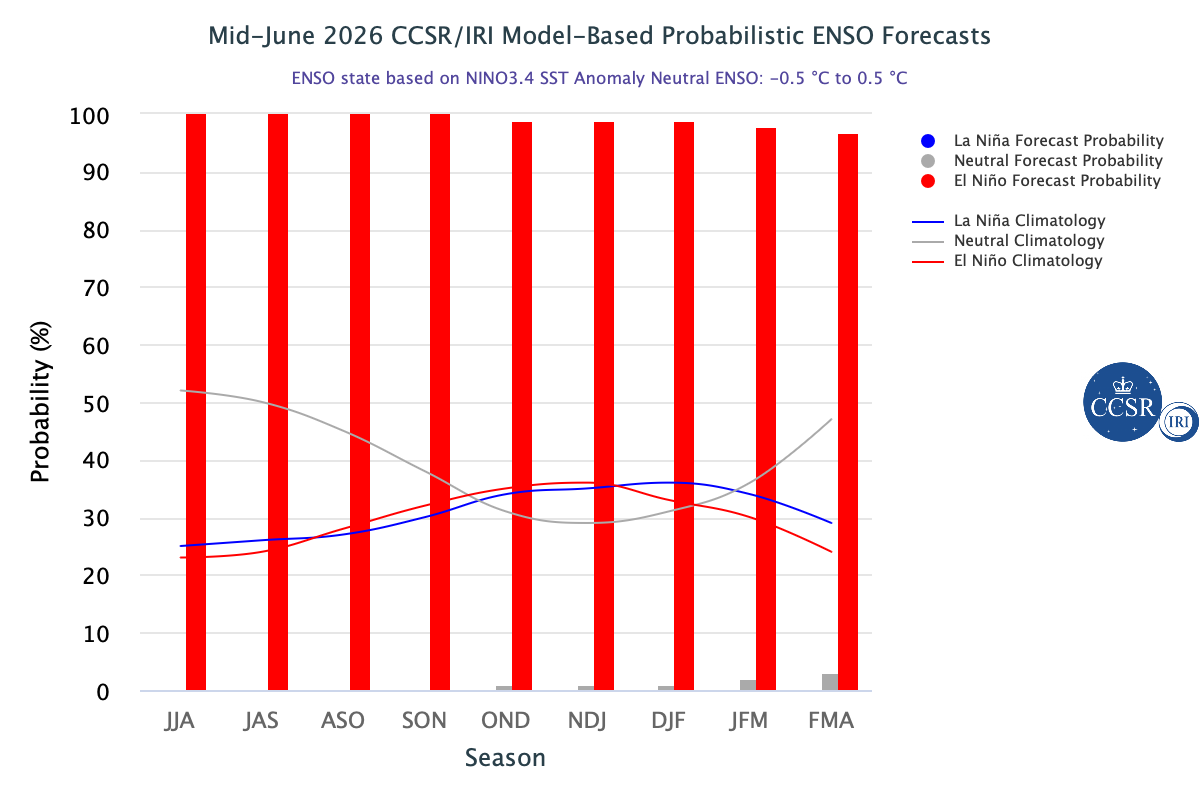
Pacific Ocean temperatures transitioned to El Niño conditions in June. Observed sea surface temperature anomalies were approximately +1.2 °C above average in the Niño 3.4 region, indicating a moderate El Niño. El Niño is favored to persist through early spring 2027, with an 81% chance of a very strong El Niño from October–December 2026. NOAA precipitation forecasts suggest an active monsoon season with an increased probability of above average precipitation during July for Utah, southwestern Colorado, and southwestern Wyoming, and an increased probability for above average precipitation for most of the region during July–September. NOAA seasonal forecasts suggest an increased probability of above average temperatures for July–September.


Significant weather event: Late June wildfires. During late June, more than 10 wildfires started across Colorado and Utah. The largest of the fires are the Babylon and Cottonwood fires in Utah, and the Aspen Acres fire in Colorado. These fires collectively have burned hundreds of thousands of acres, destroyed homes and other structures, and strained firefighting resources across the region. Every fire in the list below caused evacuations, with several prompting large-scale community evacuations and state disaster declarations. The Aspen Acres fire has burned more than 275 homes. Three firefighters lost their lives in the Snyder fire, and two more were injured.
Here is a list of wildfires in Colorado and Utah that started in late June and are actively burning at the time this briefing is published on July 9, 2026.
Go to our new Intermountain West Current Wildfires and Smoke Forecast Map for up-to-date information on the following wildfires.
Name of Wildfire | County | Acres Burned | Start Date |
|---|---|---|---|
Babylon | San Juan (UT) | 101,000+ | June 27 |
Cottonwood | Beaver, Piute (UT) | 96,000+ | June 22 |
Aspen Acres | Custer, Pueblo, Huerfano (CO) | 96,000+ | June 29 |
Ferris | Montezuma, Dolores (CO) | 62,000+ | June 27 |
Gold Mountain | Ouray (CO) | 32,000+ | June 27 |
Snyder | Mesa (CO), Grand (UT) | 30,000+ | June 27 |
Wild Goose | Millard (UT) | 12,000+ | June 26 |
Willow | Lake (CO) | 4,000+ | June 28 |