Water Year 2025 Summary
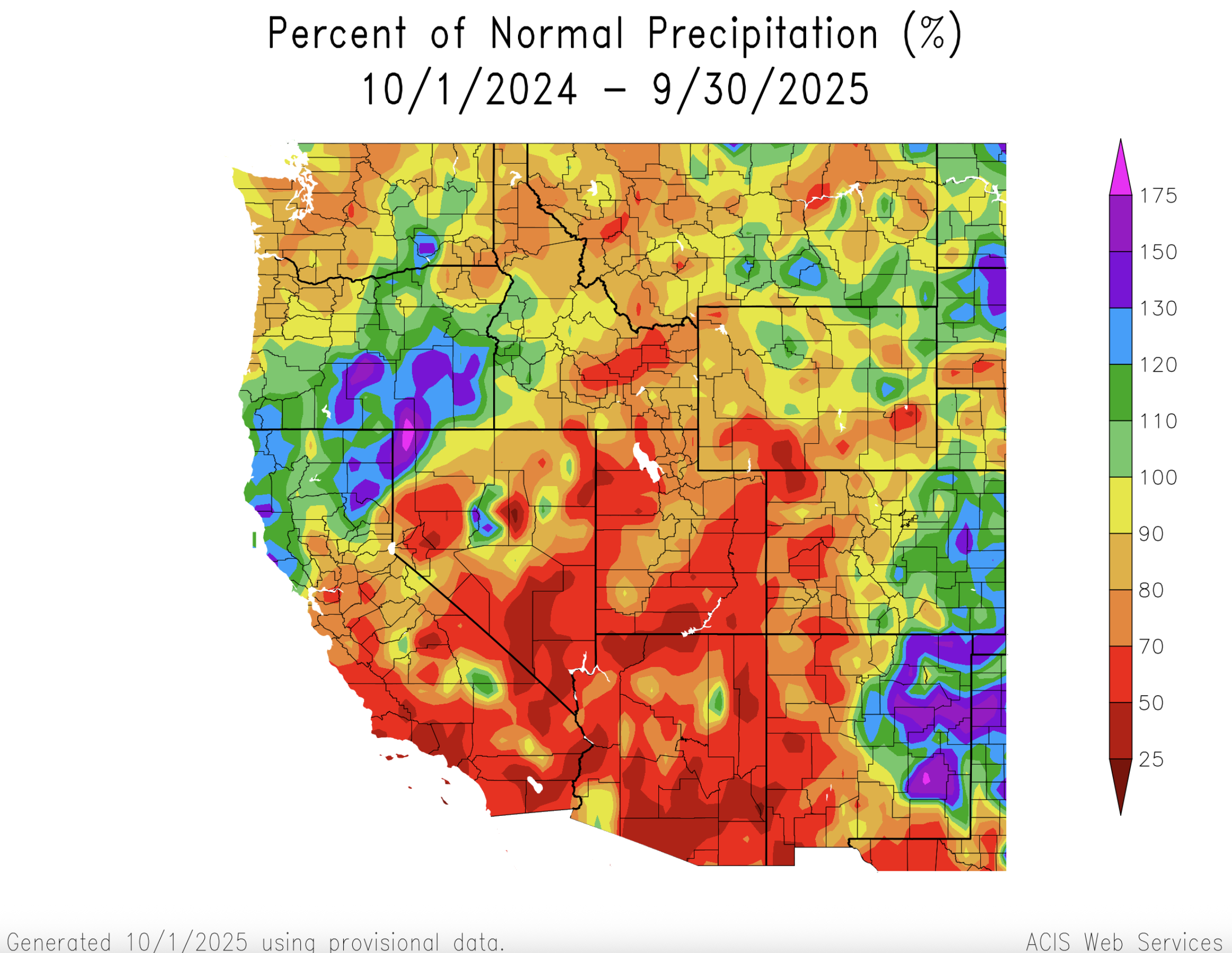
Precipitation during the 2025 water year was below average for all regional river basins west of the Continental Divide and precipitation generally ranged from 80-90% of average, except for the Lower San Juan basin which received 68% of average precipitation. Most river basins east of the Continental Divide received near average precipitation (Arkansas, Big Horn, North/South Platte, Powder and Yellowstone). The Belle Fouche and Cheyenne River basins in northeastern Wyoming received above average precipitation during 2025.
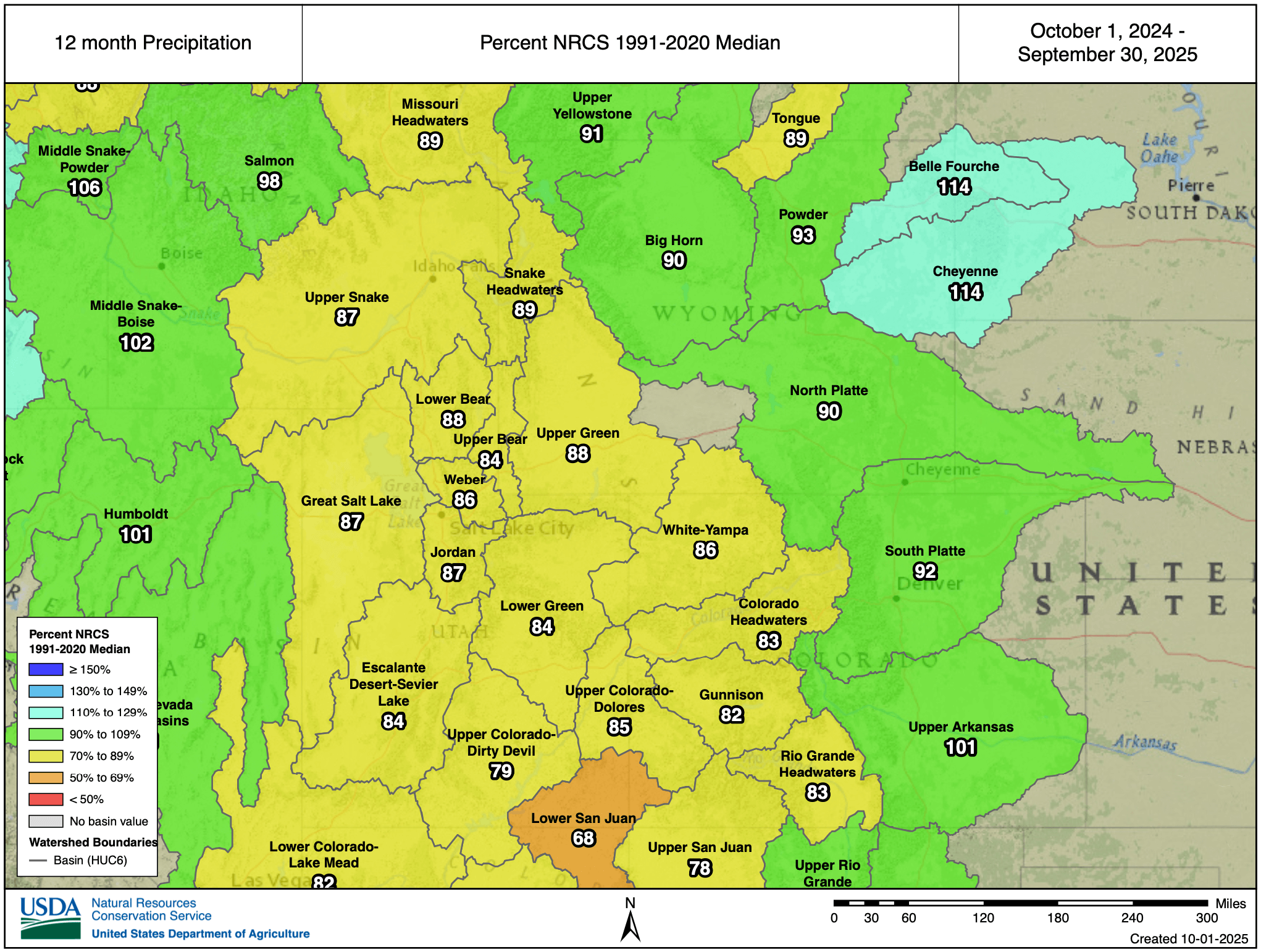
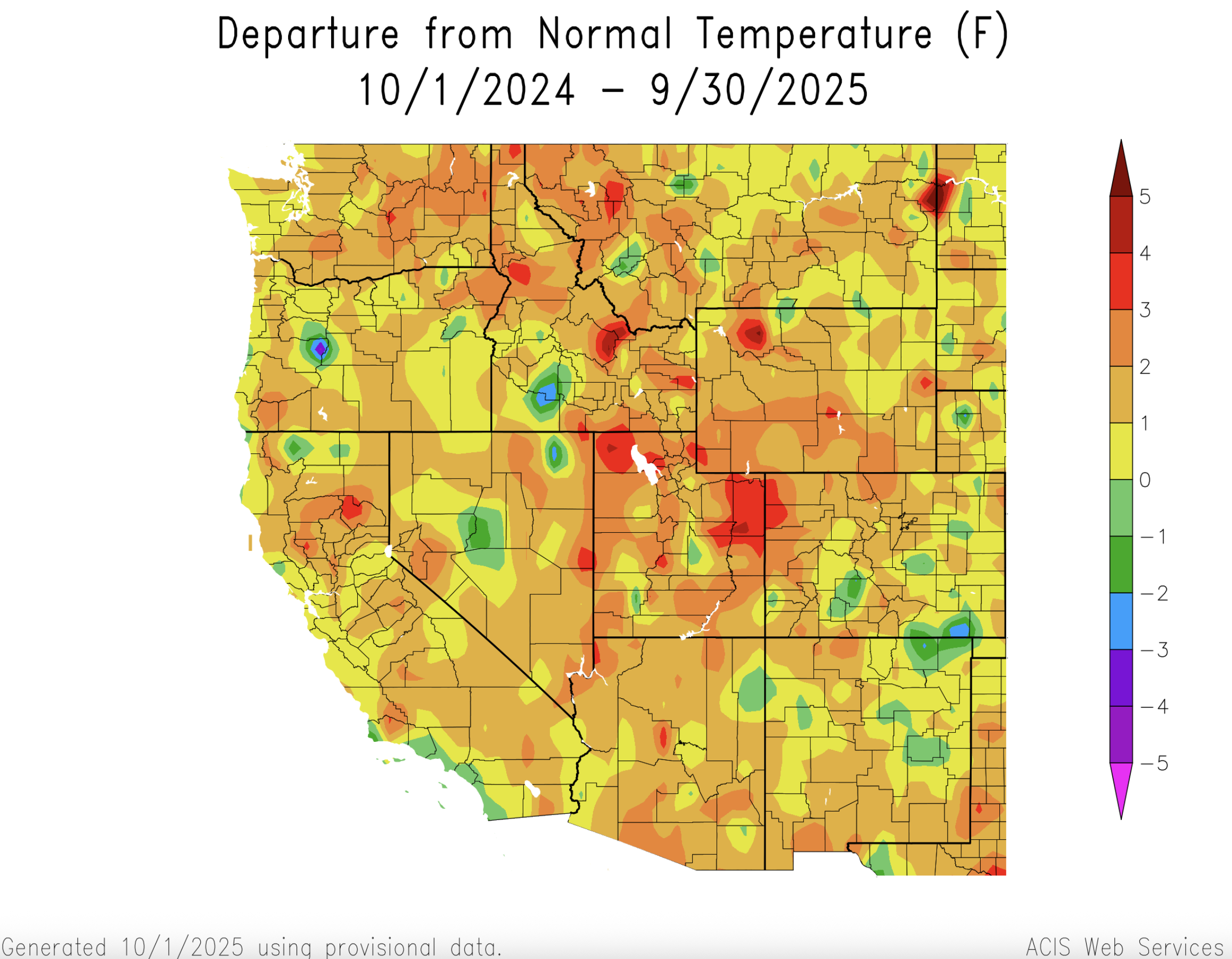
Temperatures were above average during the 2025 water year. The warmest temperatures were observed in Utah, western Colorado and southern Wyoming, where temperatures were generally 2-3 degrees above average. Temperatures were slightly above average (1-2 degrees) across much of Wyoming and central Colorado while eastern Colorado and northeastern Wyoming experienced near average water year temperatures.
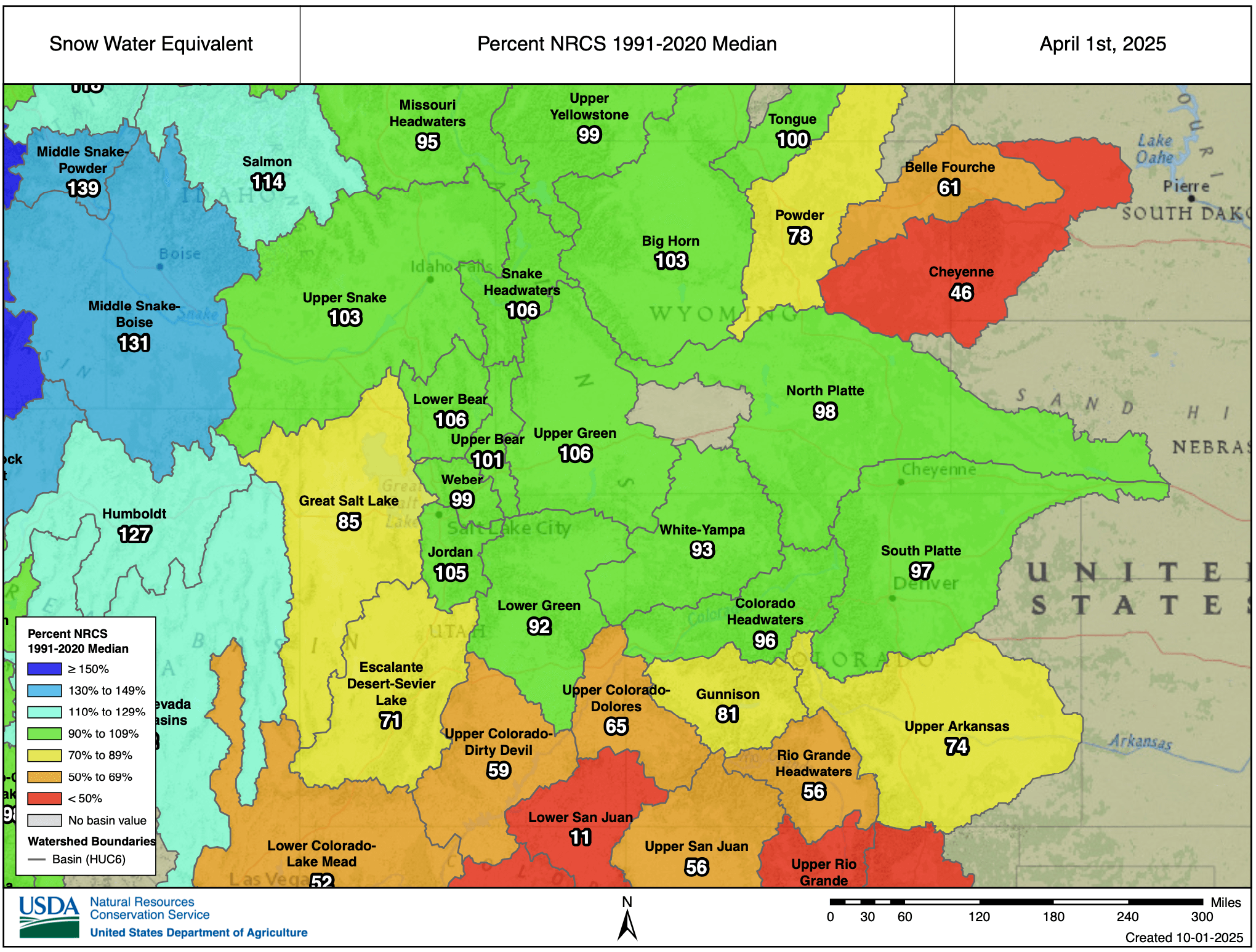
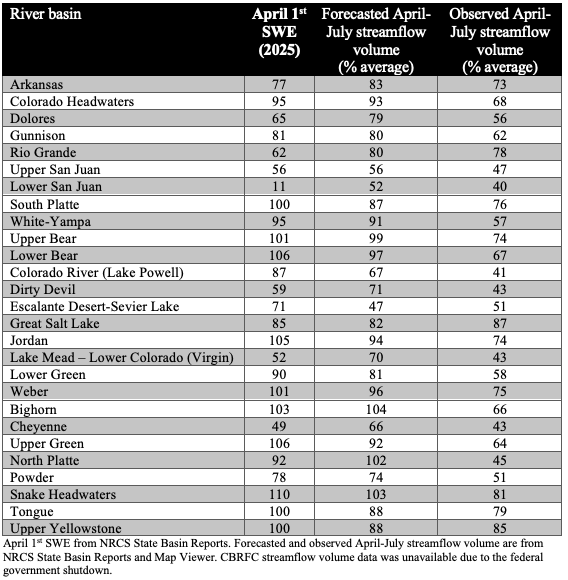
Near average snow water equivalent (SWE) conditions were observed on April 1st for much of the northern portion of the region, while below to much below April 1st SWE conditions were observed in the southern portion of the region. April 1st SWE was near average in the Green, North/South Platte, Yampa-White, Colorado Headwaters, Bear, Jordan and Weber River Basins. Much below average SWE conditions were observed in the Dolores, Dirty Devil, San Juan and Rio Grande River Basins. Upper Colorado River Basin (UCRB) April 1st SWE was 87% average. Snowpack generally peaked in late March with a secondary, lower peak during early April and snowmelt occurred only slightly earlier than average except in the San Juan basin where snowmelt occurred nearly 2 weeks early.
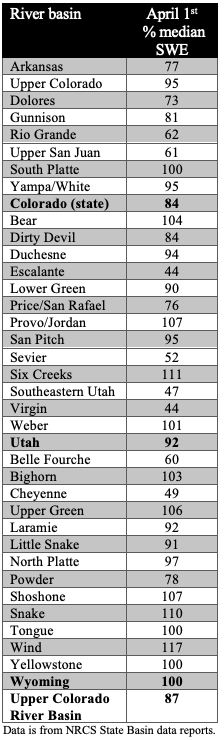
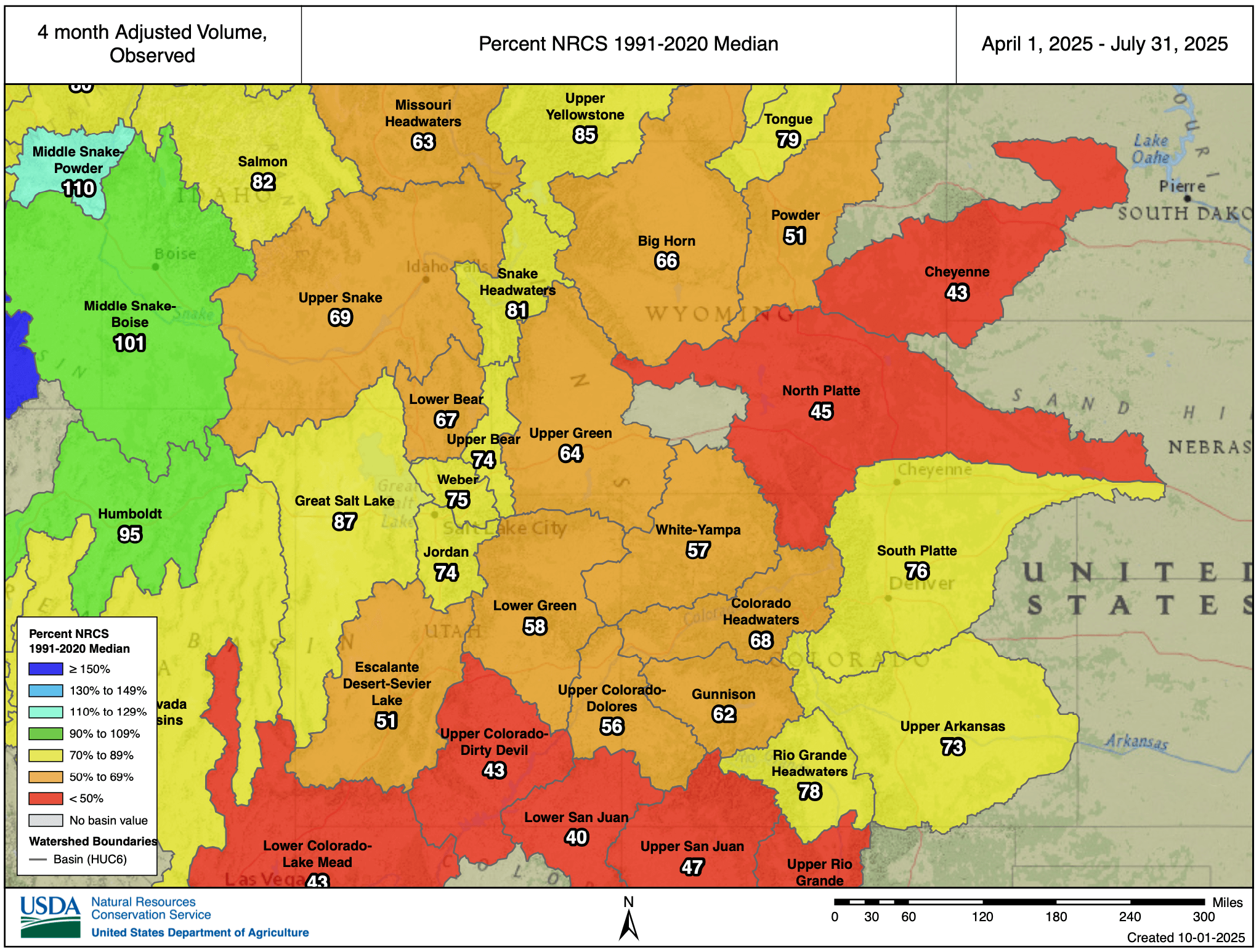
Despite near average SWE conditions for many regional river basins, especially in the North, observed April–July streamflow volume was much below normal for all river basins. In general, streamflow forecasts worsened throughout the winter and during snowmelt. Observed inflow to Lake Powell was 41% of average; a particularly disappointing result considering April 1st SWE was 87% of average. Observed April-July streamflow in the Cheyenne, Lower Green, North Platte and White-Yampa was less than 60% of average despite near to above average snowpack. Every regional river basin experienced an inefficient runoff, where runoff was relatively low compared to snowpack. The poor runoff season can be partly attributed to lack of precipitation (in the South), early onset of snowmelt and extremely dry soils.
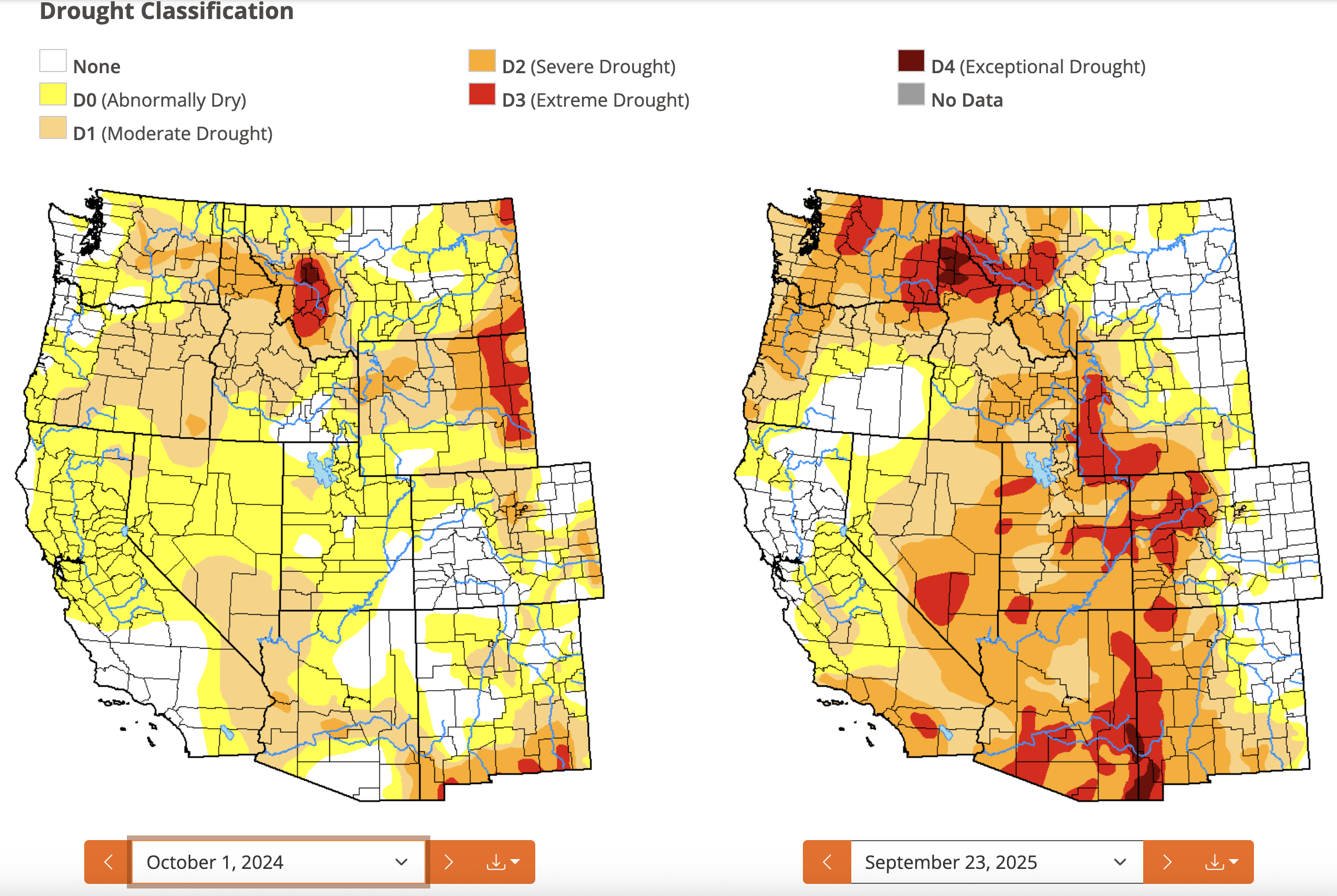
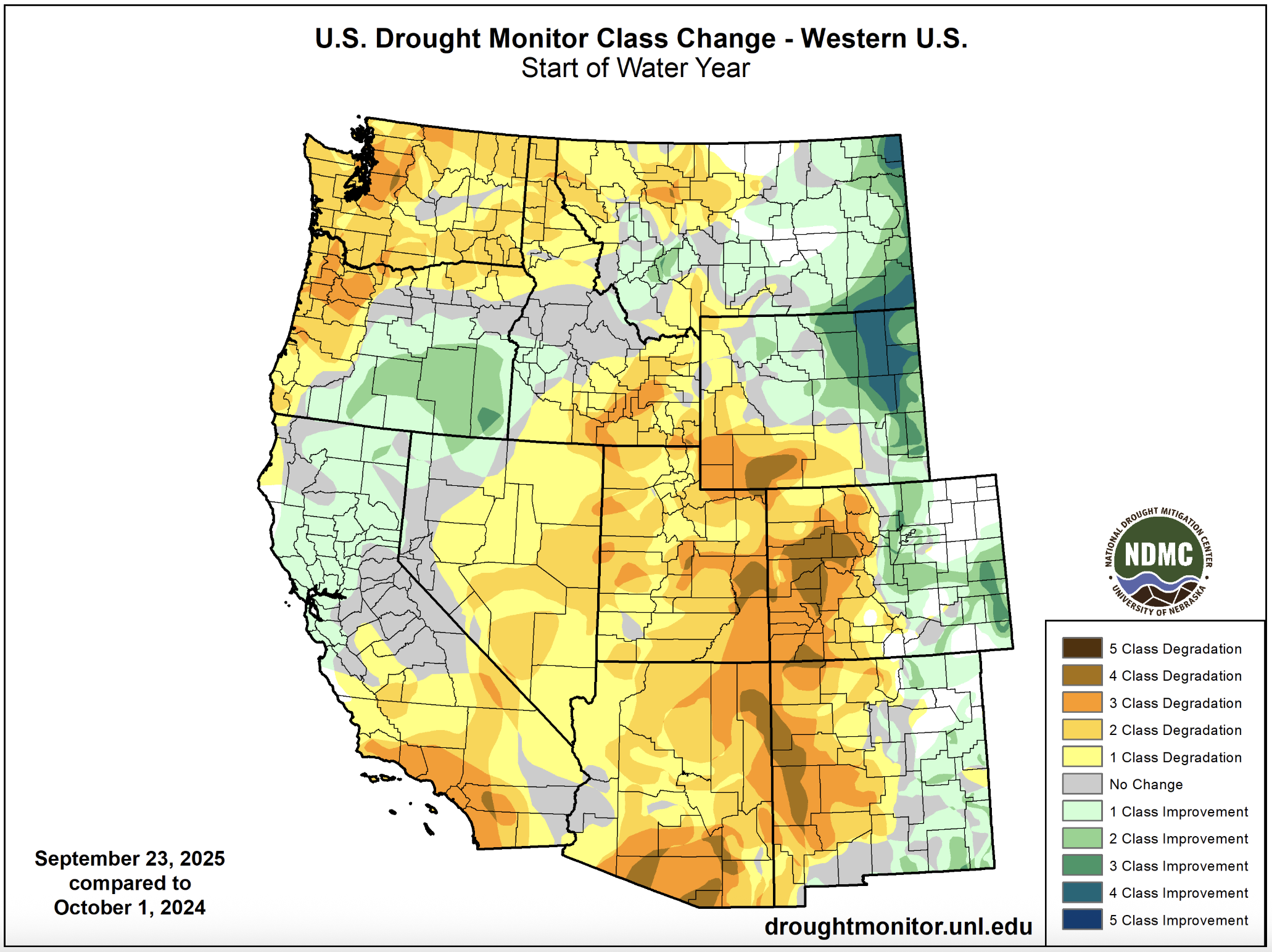
Drought conditions expanded significantly during the 2025 water year. The most significant change occurred in the Upper Colorado River Basin, where drought coverage of only 7% of the basin at the start of the water year expanded to 100% of the basin by the end of September 2025. Regionally, 36% of the region was in drought in October 2024; by late September 2025, 63% of the region was in drought, including 15% coverage by extreme drought which is mostly present in the Upper Colorado River Basin. Large areas of the Upper Colorado River Basin, predominantly in western Colorado, eastern Utah and southwestern Wyoming, experience a 3 to 4 category degradation in drought.
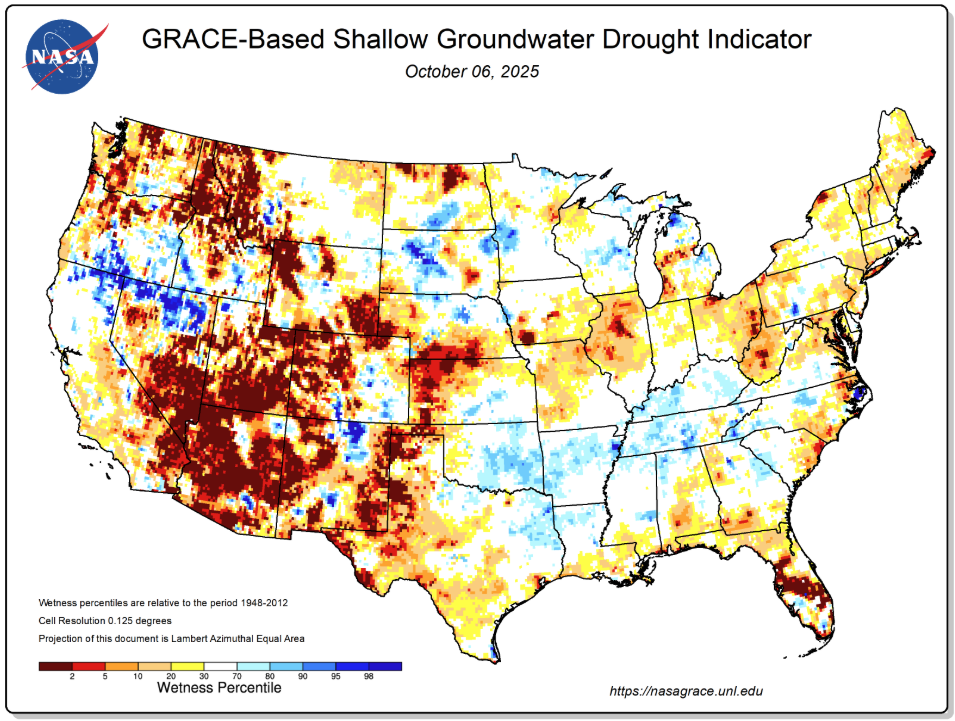
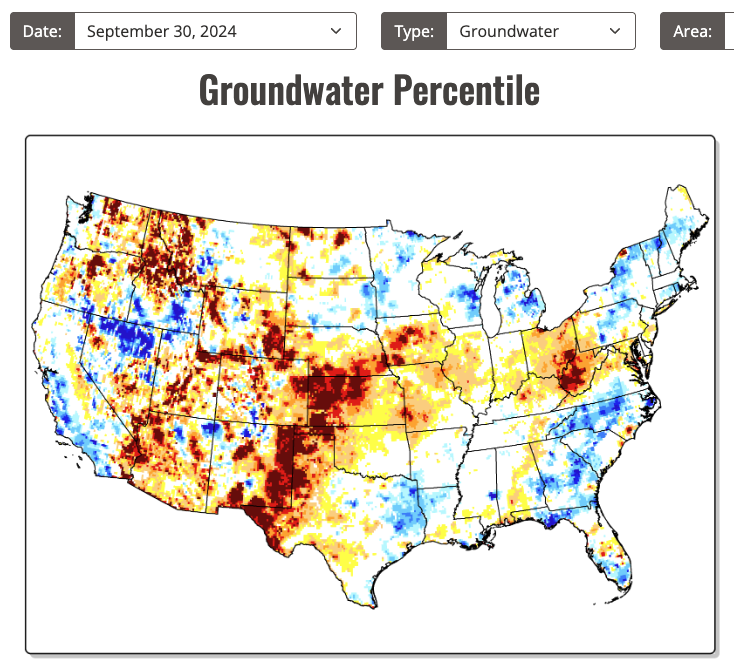
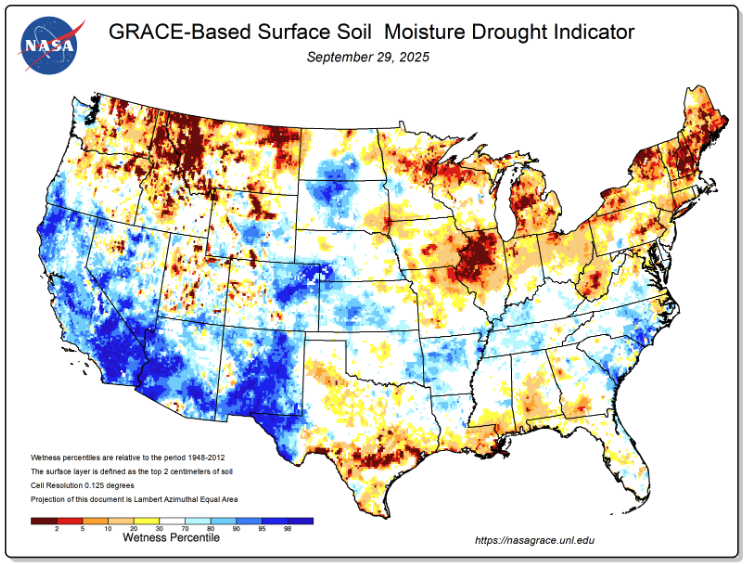
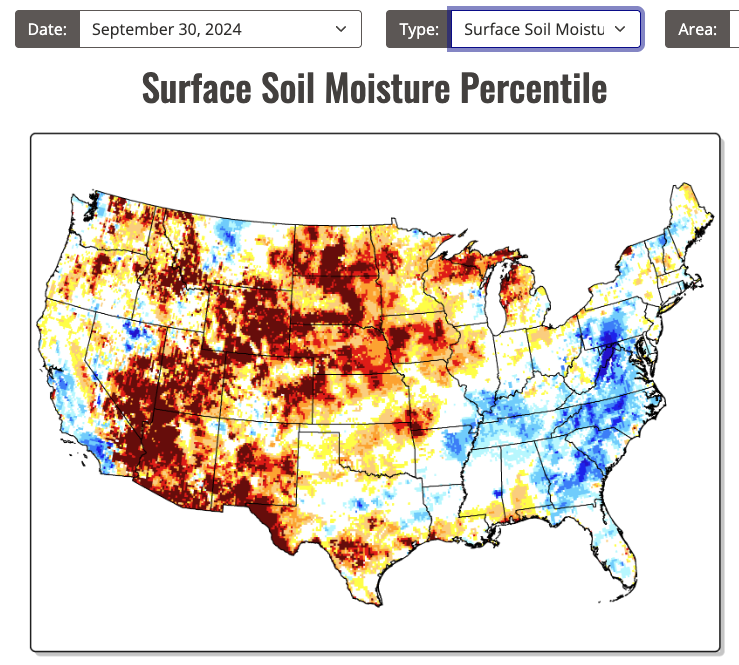
Surface soil moisture conditions were extremely poor at the start of the 2025 water year, with many areas experiencing soil moisture conditions in the less than two percentile range. After an extremely dry summer, surface soil moisture conditions improved during September across much of the region, with large areas of near average surface soil moisture and the area of low soil moisture anomalies was greatly reduced. Wetter soils near the surface may foretell the possibility of a better runoff season, however, the shallow groundwater drought index illustrates much drier conditions to end the 2025 water year. Much of southern Utah and western Colorado are experiencing exceptional shallow groundwater drought conditions.
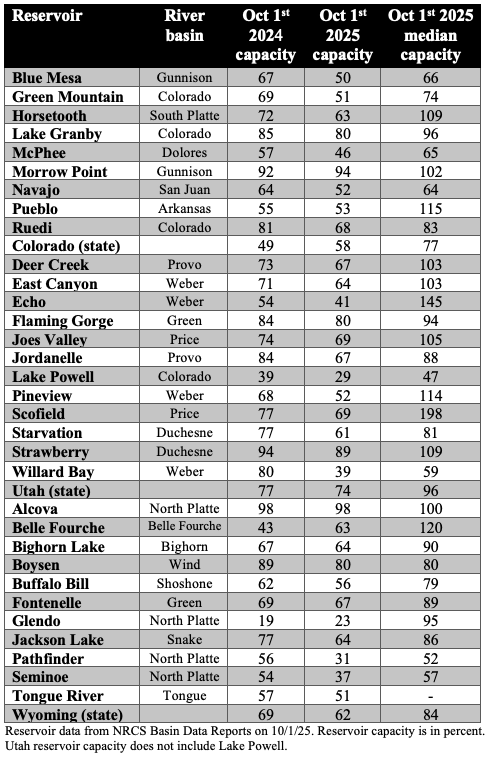
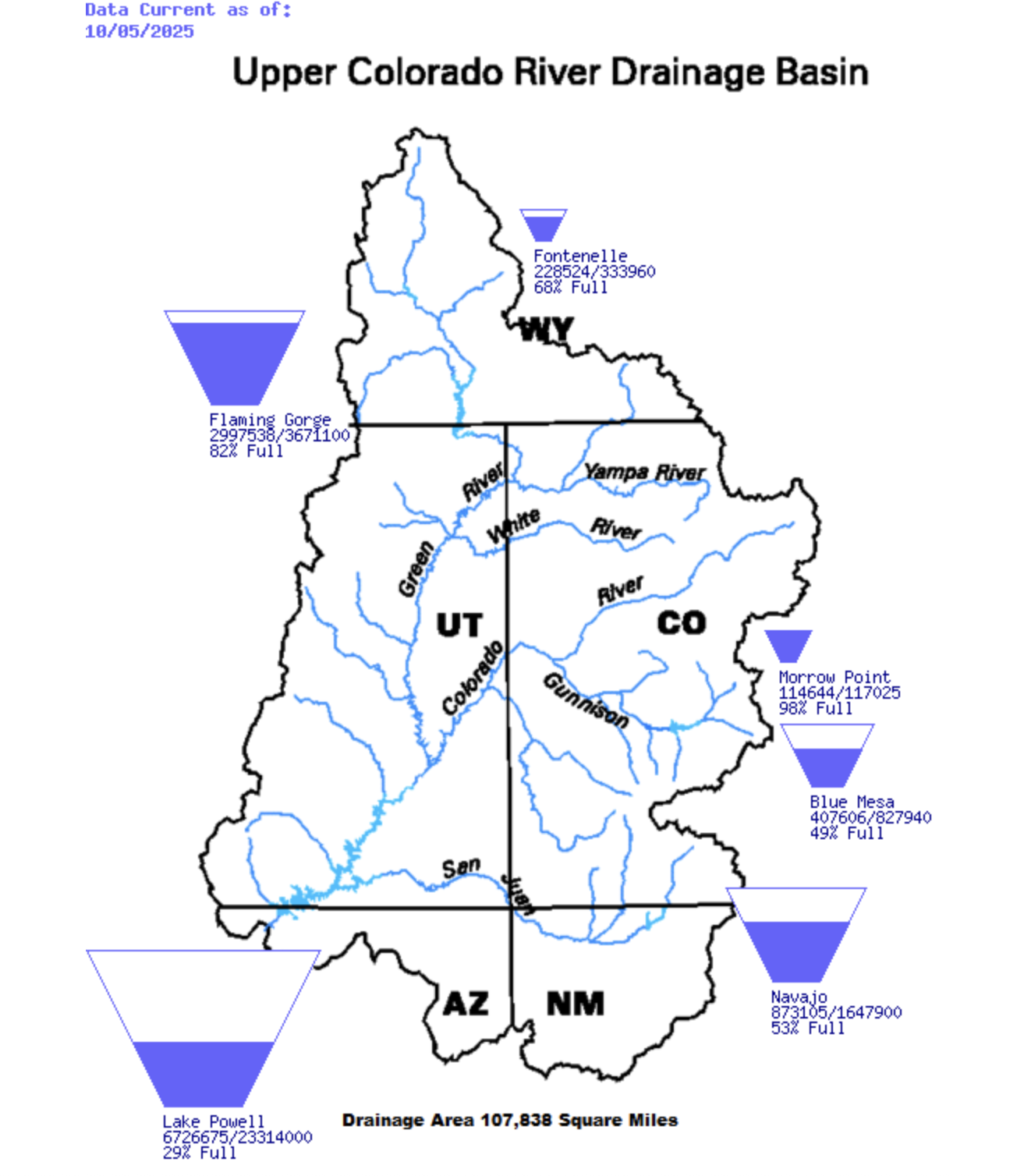
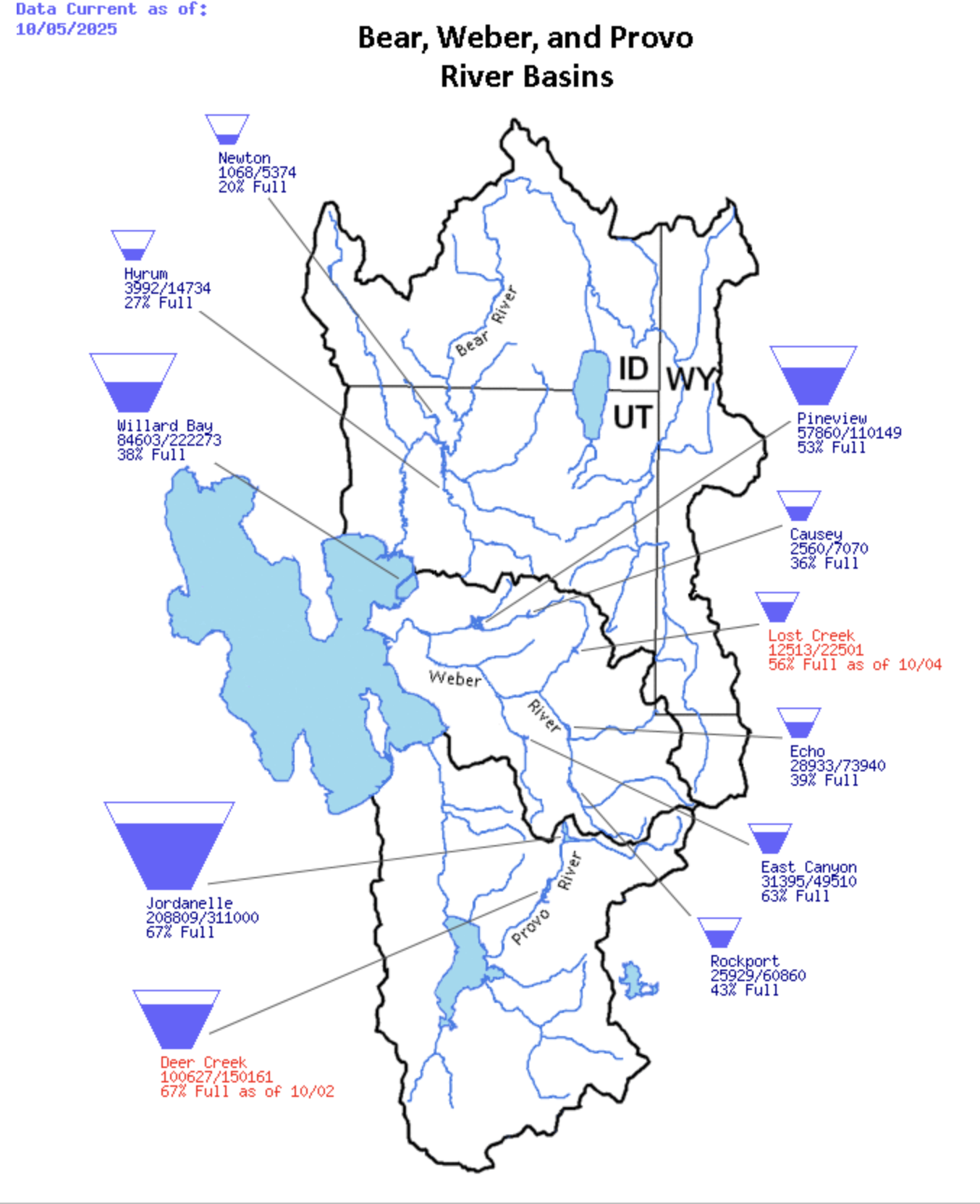
Water storage in nearly all regional reservoirs declined during the 2025 water year. In general, reservoir storage is lowest in Colorado (49% of capacity) and highest in Utah (74% of capacity), with the greatest decreases in reservoir storage during 2025 occurring in Colorado. Many reservoirs in Utah remain at or well above median storage capacity, which is largely due to the lingering effects of the record 2023 water year in Utah. In general, reservoirs on the Upper Colorado River such as Blue Mesa, McPhee, Navajo, and Lake Powell have the lowest capacities. Water levels in Flaming Gorge Reservoir remain relatively high at 84% (94% of median capacity), however, extremely low water in Lake Powell means that additional releases from Flaming Gorge and perhaps other reservoirs will be needed to maintain electrical power generation at Glen Canyon Dam. Reservoirs on the Wasatch Front and in the Uinta Basin remain relatively full.