October 8, 2025 - CO, UT, WY
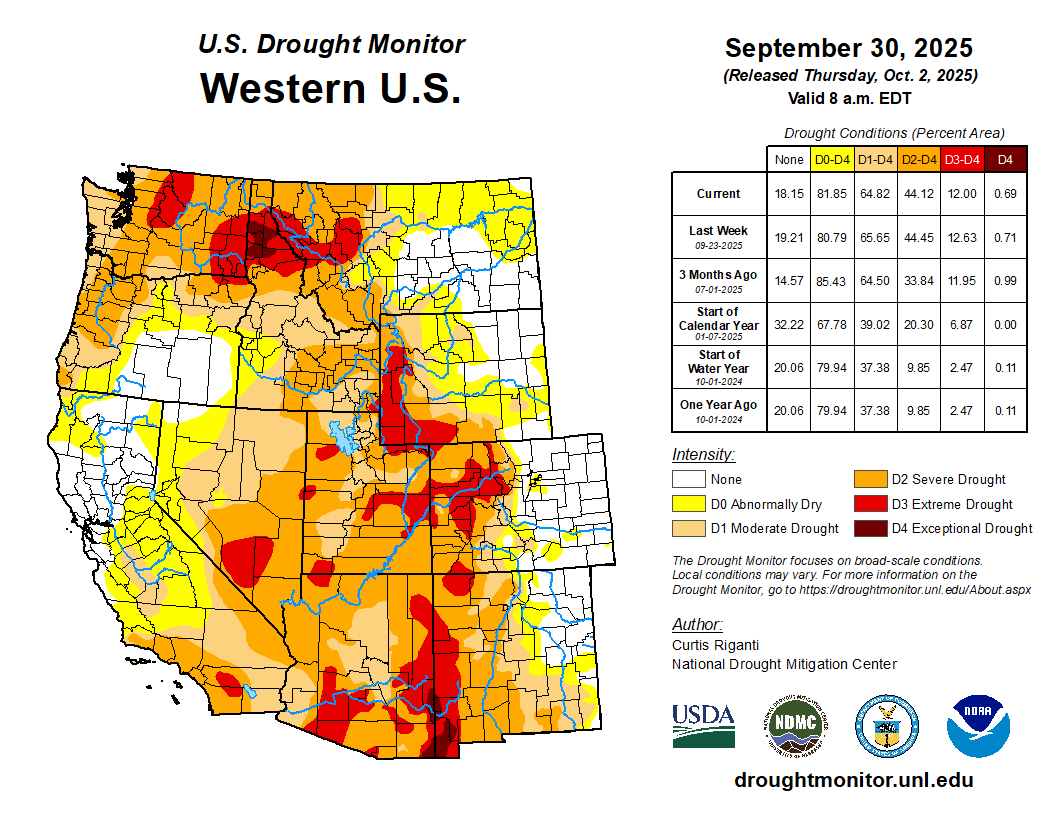
September precipitation was mixed across the region, with below normal conditions in Utah and northeastern Wyoming, and above normal conditions in eastern Colorado and southeastern Wyoming. Temperatures were near to above normal for the majority of the region, with a large pocket of record-warm temperatures in southwestern Wyoming. The first snowfall of the season was observed on September 22 in Utah and September 23 in Colorado. Drought conditions remained the same in Utah and improved in Colorado and Wyoming, with regional drought coverage at 61% as of September 30. Monthly streamflow conditions were near to below normal across much of the region. The probability of La Niña conditions developing is 60% by mid to late fall. NOAA seasonal forecasts for October-December suggest an increased probability of below average precipitation and above average temperatures for the region.
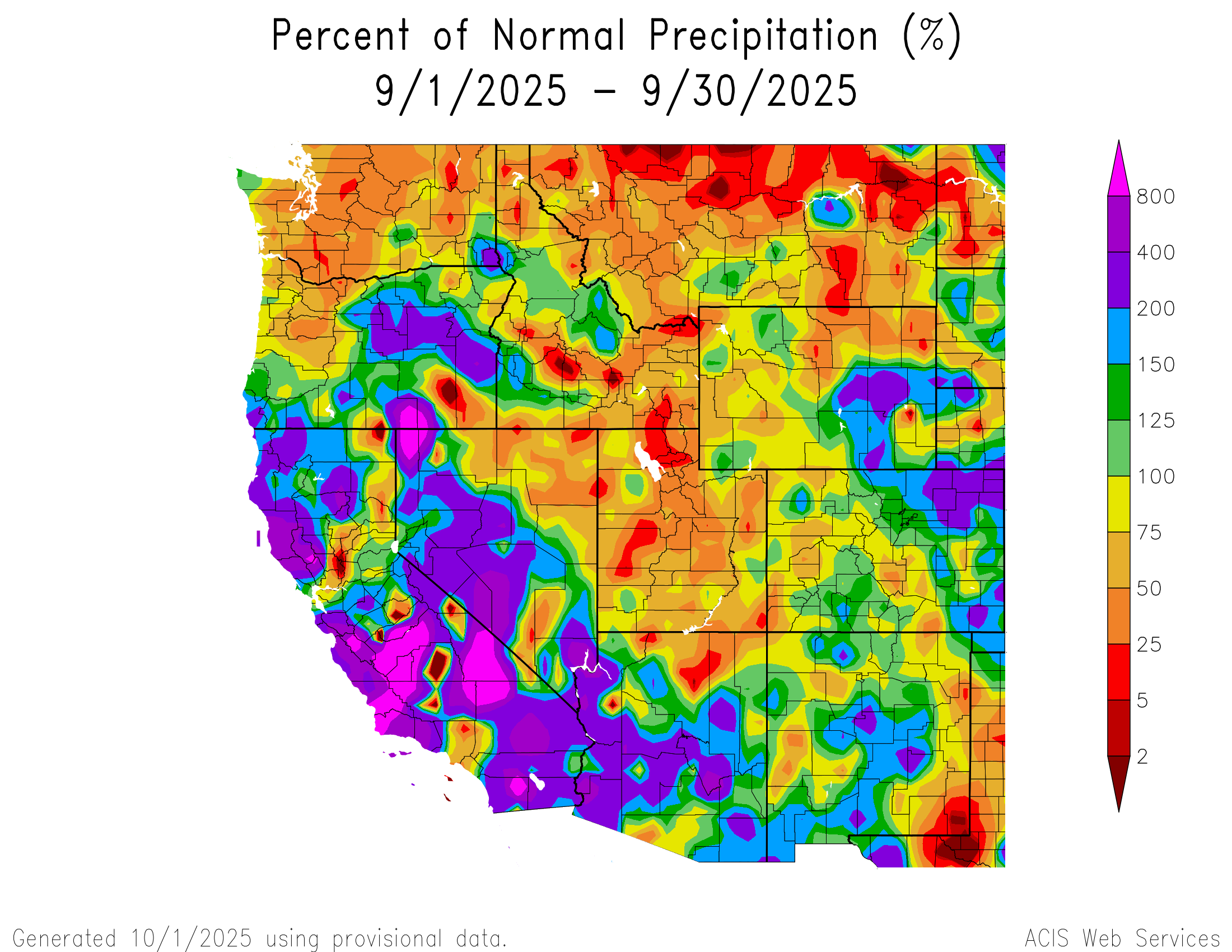
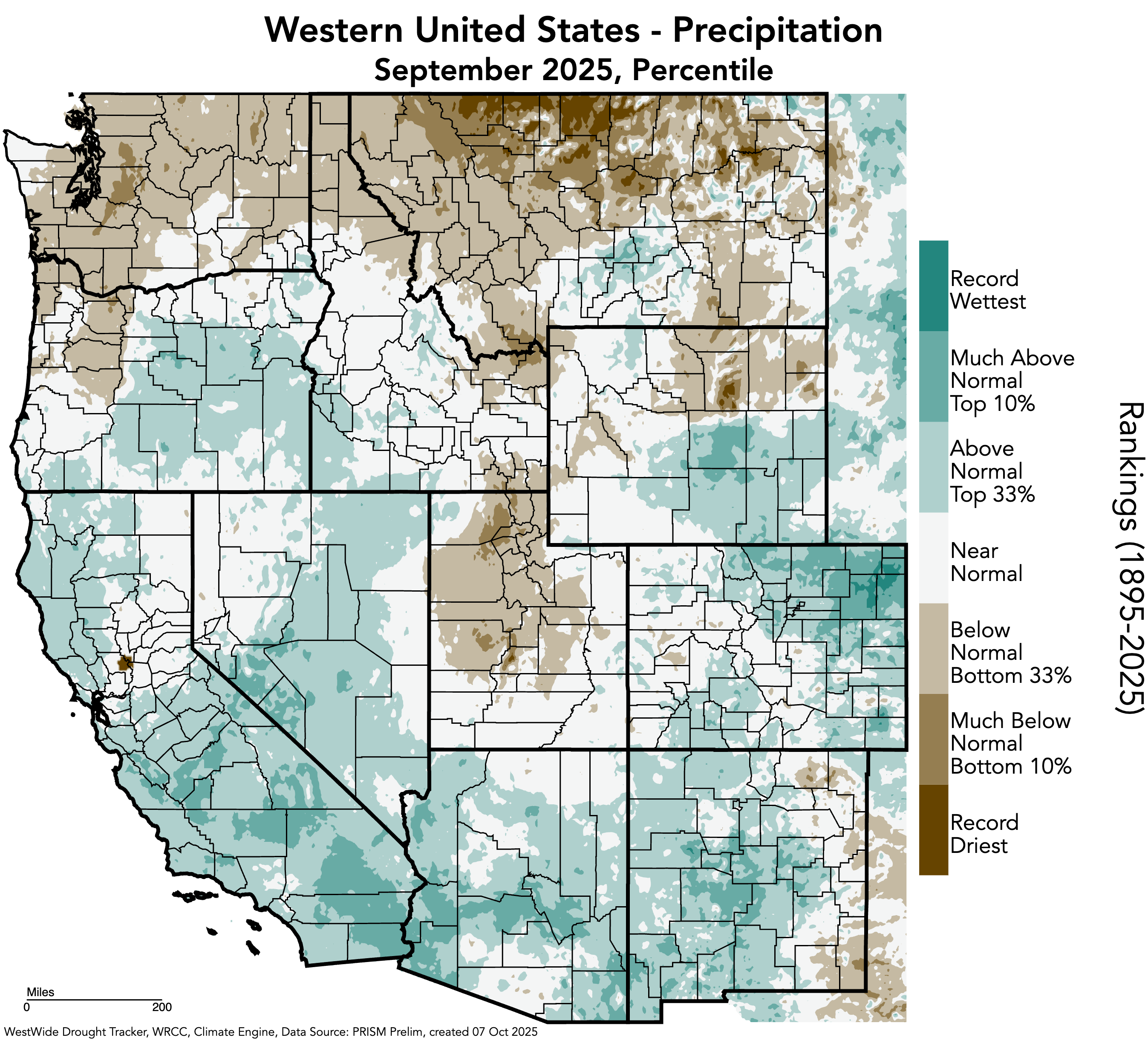
The region experienced a mix of moisture conditions in September, with very dry conditions in western and northern Utah, and wet conditions in northeastern Colorado and southeastern Wyoming. Below normal precipitation occurred throughout most of Utah and northeastern Wyoming, while above normal precipitation occurred throughout most of eastern Colorado and southeastern Wyoming. A large pocket of record-wet conditions occurred in northeastern Colorado, and a pocket of record-dry conditions occurred in Johnson County, Wyoming.
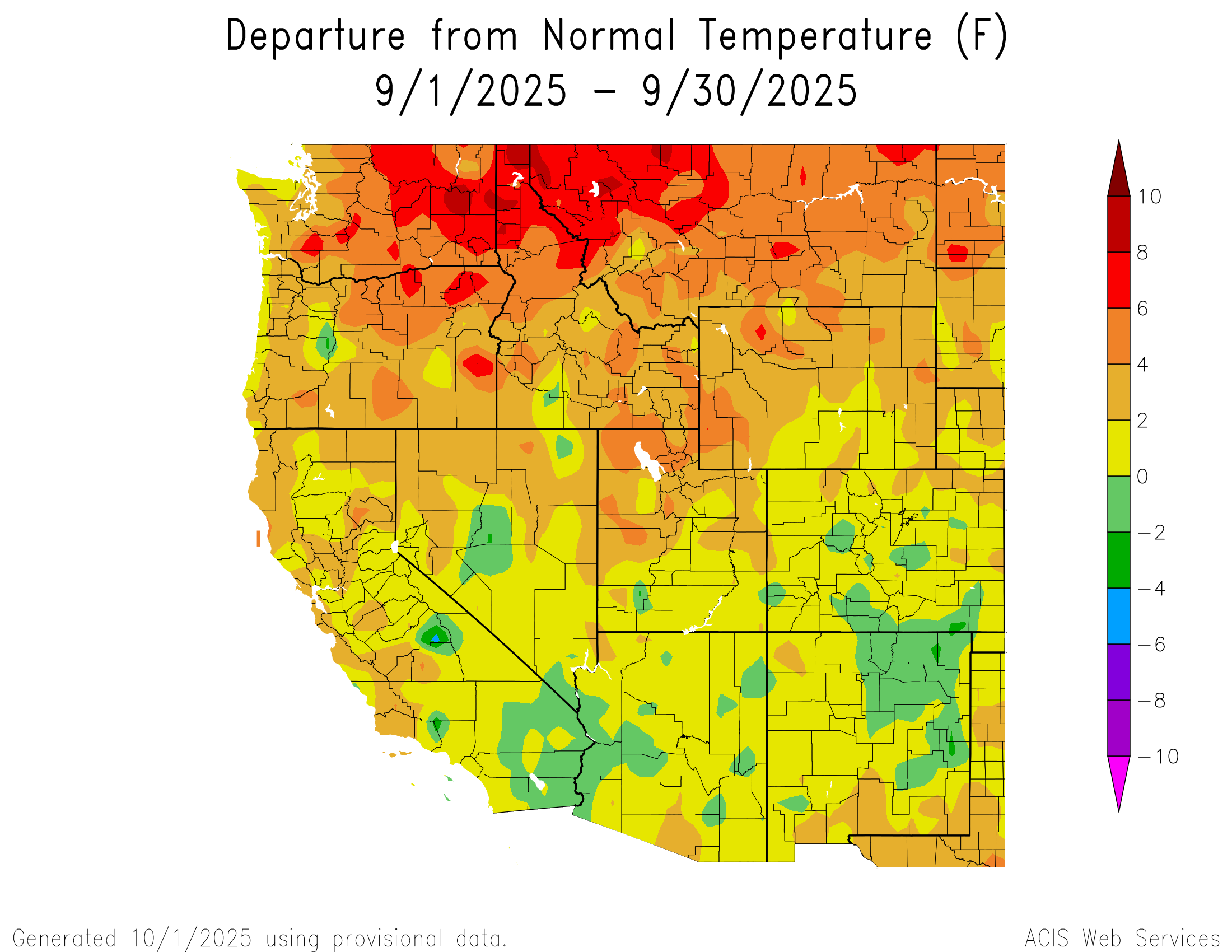
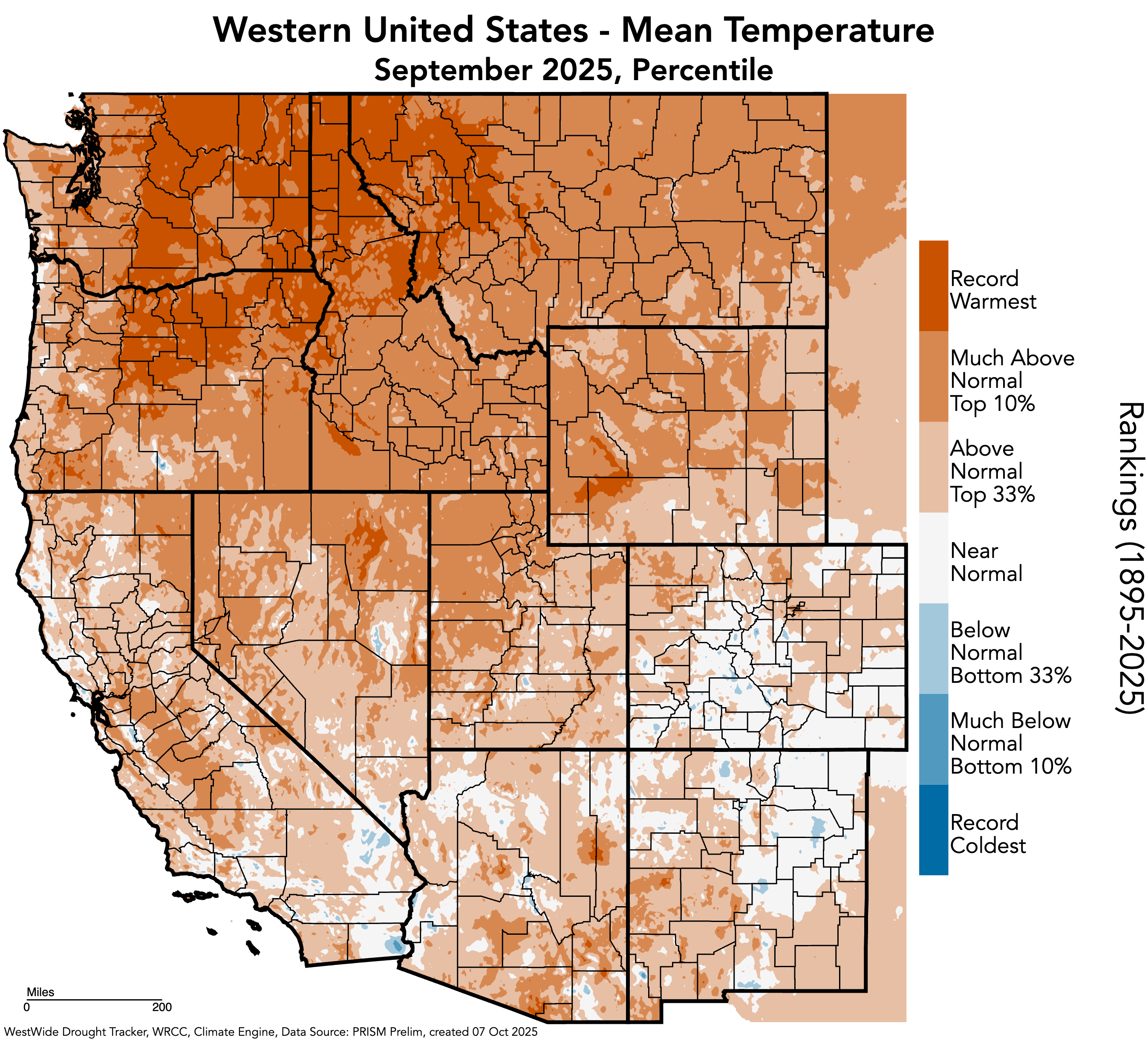
September temperatures were near to above average throughout most of the region, except for pockets of 0 to 2°F below normal temperatures in southern Colorado and southern Utah. The majority of Wyoming and northern Utah experienced 2 to 4°F above average temperatures, with pockets of 4 to 6°F above average temperatures in northern and western Utah, and northern and western Wyoming. One small pocket of 6 to 8°F above normal temperatures occurred in Park County, Wyoming and an area of 2 to 4°F below normal conditions occurred in Las Animas County, Colorado. A large pocket of record-warm temperatures occurred in southwestern Wyoming.
The first snowfall of this snow season was observed on September 22 at 10,715 feet in Bald Mountain Pass on Mirror Lake Highway in Utah’s Uinta Mountains. On September 23, Colorado received up to 8.8 inches of snowfall, particularly east of the Continental Divide above 10,500 feet, with the most falling in Glendevey. As of October 1, all SNOTEL sites are reporting no accumulated snow. Here are the top five snowfall totals in Colorado from September 23:
- Glendevey, Colorado - 8.8 inches
- Arapahoe Peak, Colorado - 8 inches
- Cameron Pass, Colorado - 7.2 inches
- Berthoud Pass, Colorado - 7.2 inches
- Winter Park, Colorado - 7 inches
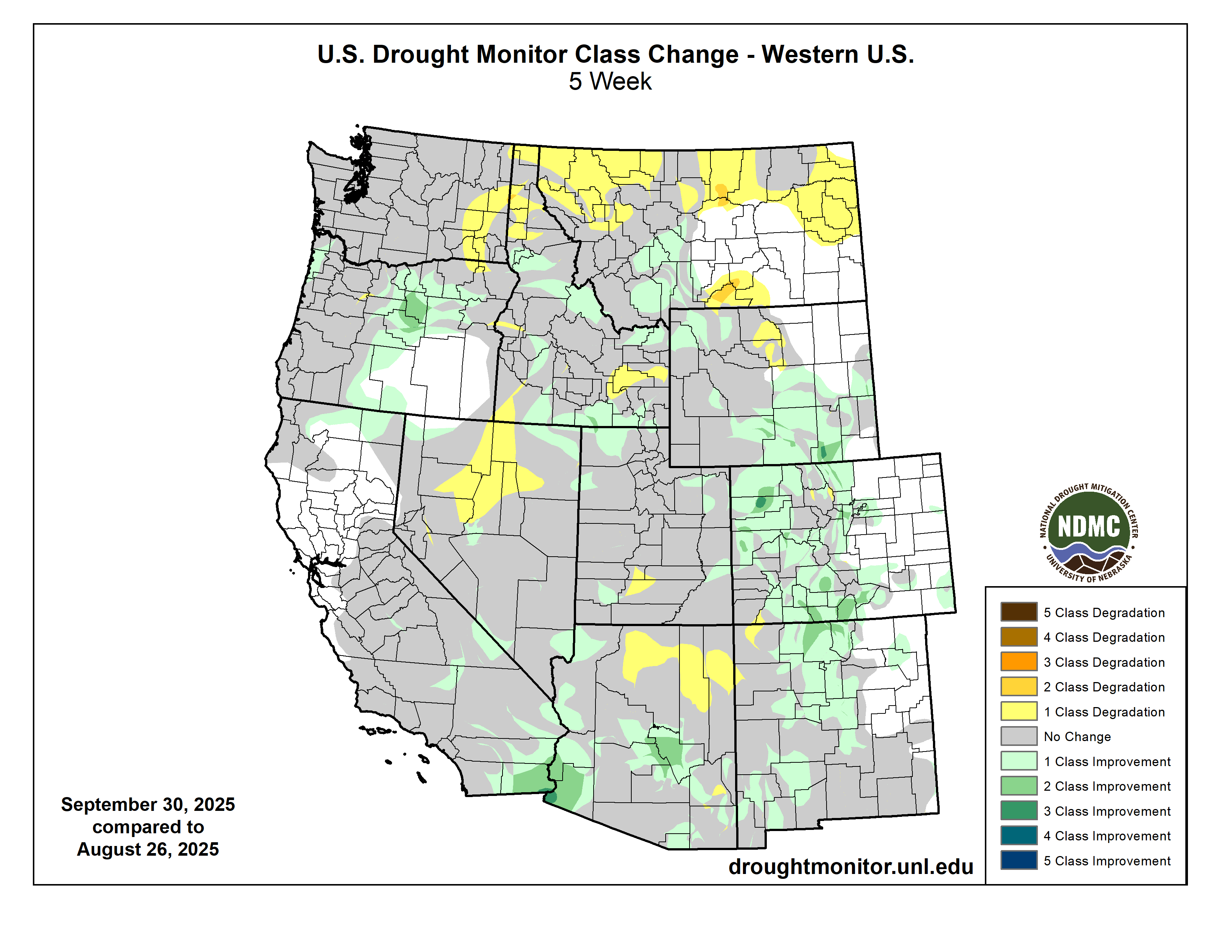
Drought conditions improved during September in Colorado and Wyoming, while all of Utah continues to remain in at least moderate (D1) drought. By September 30, regional drought coverage was 61%, a 6% improvement since the end of August. Colorado saw the removal of exceptional (D4) drought conditions on the West Slope and a 14% reduction in extreme (D3) drought. Wyoming also saw a 6% decrease in D3 drought conditions near Yellowstone region and in the south-central portion of the state. Coverage of extreme drought conditions in Utah decreased by 4% and severe (D2) drought declined by 4%.
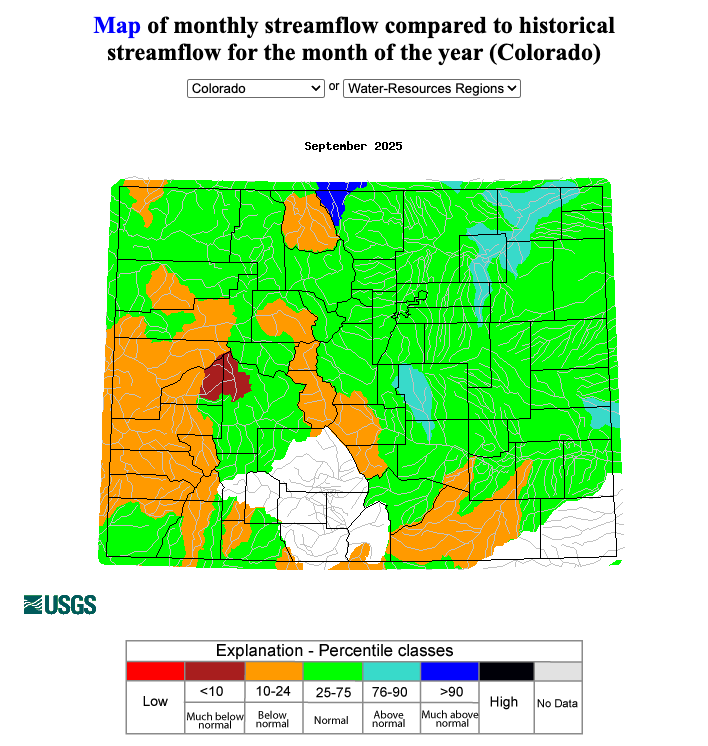
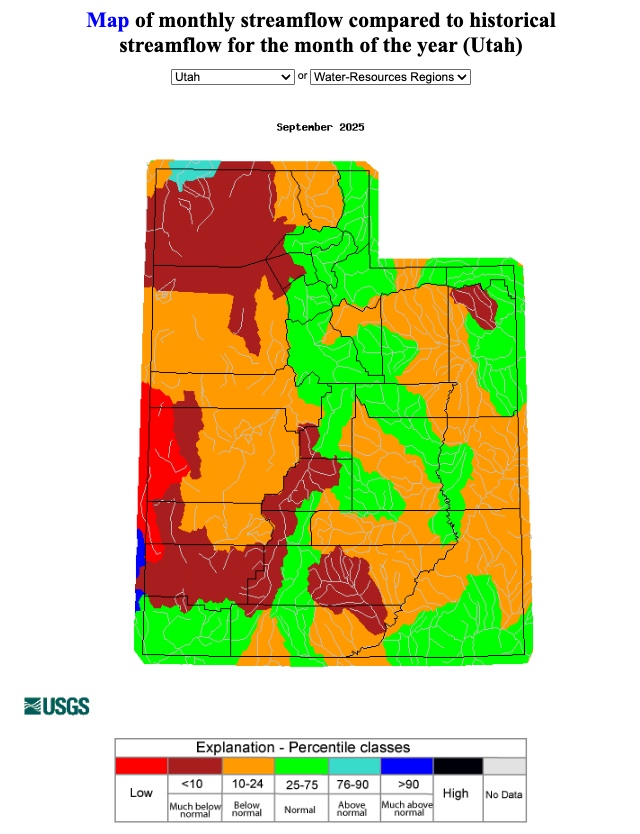
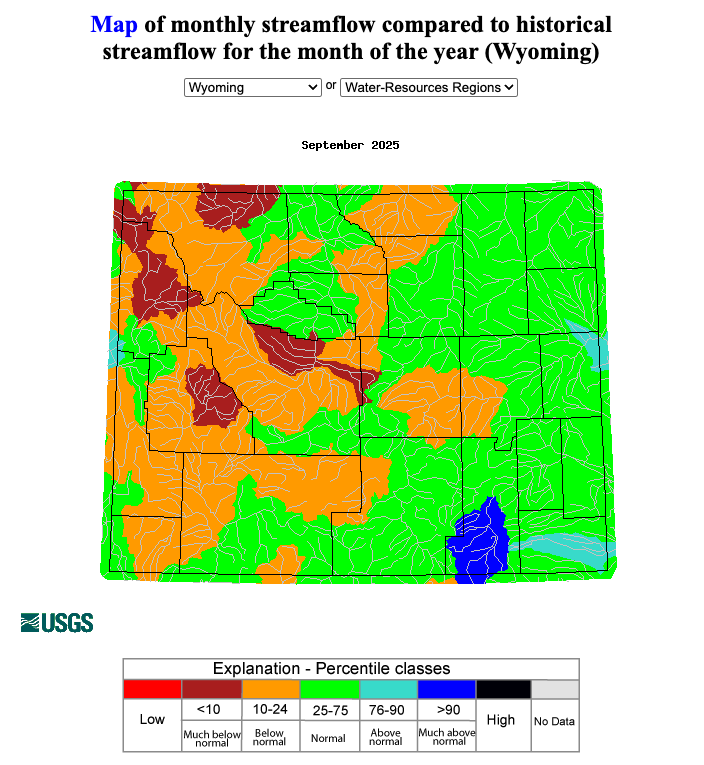
Monthly streamflow conditions were near to below normal across large parts of the region, with much below normal conditions in northwestern Wyoming and western Utah during September. Several USGS stream gages reported September streamflow conditions in the lowest 3% of all historical observations, including seven in Wyoming, six in Utah, and one in Colorado. While the majority of streamflow gages in the region reported near to below normal conditions in September, several gages reported above to much above normal conditions, particularly along the Front Range in Colorado. Additionally, a few USGS stream gages reported September streamflow conditions in the highest 96% of all historical observations, including two in Utah and one in Wyoming.
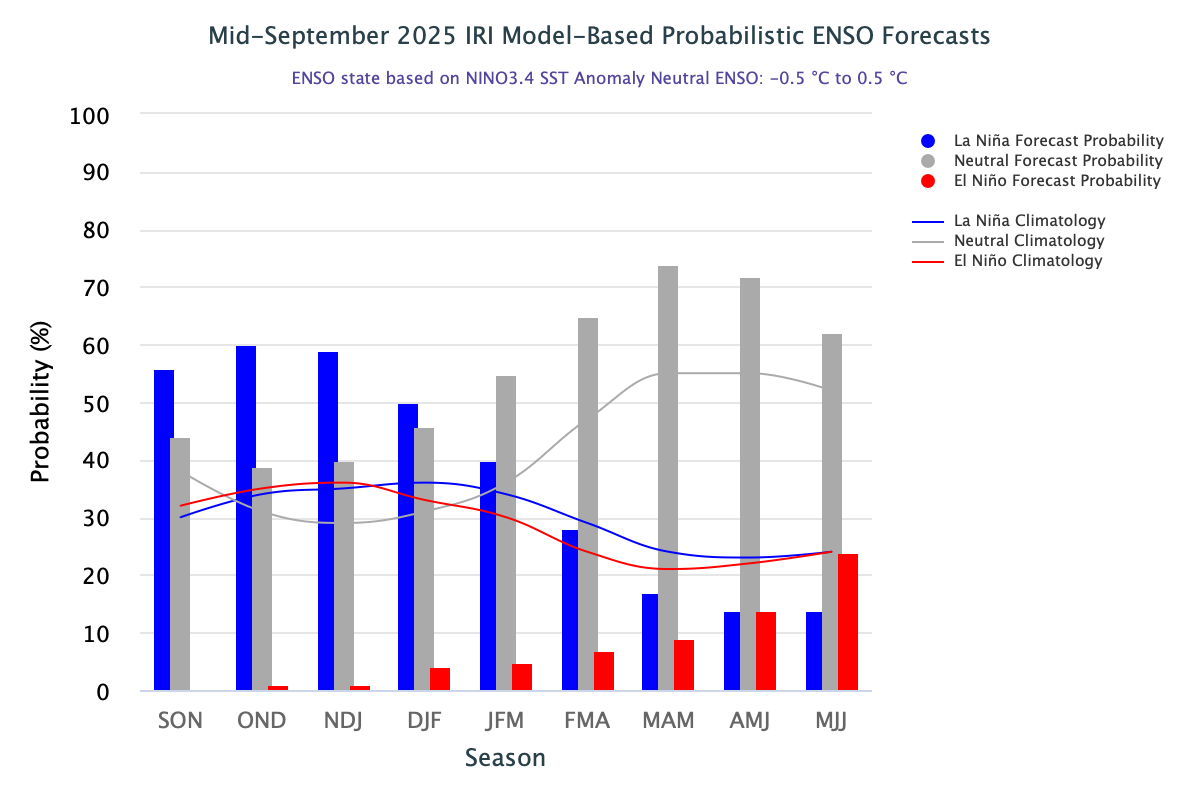
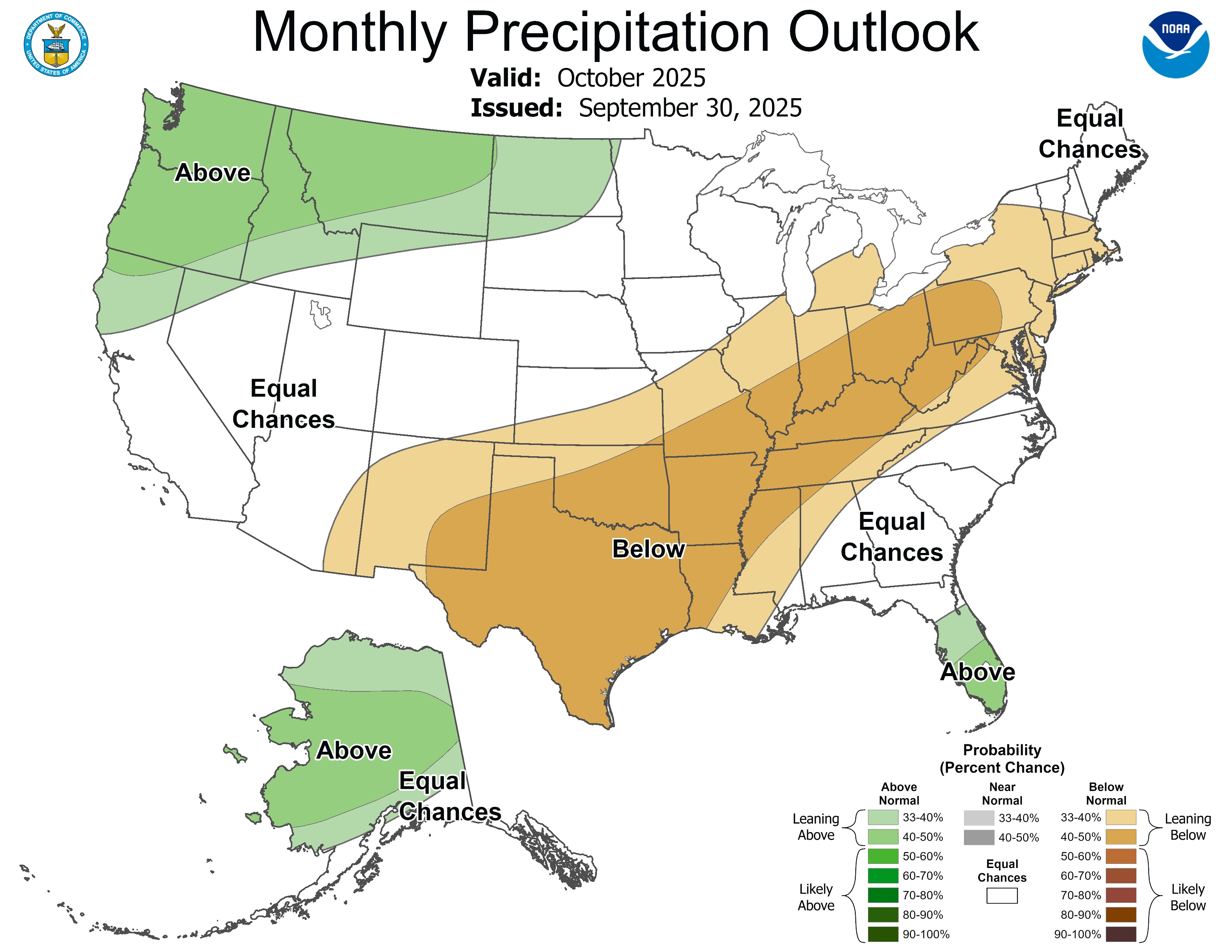
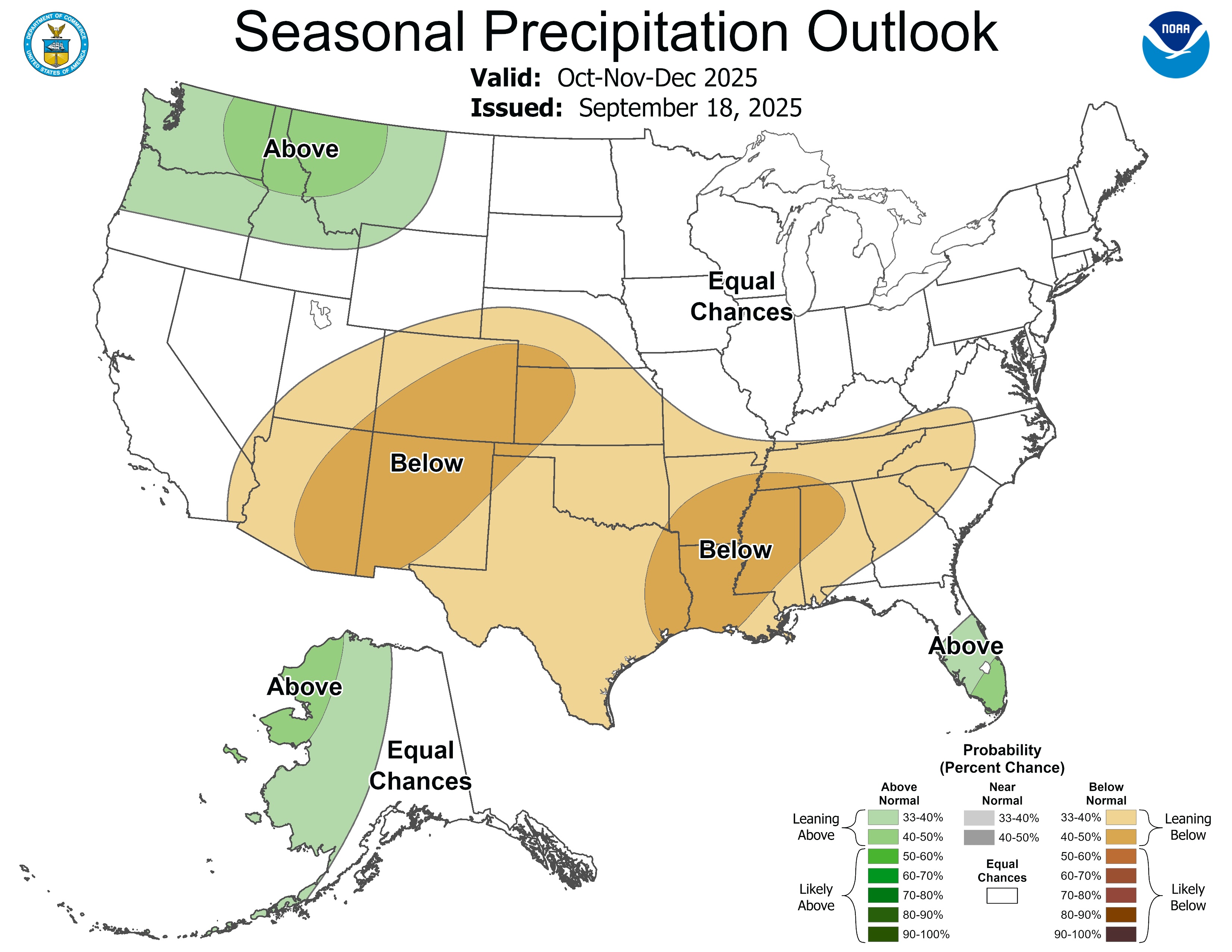
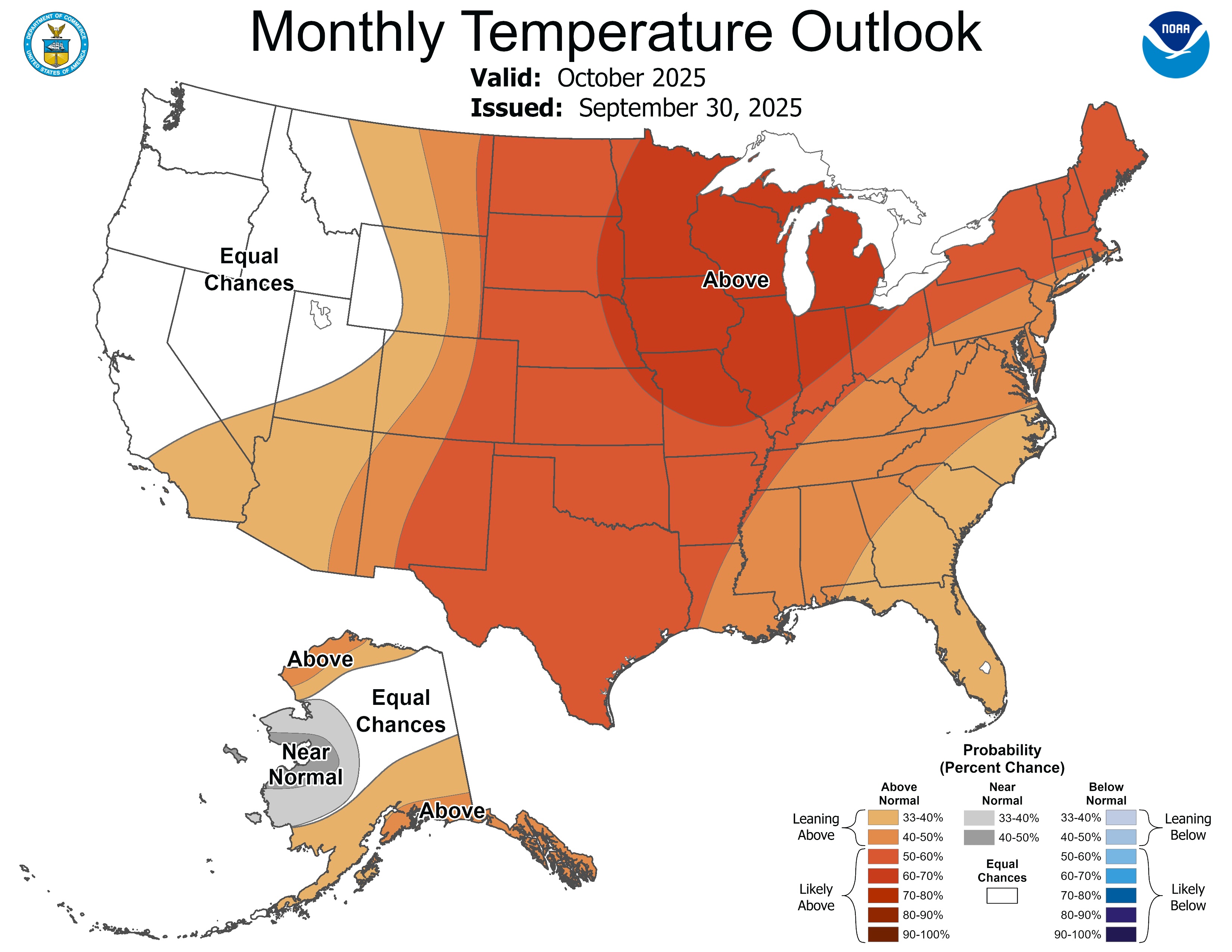
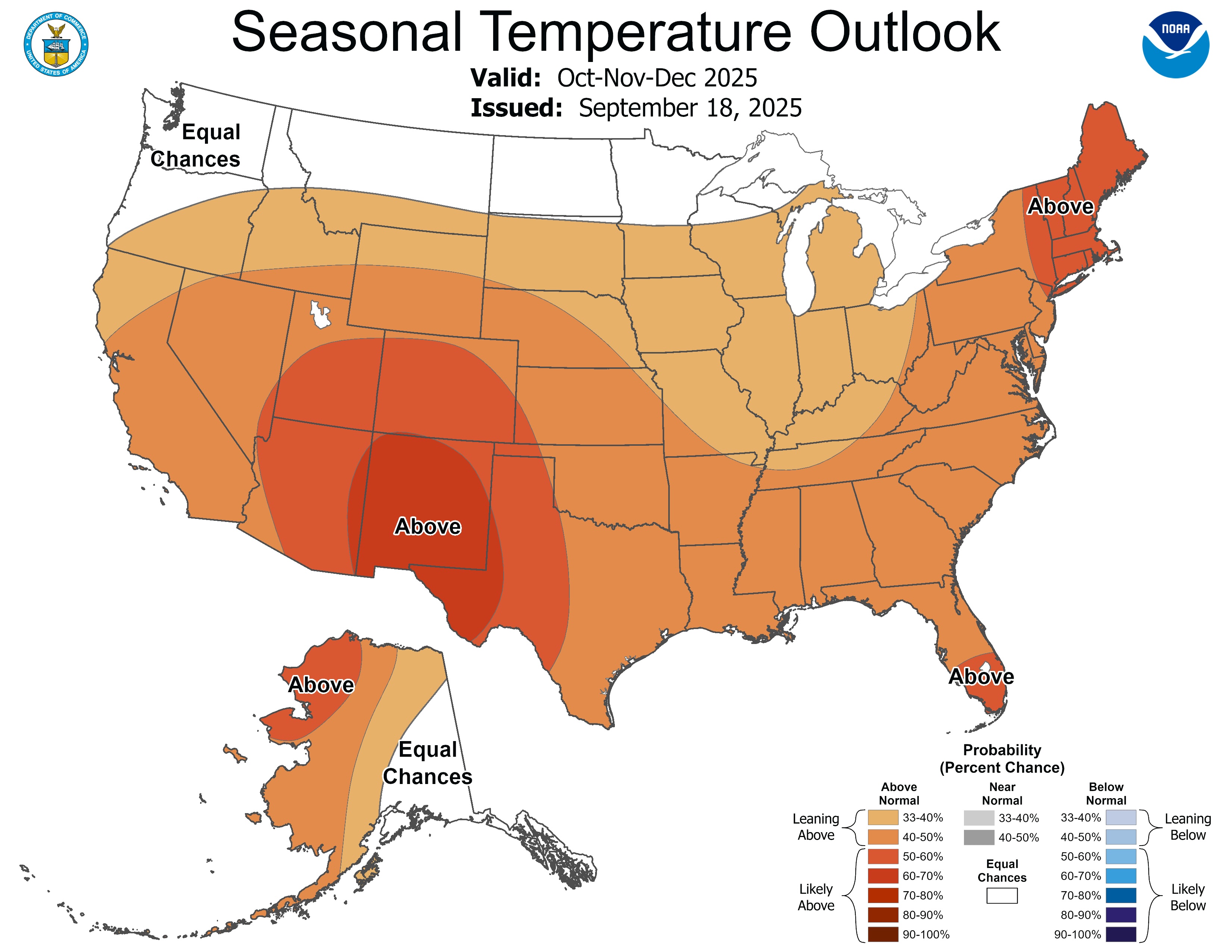
There is a 60% chance of La Niña conditions developing by November. By January, there is an equal probability of La Niña or neutral ENSO conditions and the probability for La Niña decreases throughout the remainder of winter 2026. The NOAA Monthly Precipitation Outlook suggests an increased probability of above average precipitation for northern Wyoming and below average precipitation for southeastern Colorado in October. The NOAA Monthly Temperature Outlook suggests an increased probability of above average temperatures for all of Colorado, eastern and central Wyoming, and southern Utah in October. The NOAA Seasonal Outlooks for October-December suggest an increased probability of below average precipitation in all of Colorado, southern and eastern Utah, and southeastern Wyoming, and an increased probability of above average temperatures throughout the region.
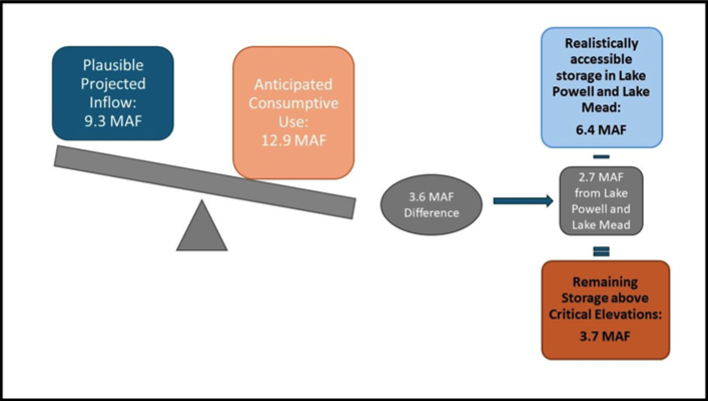
The Colorado River is in a water crisis as consumption continues to outweigh the natural supply each year. To stabilize the system, Colorado River Basin that water use must be balanced with natural river flows. According to the recent report, “Analysis of Colorado River Basin Storage Suggests Need For Immediate Action” (Schmidt et al. 2025) the basin currently has 6.3 million acre-feet of accessible water storage in Lakes Powell and Mead. If next year is a repeat of this year’s unforgiving hydrology and water use remains the same in the basin, Schmidt et al. estimate that consumptive use will exceed the natural flow in the river basin by at least 3.6 million acre-feet, leaving only 3.6-3.7 million acre-feet left in storage above critical elevations in Lakes Powell and Mead by late summer 2026. According to the report, depleting half of the basin's storage by the end of water year 2026 will leave water managers with limited flexibility when the new post-2026 operating regime comes into effect. To avoid this outcome, the basin requires immediate and substantial reductions in consumptive use.
Learn more: https://www.colorado.edu/center/gwc/media/670
Significant weather event: On September 23, Denver set a daily rainfall record of 1.28” of precipitation at Denver International Airport, making it the wettest September 23 since records began in 1872. Denver’s Central Park weather station recorded 1.33” of rain, making September 23 the wettest day since June 22, 2023 for Denver. This same storm brought heavy, wet snow to the high country, with the most snow reported at the Glendevey weather station in Larimer County at a total of 8.8” of snow (see above for the top five snowfall totals from September 23). Here are the top five rainfall totals from September 23 in Colorado:
- Central Park in Denver - 1.33 inches
- Denver International Airport - 1.28 inches
- Broomfield - 1.22 inches
- Fort Collins - 1.13 inches
- 9NEWS in Denver - 1.05 inches
Sources:
https://weather.com/news/news/2025-09-24-colorado-first-noticeable-snowfall-of-the-season
https://snowbrains.com/utah-mountains-receive-first-snow-of-winter-2025-26/